Blogs

Blogs

Blogs

Stay updated with the latest trends, technical guides, and case studies on blow molding technology. Expert insights from Kinggle’s 20+ years of experience.
Types of Blow Molding Machines: Which One Makes Your Product?17 2026-07

Types of Blow Molding Machines: Which One Makes Your Product?

The three main types of blow molding machines are extrusion blow molding (EBM), injection blow molding (IBM), and injection stretch blow molding (ISBM). EBM covers the widest range — from small bottles to 2000-liter tanks — and splits into continuous machines for small parts and accumulator machines for large ones. IBM makes small bottles with precise necks. ISBM makes clear PET bottles. Your product decides the type. Find it in the table below.
How to Choose a Blow Molding Machine: Size, Output, and Clamping Force10 2026-07

How to Choose a Blow Molding Machine: Size, Output, and Clamping Force

To choose a blow molding machine, work from the container outward. Your part's volume sets the machine size. Your target output decides single or double station. Three specs settle the rest: clamping force, accumulator size, and melting capacity. As anchors: a 2 L bottle needs about 40 kN of clamping, a 30 L drum about 215 kN, and a 1000 L IBC about 1000 kN. Fix the container and the output first, and the model picks itself.
IBC Tank Blow Molding: How 1000L Totes Are Made06 2026-07

IBC Tank Blow Molding: How 1000L Totes Are Made

An IBC tank is the big roughly 1000-litre plastic bottle you've seen strapped inside a steel cage on a pallet, used to ship and store bulk liquids. That bottle is blow molded — and because it's so large, it needs the biggest accumulator machines made: three-cylinder storage heads, clamping forces around 1000 kN, and high-molecular-weight HDPE strong enough to hold a tonne of liquid without sagging or cracking. Kinggle's KGS1000L-IBC machine is built for exactly this: 1000 L capacity, 1000 kN clamping, twin 100 mm screws, and a 33 L accumulator on a 55-tonne frame.
Multi-Layer Co-Extrusion Blow Molding: When You Need 2, 3, or 6 Layers29 2026-06

Multi-Layer Co-Extrusion Blow Molding: When You Need 2, 3, or 6 Layers

Multi-layer blow molding builds a container wall from two or more plastic layers, each doing a different job — a barrier layer to block oxygen or fuel vapour, a recycled core to cut cost, virgin skins for a clean surface. They're co-extruded together through one die head, so the wall comes out seamless and fused. You need it when one material can't do everything: a fuel tank that mustn't leak vapour, a juice bottle that has to keep oxygen out for a year, a container that has to hit recycled-content targets without contaminating what's inside. Kinggle's KGH curved-arm machines run 1 to 6 layers on containers from 5 to 30 litres.
How Does a 10L Accumulate Blow Moulding Machine Improve Production Efficiency in Packaging Manufacturing?23 2026-06

How Does a 10L Accumulate Blow Moulding Machine Improve Production Efficiency in Packaging Manufacturing?

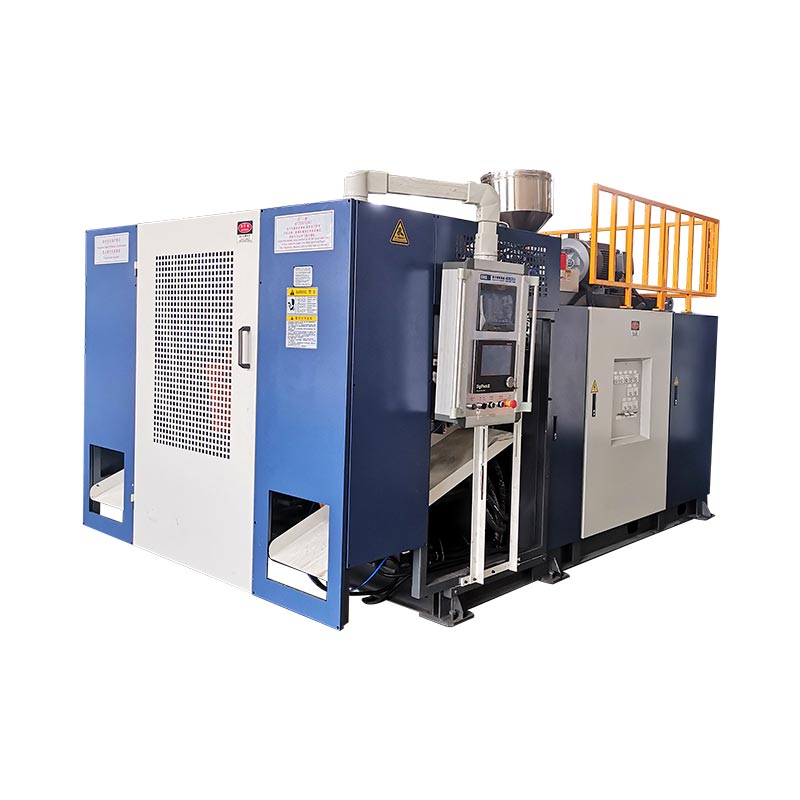
​The 10L Accumulate Blow Moulding Machine has become a critical solution in modern plastic container manufacturing, especially for medium-to-large volume hollow products such as jerry cans, chemical containers, lubricant bottles, and industrial packaging. This article explores how this machine works, why it is preferred in high-output production environments, and how it solves common industry pain points such as unstable wall thickness, energy inefficiency, and limited material compatibility.
How does a 30L Chemical Drum Double Station Blowing Machine Improve Industrial Container Production?18 2026-06

How does a 30L Chemical Drum Double Station Blowing Machine Improve Industrial Container Production?

The 30L Chemical Drum Double Station Blowing Machine is a specialized industrial solution designed for high-efficiency plastic drum manufacturing. It plays a critical role in producing durable, uniform, and chemically resistant 30-liter drums used in chemical storage, industrial packaging, and logistics operations. This article provides a comprehensive exploration of how this machine works, its structural advantages, production benefits, and real-world applications.
X
We use cookies to offer you a better browsing experience, analyze site traffic and personalize content. By using this site, you agree to our use of cookies.Privacy Policy