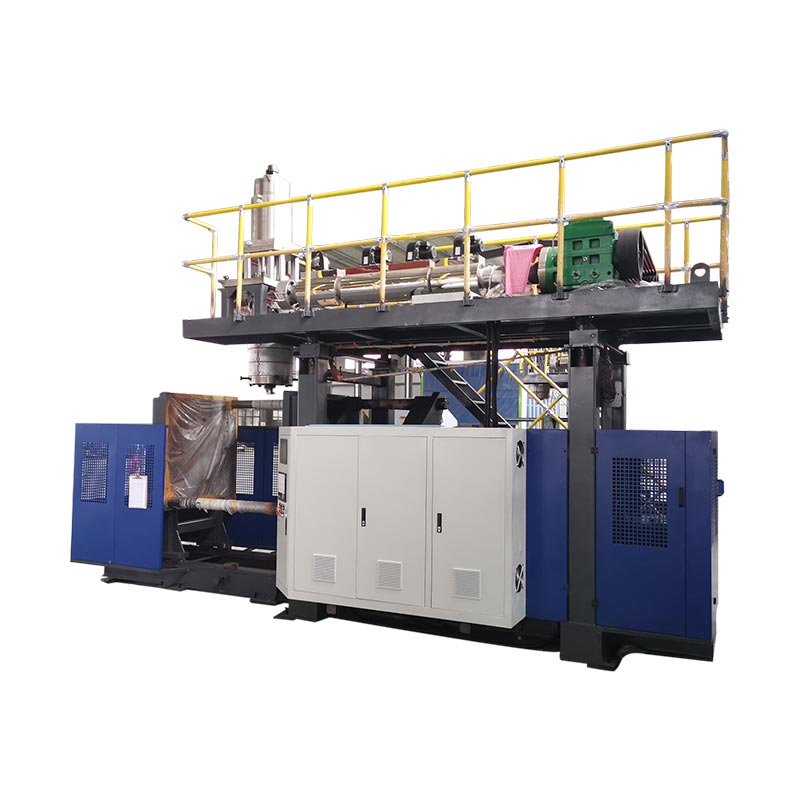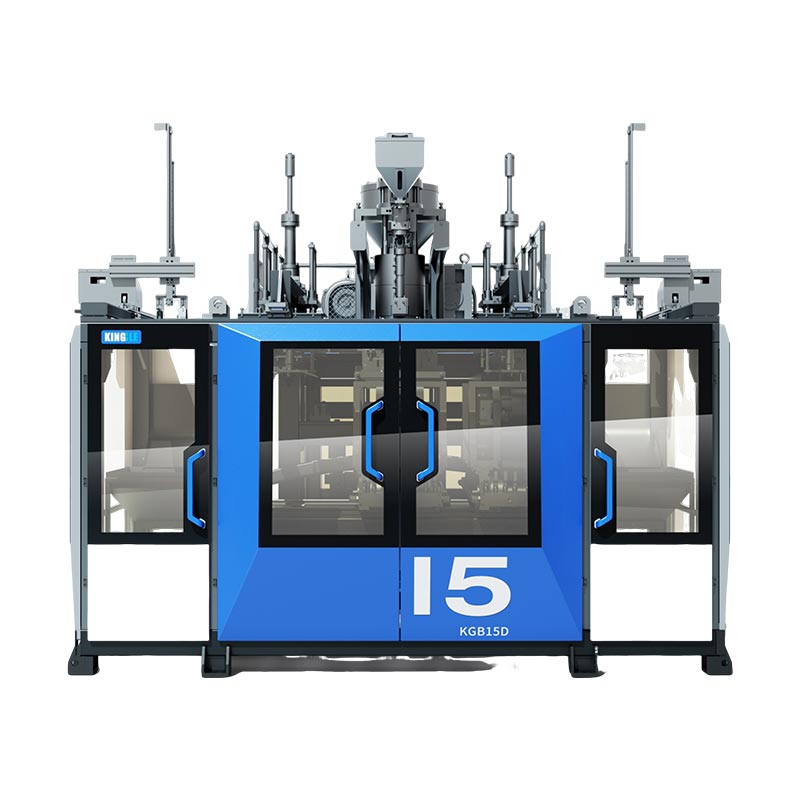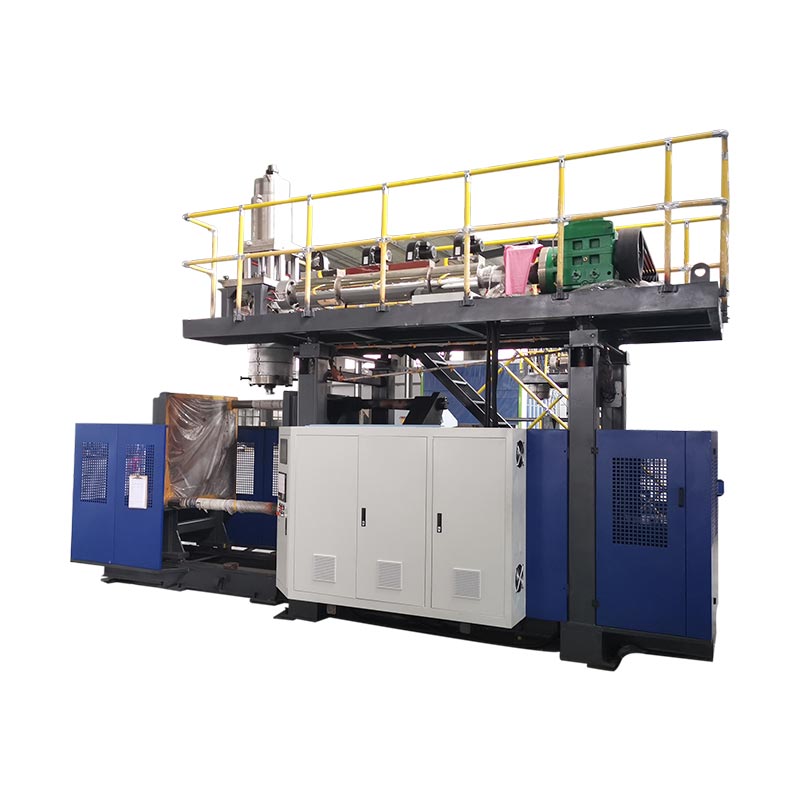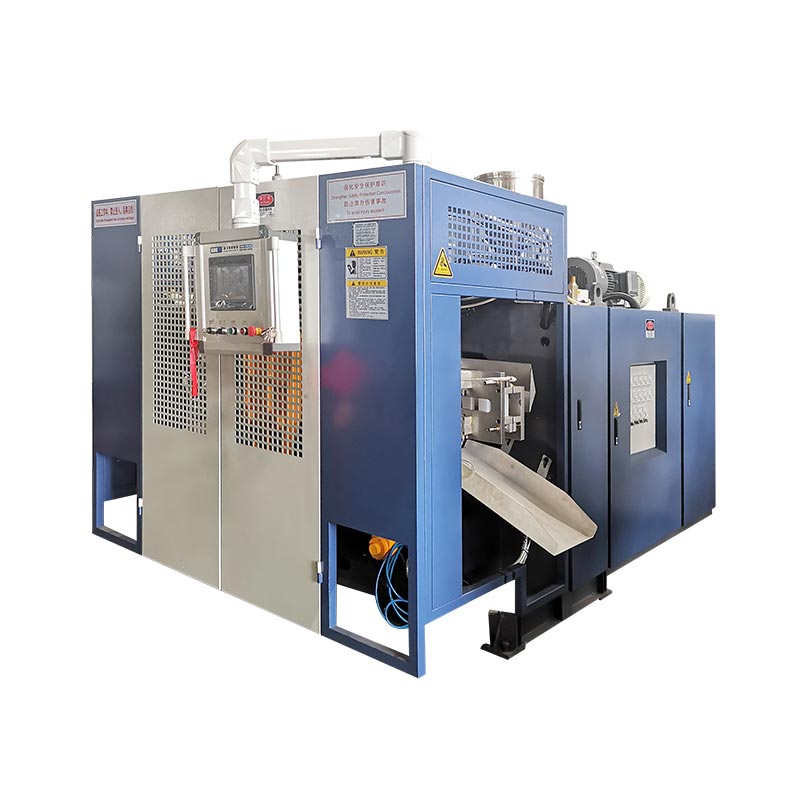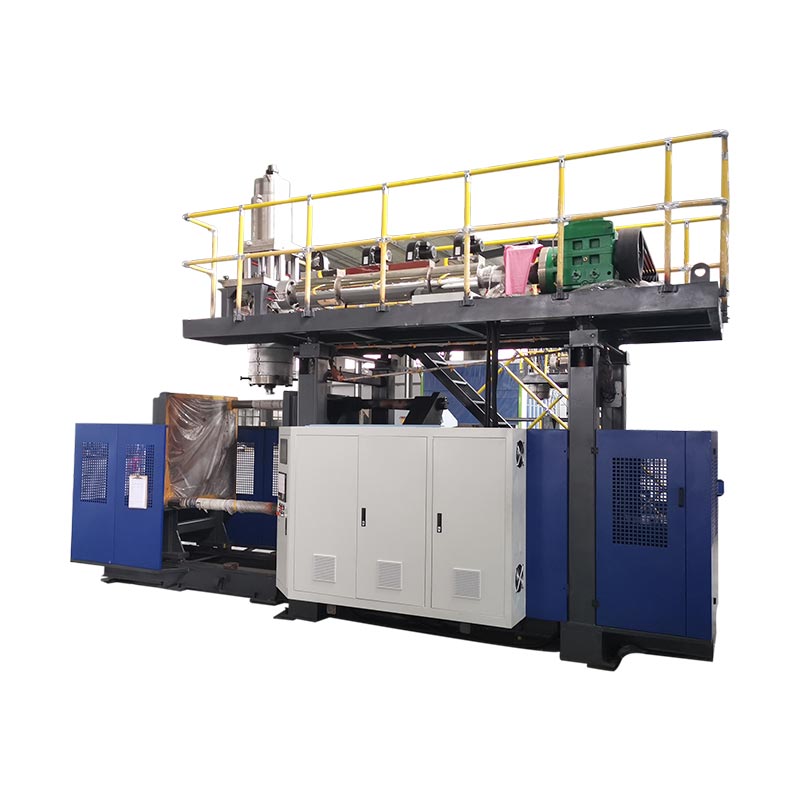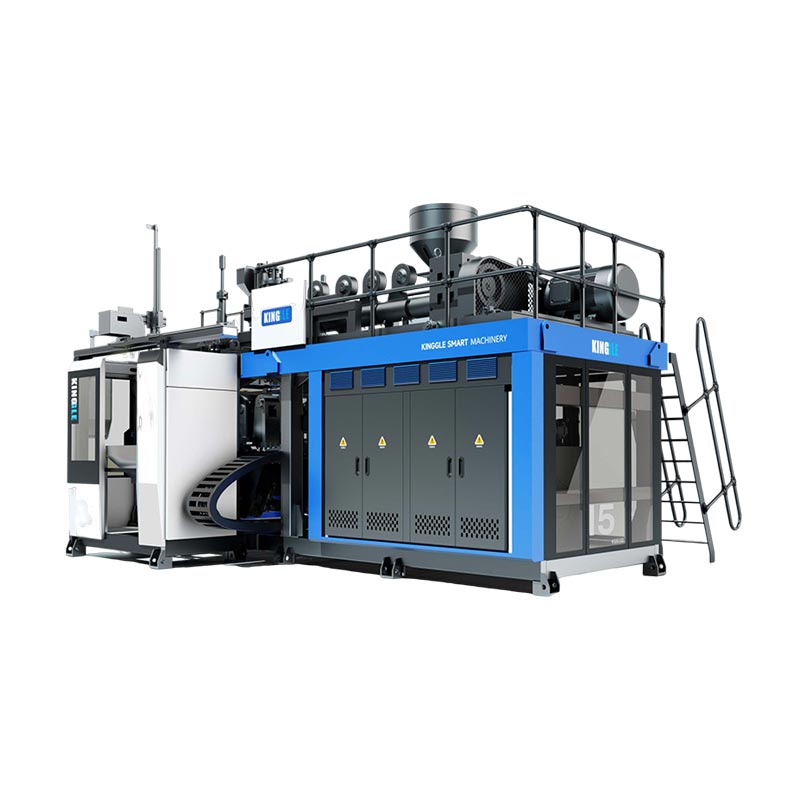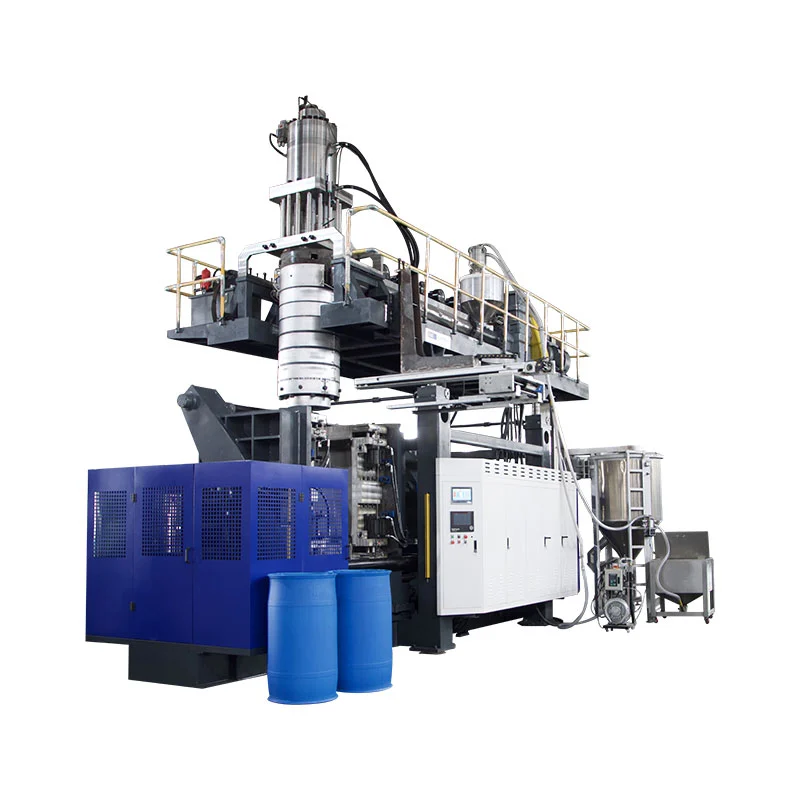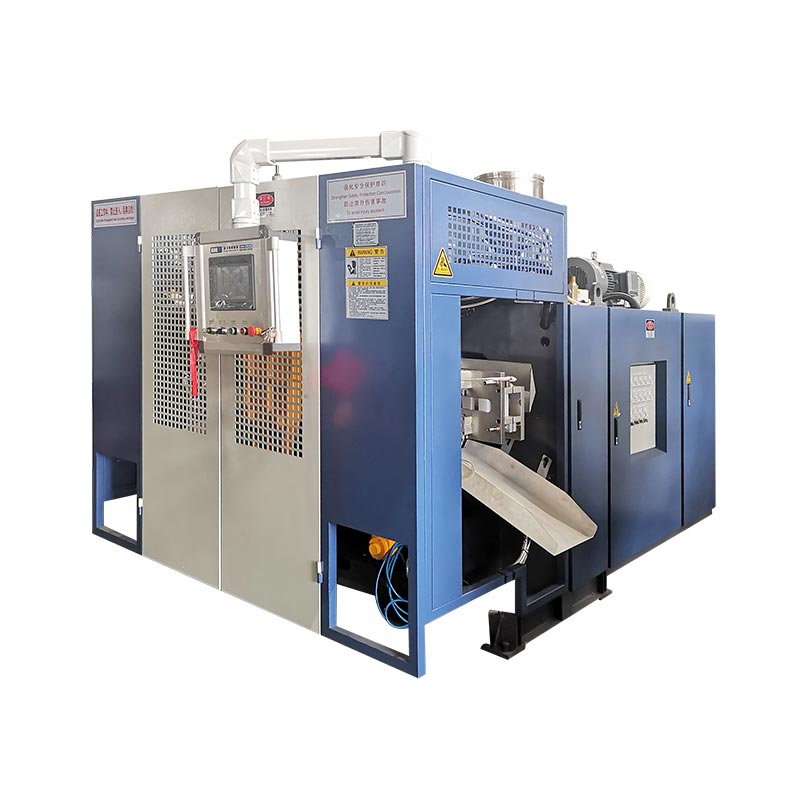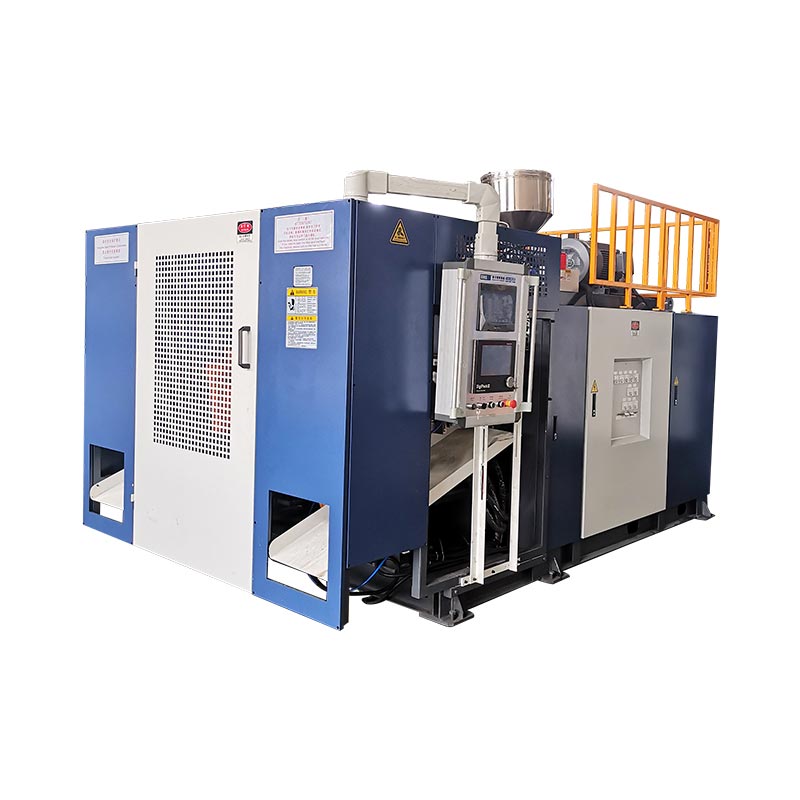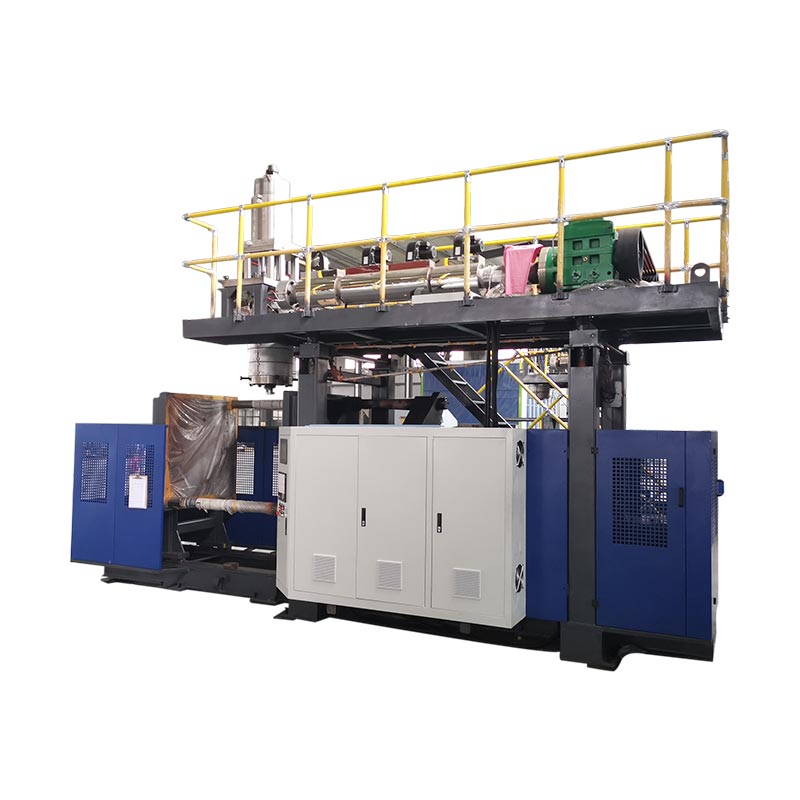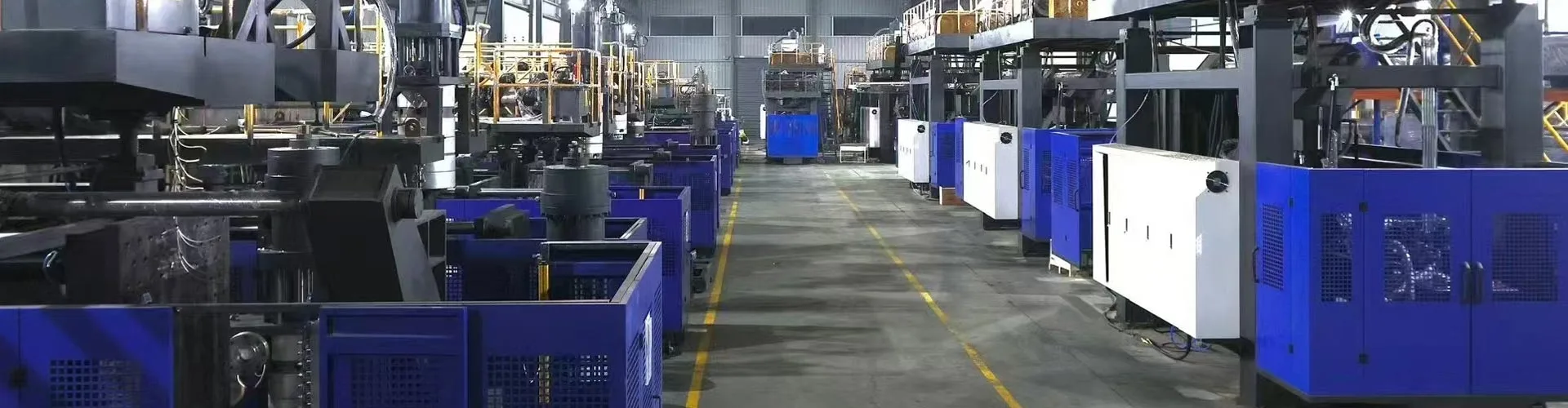
Multi-layer blow molding builds a container wall from two or more plastic layers, each doing a different job — a barrier layer to block oxygen or fuel vapour, a recycled core to cut cost, virgin skins for a clean surface. They're co-extruded together through one die head, so the wall comes out seamless and fused. You need it when one material can't do everything: a fuel tank that mustn't leak vapour, a juice bottle that has to keep oxygen out for a year, a container that has to hit recycled-content targets without contaminating what's inside. Kinggle's KGH curved-arm machines run 1 to 6 layers on containers from 5 to 30 litres.
Most plastic bottles are one material, one wall, done. Squeeze HDPE through a die, blow it up, eject. Simple, cheap, and right for the vast majority of containers. But some products ask for something a single plastic just can't give. And that's where multi-layer comes in.
We get a steady trickle of buyers who've been told they need "co-extrusion" or "a six-layer machine" and aren't sure what that actually buys them — or whether they're being upsold. So here's the plain version: what the layers do, when they're worth it, and when you're better off staying single-layer.
What "multi-layer" actually means on the factory floor
Single-layer is one extruder feeding one die head with one material. Multi-layer is several extruders — each melting a different resin at its own temperature — all feeding one shared co-extrusion die head. Inside that head, the separate melt streams get stacked into concentric layers, so the parison drops out already layered. Then it blows exactly like any other parison.
Think of it like plywood, except the layers are formed and fused in a single shot rather than glued up as sheets. And the two terms you'll hear — "multi-layer" and "co-extrusion" — describe the same thing from different ends. Co-extrusion is the method; multi-layer is the result.
Layer counts usually land on 2, 3, 5, or 6, and each number has a reason behind it. We'll get to that. First, the layers themselves.
What each layer is actually for
The barrier layer — the reason most multi-layer jobs exist
Plain HDPE and PET are good at a lot of things, but they're slightly porous to gases over time. For most products, who cares. For some, it's the whole ballgame. Oxygen creeping in spoils food. Fuel vapour creeping out of a tank breaks emissions rules and is a safety problem. An aggressive solvent slowly works its way through a wall it doesn't like.
That's what a barrier layer fixes. EVOH (ethylene vinyl alcohol) is the gold standard for blocking oxygen and hydrocarbons; PA (nylon) is the other common choice. Here's the catch that trips people up: EVOH is expensive, and it hates moisture — damp ruins its barrier performance. So you never put it on the surface. You bury it in the middle, a sliver of a millimetre thick, protected on both sides. The thin EVOH core does the blocking; cheap HDPE makes up the bulk of the wall. Small layer, big effect.
The recycled / regrind layer — cost and PPWR
Every blow molding line produces trim — the pinch-off waste at the top and tail of each part. Grind it up and you've got perfectly good material, just not material you want touching the product or showing on the outside. So you feed it back as a buried middle layer. Free input, no compromise on the surfaces that matter.
The same trick handles post-consumer recycled content. Sandwich PCR resin in the core, keep virgin food-grade plastic on the inner and outer skins, and you can hit recycled-content targets — including the EU thresholds we covered in our PPWR compliance piece — without the recycled material ever contacting what's inside the bottle. For a lot of brands chasing 2030 PCR mandates, multi-layer is the cleanest route there is.
Tie layers — the ones everyone forgets
Now the part that catches buyers out when they're costing a job. EVOH and nylon don't bond to polyethylene. Put them side by side and they'll delaminate — the layers peel apart like a laminate gone wrong, and the part's ruined.
So between every pair of materials that won't stick, you need a tie layer: a thin adhesive resin that grips both sides. This is why a "six-layer" fuel tank is really outer HDPE, regrind, tie, barrier, tie, inner HDPE. The tie layers are layers too. Leave them out of your plan and you've either got a part that falls apart or a layer count that doesn't add up. They're not optional, and they're a real line item.
Where multi-layer earns its cost
Automotive fuel tanks (the six-layer classic)
This is the textbook case. A plastic fuel tank can't let hydrocarbon vapour seep through its wall — emissions regulations don't allow it, and it's a safety matter. The standard build is HDPE structure, a regrind layer, a tie layer, an EVOH barrier, another tie layer, and an inner HDPE layer. Six layers, with the EVOH doing the permeation blocking and the tie layers holding the sandwich together. Kinggle's catalogue lists fuel tanks under auto parts, and tanks are exactly the kind of heavy, demanding part the curved-arm multi-layer machines are built to make.
Food, beverage and cosmetic packaging
A ketchup, sauce, or juice bottle that has to sit on a shelf for a year needs an oxygen barrier, or the contents oxidise and spoil. A three-layer wall (virgin / barrier / virgin) or a full five-layer build handles that. Cosmetics reach for multi-layer for a different reason too — a coloured or pearlescent outer skin over a different inner layer, or a clear "view stripe" co-extruded down the side of an opaque bottle so the user can see how much product is left. That stripe in your detergent bottle? Co-extruded.
Agrochemical and household-chemical containers
An aggressive pesticide or solvent can permeate or stress-crack a plain HDPE wall over months of storage. A barrier or fluorinated layer buys chemical resistance and shelf life, which is why a lot of agrochemical packaging is multi-layer rather than single. These daily-chemical and agrochemical bottles sit right inside Kinggle's packaging applications — the same container families the small curved-arm machines run all day.
So how many layers do you actually need?
More layers means more extruders, more cost, and more variables to tune. The right number is the fewest that does the job — not the most a salesperson can sell you. Roughly:
| Layers | Typical use | Why |
|---|---|---|
| 1 | Water, most detergents, plain jerry cans | One material does everything needed |
| 2–3 | Regrind reuse, colour/surface split, light barrier | Hide recycled core, or add a modest barrier |
| 5 | Food and beverage with full oxygen barrier | Barrier + tie layers on both sides |
| 6 | Fuel tanks, demanding permeation jobs | Barrier + ties + regrind + structure |
If a single material already meets your product's shelf life, chemical resistance, and recycled-content needs, don't pay for layers you won't use. Multi-layer is a tool for specific problems, not an upgrade for its own sake.
What multi-layer demands from the machine
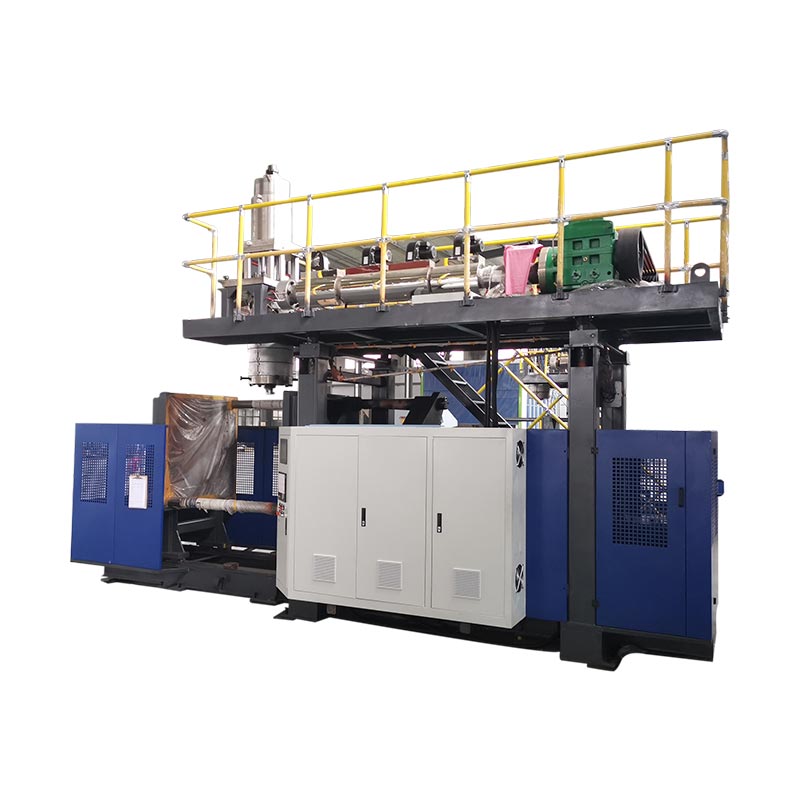
Here's the thing a layer diagram won't tell you: every layer needs its own extruder feeding the co-extrusion die head. A six-layer tank can mean five or six extruders clustered around a single head, each melting a different resin at its own temperature, each metering precisely so its layer stays an even thickness all the way around the parison. That's a fundamentally different machine from a single-layer bottle line.
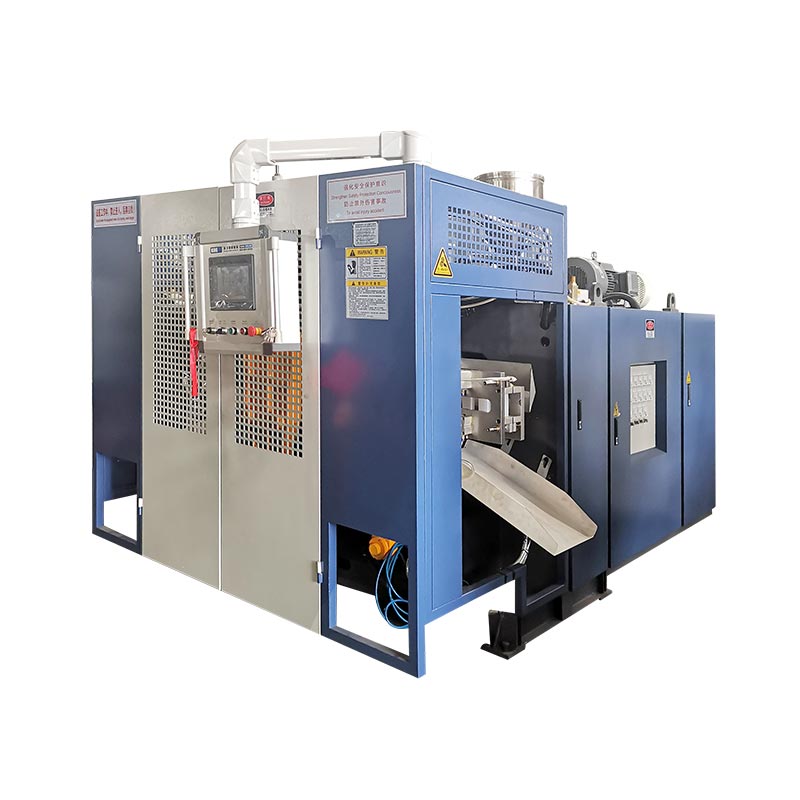
Kinggle's KGH curved-arm series is built for this work — 1 to 6 layers on containers from 5 to 30 litres. The numbers behind it are real: clamping force from 200 to 300 kN across the range, HDPE plasticising up to 300 kg/hr on the KGH30D, and MOOG-controlled wall-thickness programming. That thickness control matters even more on multi-layer than single, because you're holding several thin layers — including a barrier that might be a fraction of a millimetre — to spec at the same time, all the way around the part. Get it wrong and your barrier thins out at the shoulder, which is precisely where you don't want a gap.
It's also worth knowing what's inside the control system, because multi-layer lives or dies on precise coordination between extruders. Kinggle's machines run on industrial-grade components — Mitsubishi PLC, MOOG servo control, OMRON and Schneider electrics — the kind of kit that keeps five extruders metering in sync shift after shift.
Four mistakes we watch buyers make
- Buying layers you don't need. If plain HDPE meets your shelf life and recycled-content goals, a six-layer machine is money sitting idle. Match the layers to the actual problem.
- Forgetting tie layers in the budget. They're real layers and real cost, and leaving them out is the fastest way to a delaminating part. Count them from the start.
- Putting the barrier in the wrong place. EVOH on or near the surface, where moisture reaches it, throws away the performance you paid for. It belongs in the protected core.
- Skimping on wall-thickness control. On a thin barrier layer, sloppy thickness control means thin spots that leak. This is not where to save money.
If you're still deciding between machine types before you even get to layers, our guide to accumulator vs continuous blow molding machines is the right place to start, and the blow molding vs injection molding overview covers the process choice one level up.
Frequently asked questions
What is the difference between multi-layer and co-extrusion blow molding?
They describe the same thing. Co-extrusion is the method — several extruders each melt a different resin and feed one shared die head, which stacks them into concentric layers. Multi-layer describes the result — a container wall made of two or more fused layers. If a wall has more than one layer, it was co-extruded.
Why is the EVOH barrier layer buried in the middle instead of on the surface?
Two reasons. EVOH is expensive, so you use as little as possible — a thin core does the barrier job while cheaper polyethylene makes up the bulk. And EVOH absorbs moisture, which ruins its barrier performance, so it has to be protected on both sides by other layers. Putting it on the surface would waste it and expose it to humidity.
What are tie layers and can I skip them?
Tie layers are thin adhesive resin layers that bond materials which otherwise will not stick together — EVOH and nylon do not bond to polyethylene on their own. Skip them and the layers delaminate, peeling apart like a failed laminate. They are not optional. A six-layer fuel tank includes tie layers between every dissimilar pair, which is part of why it has six layers.
How many layers does a plastic fuel tank need?
Typically six. A common structure is an outer HDPE layer, a regrind layer, a tie layer, an EVOH barrier, a second tie layer, and an inner HDPE layer. The EVOH stops hydrocarbon vapour from permeating the wall, the tie layers hold it to the polyethylene, and the regrind layer reuses production trim.
Can I run recycled material in a multi-layer container?
Yes, and multi-layer is the cleanest way to do it. You bury recycled or post-consumer (PCR) material in a middle layer and keep virgin, food-grade resin on the inner and outer surfaces. The recycled core never touches the product or shows on the outside, so you can hit recycled-content targets without risking contamination.
Not sure how many layers your product needs?
Tell us what the container has to hold and what it has to keep in or out — oxygen, fuel vapour, an aggressive chemical, a recycled-content target — and our engineers will tell you the layer structure and which machine builds it. We've been making blow molding machines since 2002, with 15 engineers on the team.
Ask our engineers about a multi-layer setup →Multi-layer isn't fancier single-layer — it's a different tool for products a single material can't serve. Once you know what each layer is there to do, the question stops being "how many layers?" and becomes "what does this container actually have to survive?" Answer that, and the structure picks itself. Browse the full blow molding machine range when you're ready to match a machine to it.