Quick answer
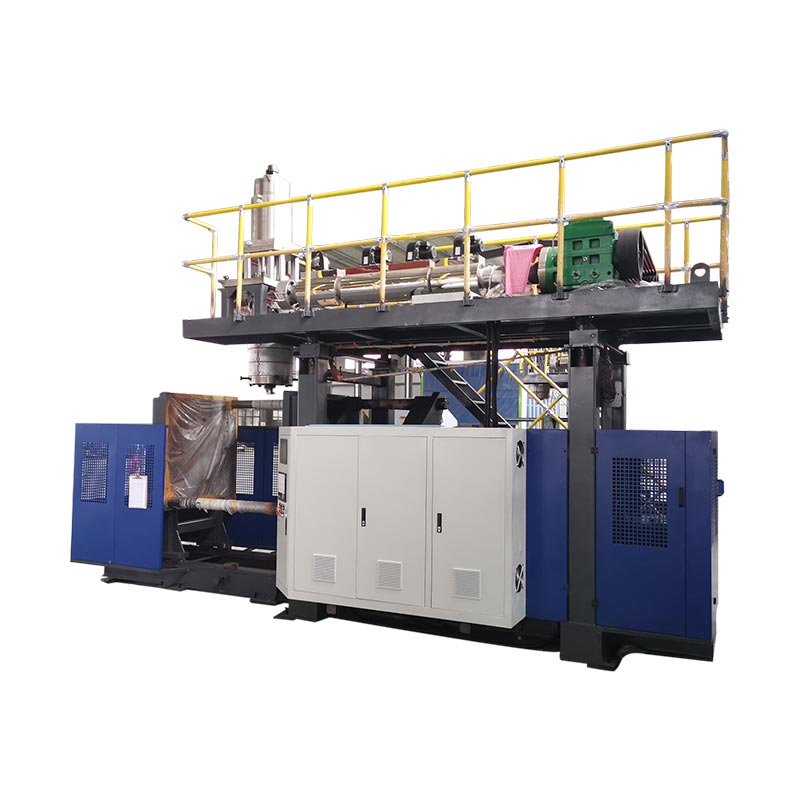
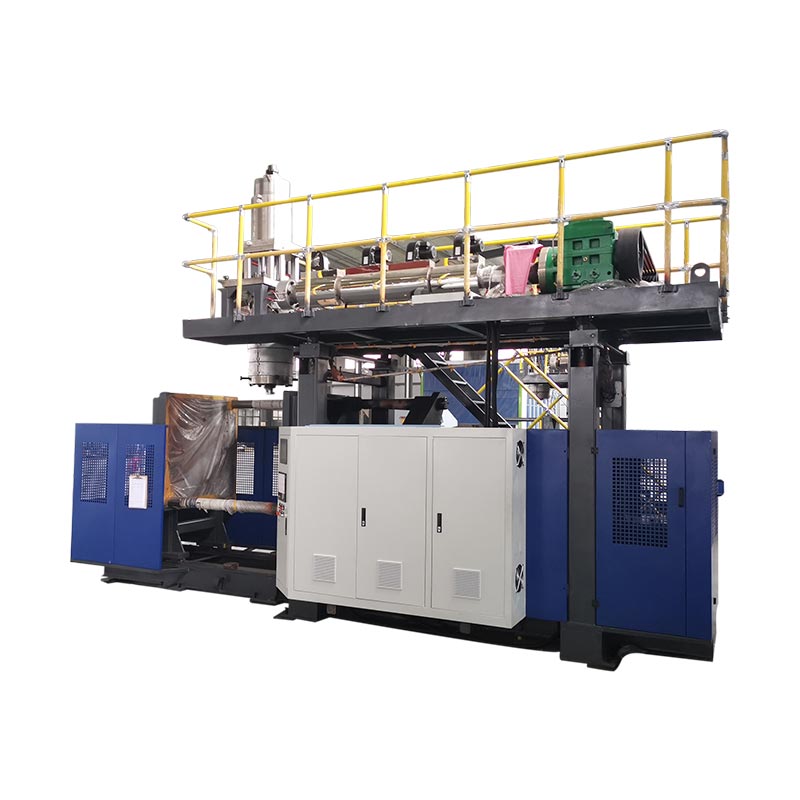
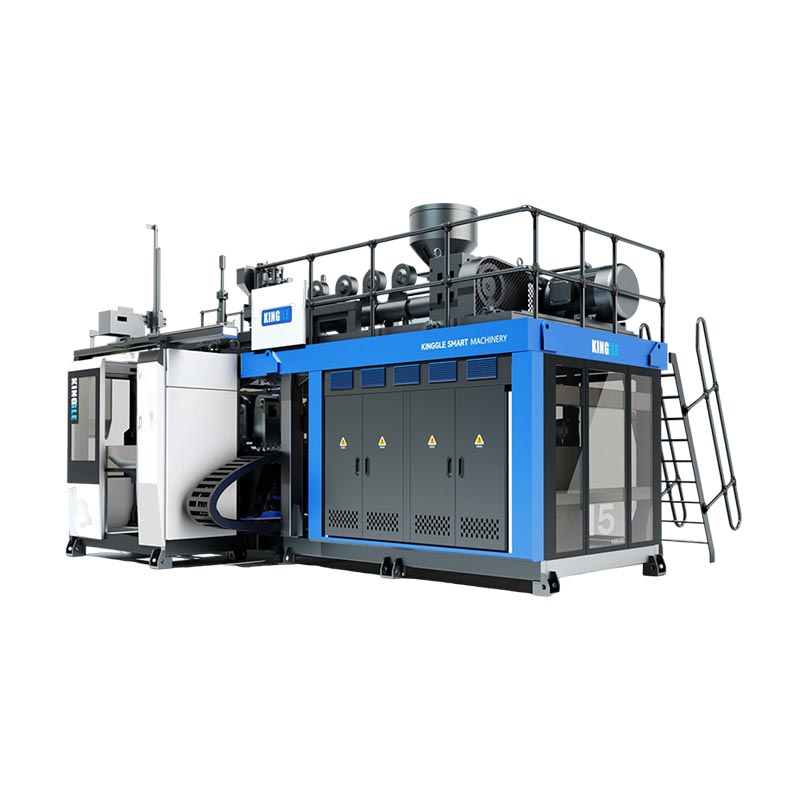
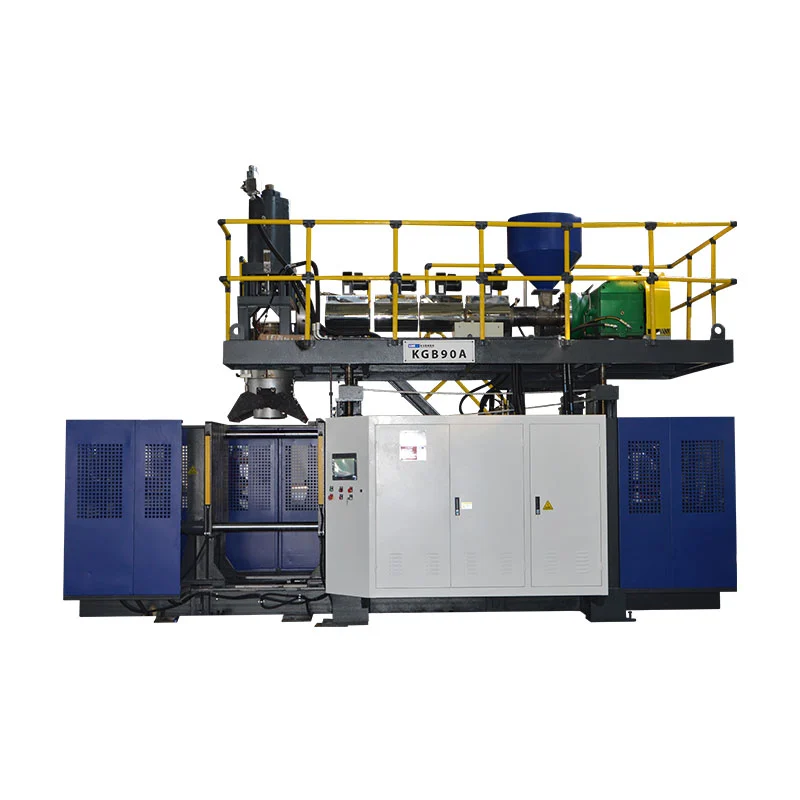
An accumulator blow molding machine stores melted plastic in a cylinder behind the die head and pushes it out as one large parison — built for heavy parts like drums, IBC tanks, and anything past about 30 litres. A continuous blow molding machine keeps the parison flowing nonstop and suits smaller, high-volume products like bottles and jerry cans up to roughly 15 litres. The real deciding factor is parison sag. On our floor, the continuous shuttle machines cover about 0.1–15 L; the accumulator series (such as the KGB80A) runs 30 L up to 1000 L IBC tanks.
People ask us this constantly: "Do I need an accumulator machine, or will a continuous one do the job?" It sounds like a small question. It isn't. Pick wrong and you either overpay for a machine that's idling most of its capacity, or you buy something that physically can't make the part you sell. Both happen. We've seen both walk through our door.
So here's the honest version, the same way we'd explain it to a customer standing on the factory floor. No fluff, just how the two machines actually behave and where each one earns its keep.
The real difference is how the parison gets made
Both machine families do extrusion blow molding. Both melt plastic, form a hollow tube called a parison, clamp a mold around it, and inflate it with air against the mold walls. That part is the same. The difference sits in one place: the die head, and how it delivers the parison.
Continuous extrusion, in plain terms
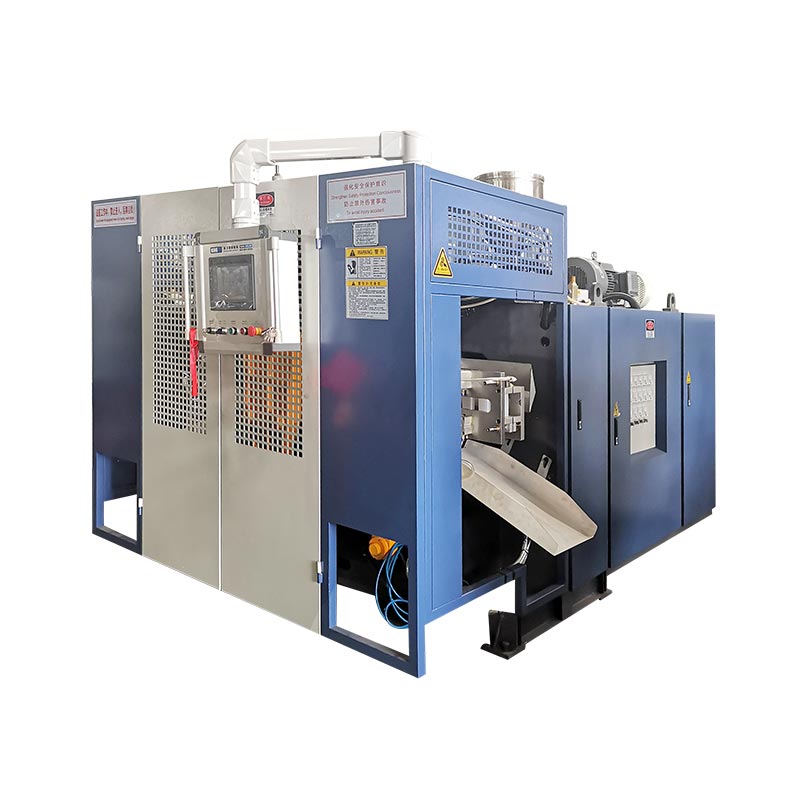
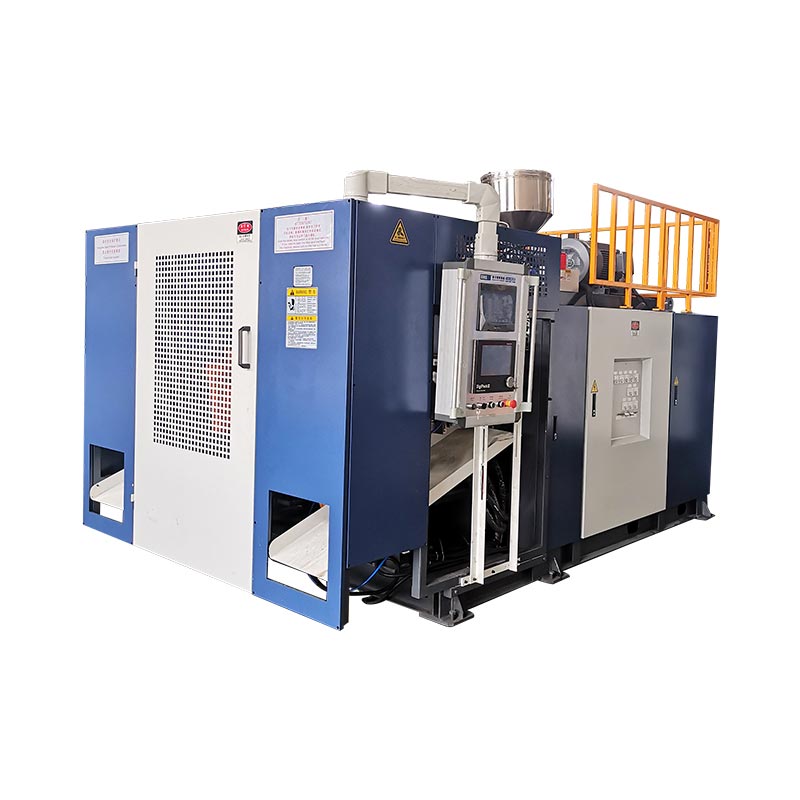
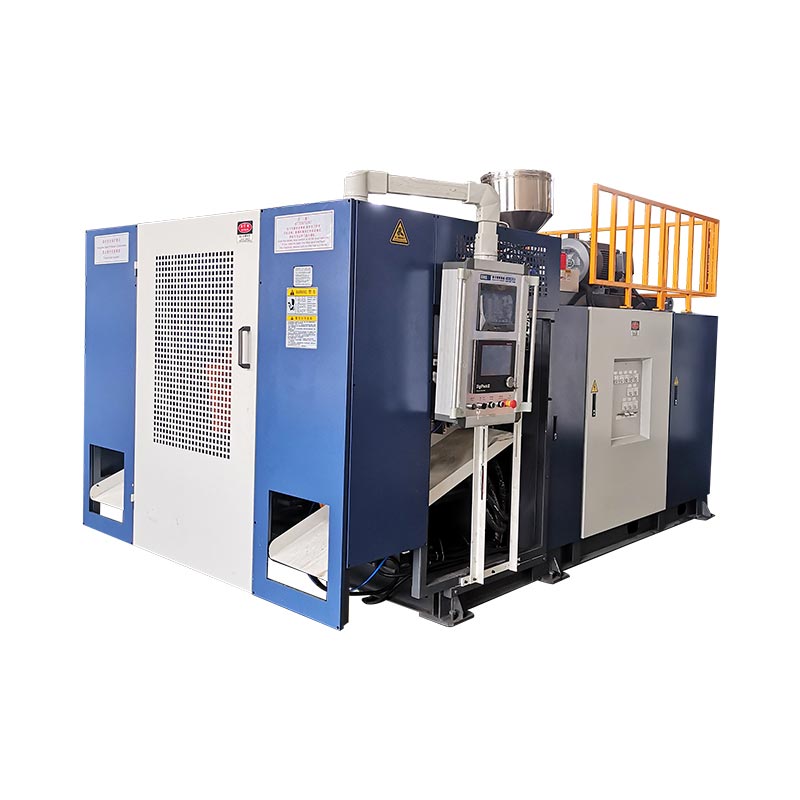
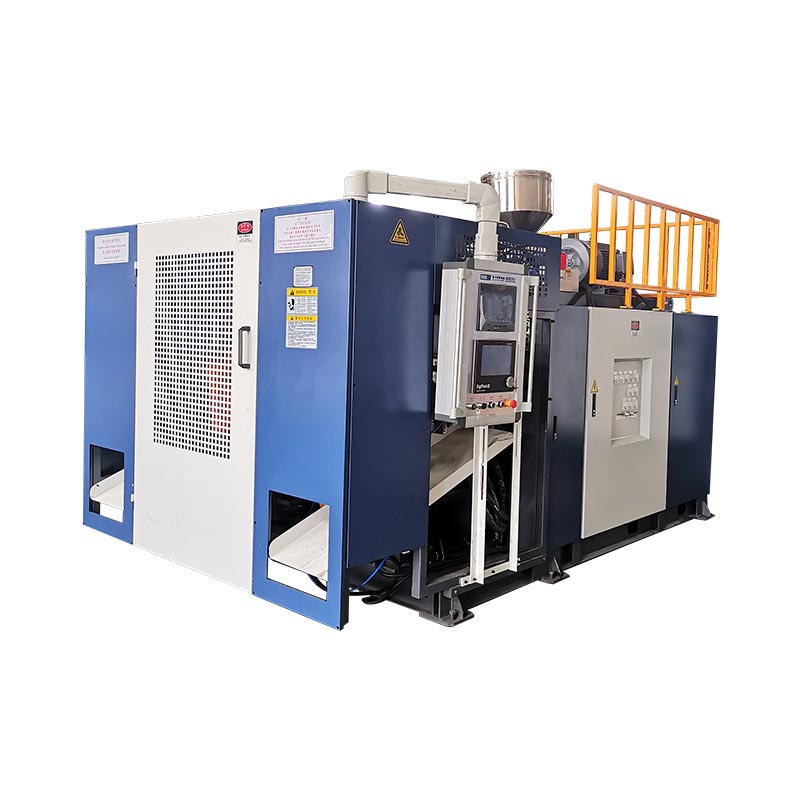
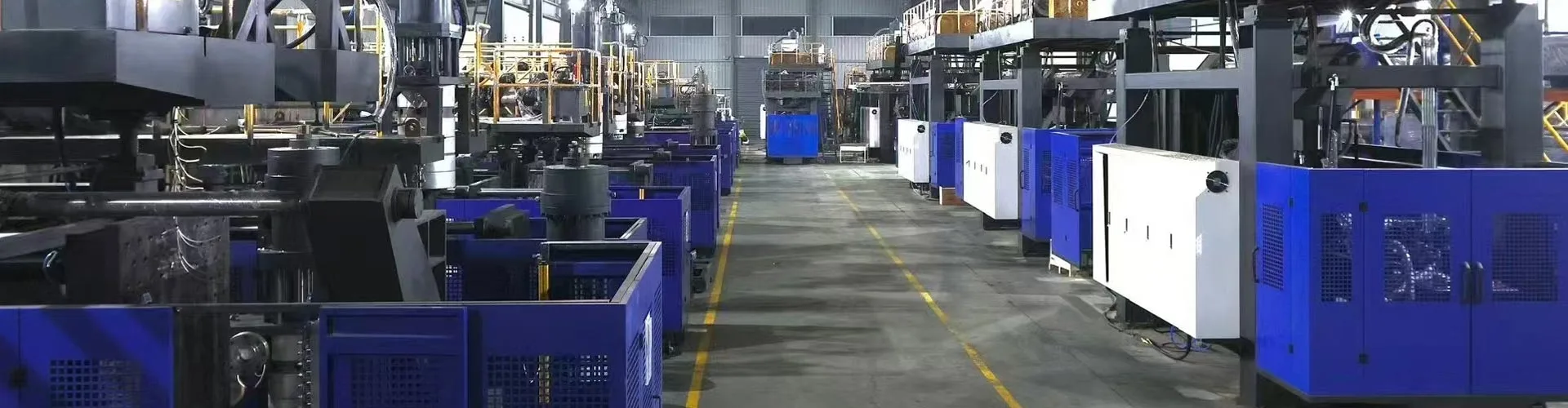
The extruder runs without stopping. Plastic flows through the die head and out the bottom as a continuous parison, hanging down like toothpaste squeezed from a tube that never lets up. Because the parison keeps coming, the molds have to do the moving — they shuttle in, clamp, and shuttle out while the next parison is already forming. That's why you'll see these sold as single station and double station machines. A double station simply means two mold stations sharing one die head, so one side blows while the other ejects. More throughput from the same extruder.
This setup is fast and it's economical for small parts. Our 2L double station machine weighs in around 4.5 tonnes; the 5L double station around 5.2 tonnes. Compact, quick-cycling, and happy running all day on bottles.
The accumulator head, in plain terms
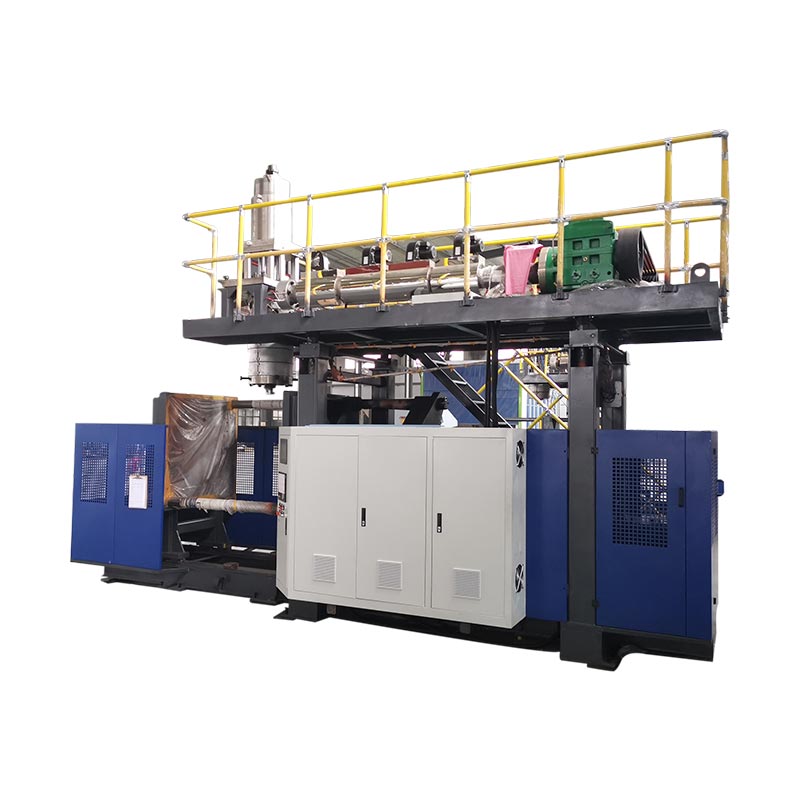
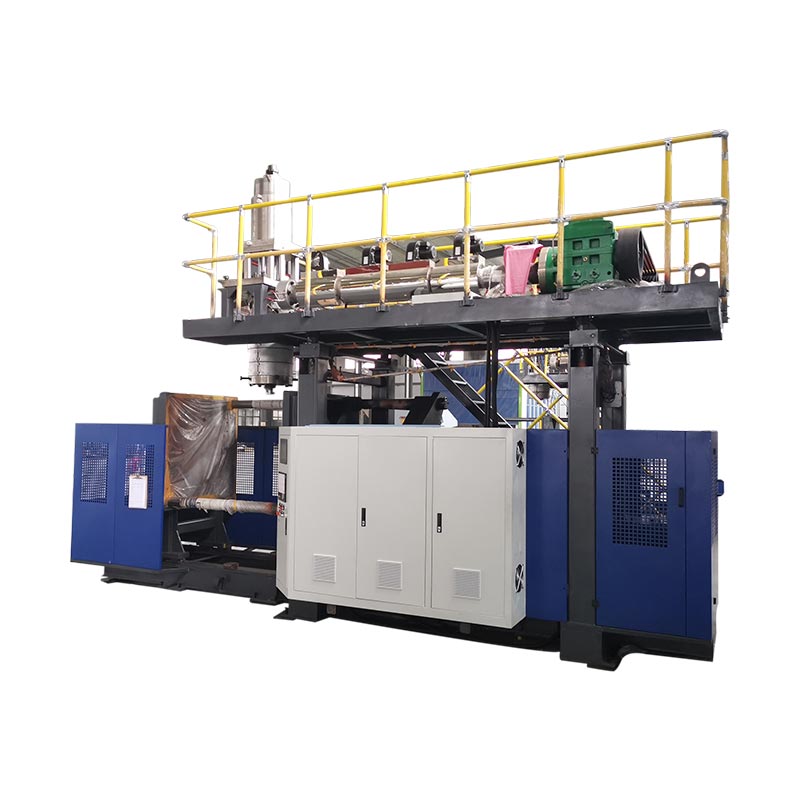
Now flip the logic. Instead of letting plastic dribble out continuously, an accumulator machine collects the melt in a storage cylinder sitting behind the die — Kinggle's own product literature calls it the "storage cylinder die head series." The melt builds up. Then a ram drives the entire charge out in one fast push, forming a big parison in a couple of seconds before gravity has a chance to ruin it.
That speed is the whole point, and it's why every large container on our line — 30 L, 60 L, 120 L, 160 L, 250 L, right up to the 1000 L IBC tank machine — uses an accumulator head. You physically cannot make those parts any other way and keep the walls even.
Why parison sag is the factor that actually decides it
Here's the bit most spec sheets skip. A parison is molten plastic, and molten plastic hangs under its own weight. For a small bottle, the parison is short and light, so it doesn't matter — it's in the mold before anything goes wrong. But make that parison big and heavy, and physics takes over. The top, which is holding up everything below it, stretches and thins. By the time the mold closes you've got a part that's too thin at the shoulder and too thick at the base. Weak where it needs to be strong.
That stretching is parison sag, and beating it is the entire reason the accumulator head exists. By storing the shot and firing it out fast, the accumulator gets a large parison into the mold before it has time to droop. A continuous die just can't push that much plastic that quickly — the parison would hang there sagging while the extruder slowly caught up.
So the question "accumulator or continuous?" is really the question "is my parison heavy enough to sag before the mold closes?" Answer that and the machine type answers itself.
Side-by-side: the two machine types at a glance
| Continuous extrusion | Accumulator head | |
|---|---|---|
| How the parison forms | Flows continuously; molds shuttle in to catch it | Stored in a cylinder, then pushed out as one fast shot |
| Best container size | ~0.1 L to 15 L | ~30 L to 1000 L and beyond |
| Typical output | High shot frequency, many small parts per hour | Fewer shots per hour, large part each shot |
| Kinggle models | 2 L / 5 L / 15 L single & double station | KGB80A 30 L, 60 L, 120 L, 160 L, 250 L, 1000 L IBC |
| Best-fit products | Bottles, daily-chemical packaging, small jerry cans | Chemical drums, IBC tanks, water tanks, large auto parts, tool boxes |
| Watch out for | Can't form large parts before they sag | Slow and power-hungry if you only run small parts |
Matching the machine to the product you actually make
Forget the brochure adjectives for a second. The only thing that matters is what you're producing and how many of them.
Where a continuous machine wins
If your bread and butter is bottles and containers up to about 15 litres — water bottles, oil bottles, detergent and daily-chemical packaging, small jerry cans — a continuous blow molding machine is almost always the right call. The cycles are quick, the footprint is smaller, and the energy bill per bottle is low. Run a multi-die head (we offer 2, 3, or 4 cavity setups on several models) and you multiply output without buying a second machine. For high-volume small packaging, nothing an accumulator does justifies its cost here.
Where an accumulator head is the only real option
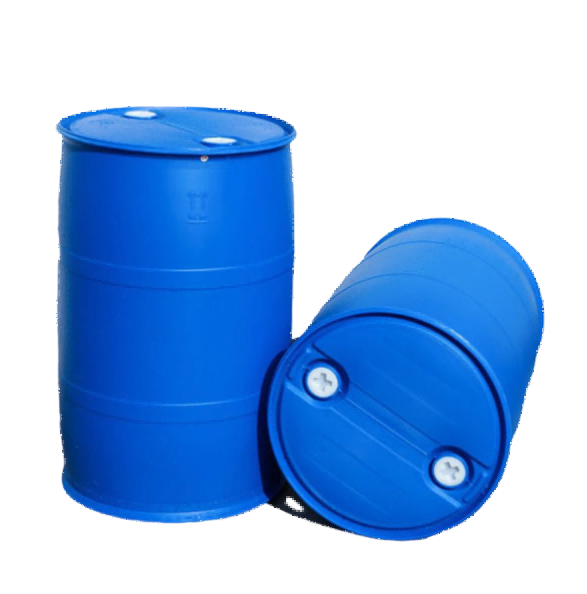
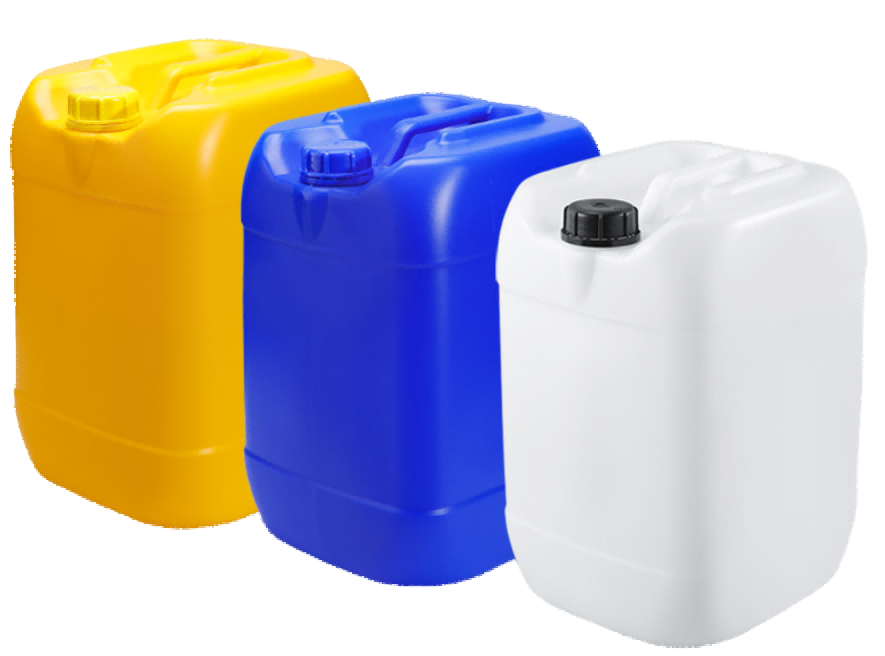
Cross into large, heavy, or structural parts and the conversation ends quickly — you need an accumulate blow molding machine. Take a real job we run on the KGB80A: a 30 L chemical drum, finished weight 1.5–1.7 kg, blown in HDPE with a 2.5–3 mm wall. That's a heavy parison. A continuous die would have it sagging before the mold ever closed. The customer needed drums that survive stacking, transport, and storage without splitting, and even wall thickness is non-negotiable for that. Storage-head machine, every time.
Same story scales up: 250 L drums, 1000 L IBC water tanks, large automotive ducting, road barriers, kayaks, big tool cases. All accumulator territory. If the part is large or has to take a load, you're choosing among accumulator machines, not deciding whether to use one.
How to read an accumulator spec sheet (using a real KGB80A as the example)
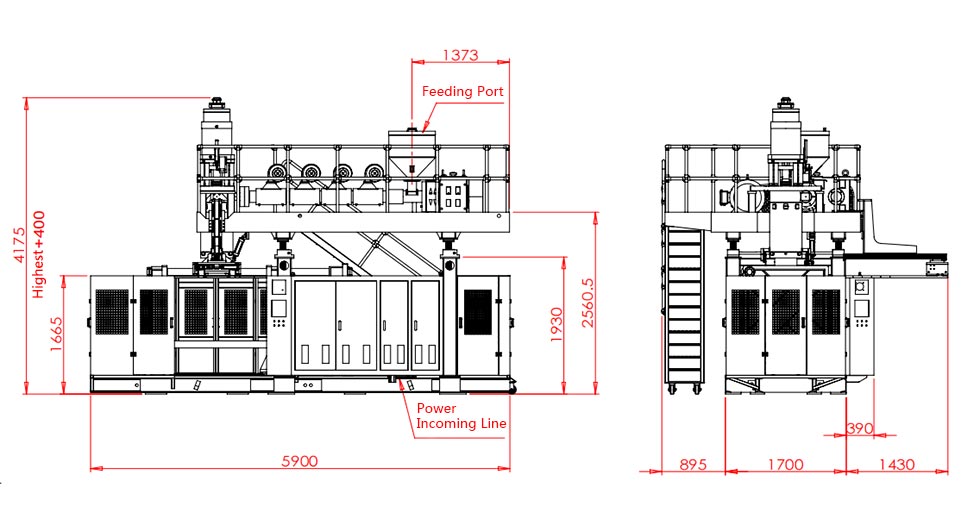
Spec tables look intimidating, but four or five numbers carry most of the decision. Let's decode the ones from our 30L accumulator machine, because real figures beat generic ones.
- Clamping force — 215 kN. This has to be greater than blow pressure times the projected area of your part, or the mold breathes open under pressure and you get flash along the seam. It's the first number to check against the part you want to make, not an afterthought.
- Accumulator capacity — 5 L. This sets the size of the shot the head can store and fire. It's the ceiling on how big a parison — and therefore how big a part — the machine can form in one go.
- Output (dry cycle) — 650 pc/hr. Read this as a theoretical ceiling, not a promise. "Dry cycle" means the machine running empty. Real output with cooling, handling, and trimming is lower, and that's normal — anyone quoting you dry-cycle numbers as production rates is rounding in their own favor.
- Screw 80 mm, L/D 24, melting 120–140 kg/hr HDPE. The screw geometry sets how much melt you can push. A 24:1 length-to-diameter ratio is a sensible all-rounder for HDPE — enough mixing and melting without overcooking the resin.
- Average energy use — 27–37 kW. A genuine, useful number for costing. Bigger accumulator machines pull more; smaller continuous ones pull less. Always think in energy per finished part, not per hour.
- MOOG 100 thickness controller. This is the wall-thickness programming, and on large parts it's the difference between pass and scrap. It varies the die gap as the parison forms, putting plastic where the part needs it and trimming it where it doesn't — directly fighting the sag problem from earlier.
Five mistakes we watch buyers make
After enough of these conversations, the same missteps come up again and again. Save yourself the trouble:
- Buying continuous to save money, then discovering it can't make the part. The cheaper machine is no bargain if your 60 L tank comes out with a paper-thin shoulder. Match the machine to the part first, price second.
- Over-sizing an accumulator for small bottles. A big storage-head machine running 1 L bottles is slow and burns energy it doesn't need to. That's a continuous job.
- Ignoring clamping force versus projected area. It's the most common cause of flash on the parting line, and it's entirely predictable before you ever buy.
- Skipping wall-thickness control on large parts. On anything heavy, a thickness controller isn't a luxury. Without it, sag wins.
- Reading dry-cycle output as real output. Plan your capacity on realistic rates, not the empty-machine maximum, or your delivery dates will slip.
If you're weighing this against other process choices entirely, our piece on the difference between blow molding and injection molding is a good companion read, and the technical requirements and tolerance guide goes deeper on what "even wall thickness" really means in numbers.
Frequently asked questions
What is the main difference between an accumulator and a continuous blow molding machine?
A continuous machine extrudes the parison without stopping, and the molds move in to catch it — that suits small, high-volume parts. An accumulator machine collects melt in a storage cylinder behind the die head, then pushes the whole shot out at once, which is what large, heavy parts need. The split is the die head, not the extruder.
What container size needs an accumulator head?
There is no single hard line, but as a rule of thumb once a part passes roughly 20–30 litres, or gets heavy enough that a hanging parison would stretch and thin before the mold closes, you need an accumulator head. Our continuous shuttle machines cover roughly 0.1 to 15 litres; our accumulator series runs from 30 litres up to 1000-litre IBC tanks.
Can one machine make both large drums and small bottles?
Not well. A machine sized for 250-litre drums is slow and energy-hungry on small bottles, and a small continuous machine simply cannot form a large parison before it sags. Most plants run the right tool for each job rather than forcing one machine to cover both ends.
Does an accumulator machine use more energy than a continuous one?
Per machine, usually yes, because it is moving more plastic and clamping larger molds — our 30-litre KGB80A averages 27 to 37 kW, and bigger models draw more. But per part it can be efficient, since one shot produces a large container. Judge energy per finished part, not per hour.
How do I read clamping force when comparing blow molding machines?
Clamping force has to be greater than the blow pressure multiplied by the projected area of the part, or the mold opens slightly under pressure and you get flash along the parting line. The KGB80A provides 215 kN for parts up to 30 litres. If you are quoted a machine with less clamping force than your part needs, the price saving is not worth it.
Not sure which machine fits your part?
Send us the container — volume, material, wall thickness, and how many you need per hour — and our engineers will tell you straight whether it's a continuous or accumulator job, and which model fits. We've been building blow molding machines since 2002, with 15 engineers on the team.
Get a machine recommendation →One last thing. The two machine types aren't competitors — they're different tools for different jobs, and plenty of plants run both: continuous lines for their bottle work, an accumulator or two for the big stuff. Once you frame the decision around parison weight and the part you actually sell, the rest falls into place. Browse the full blow molding machine range if you want to see where your product lands.