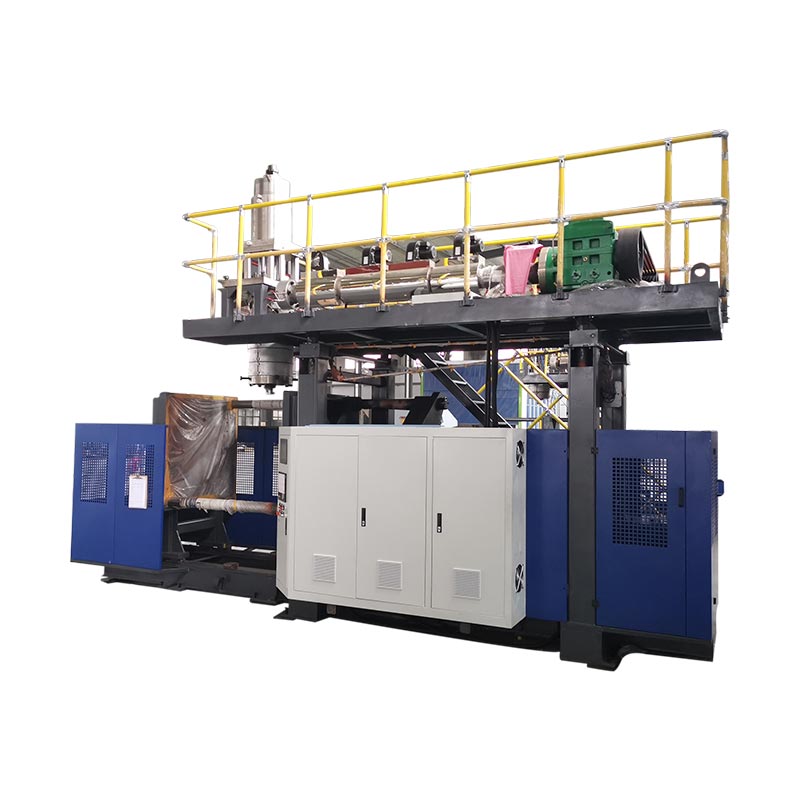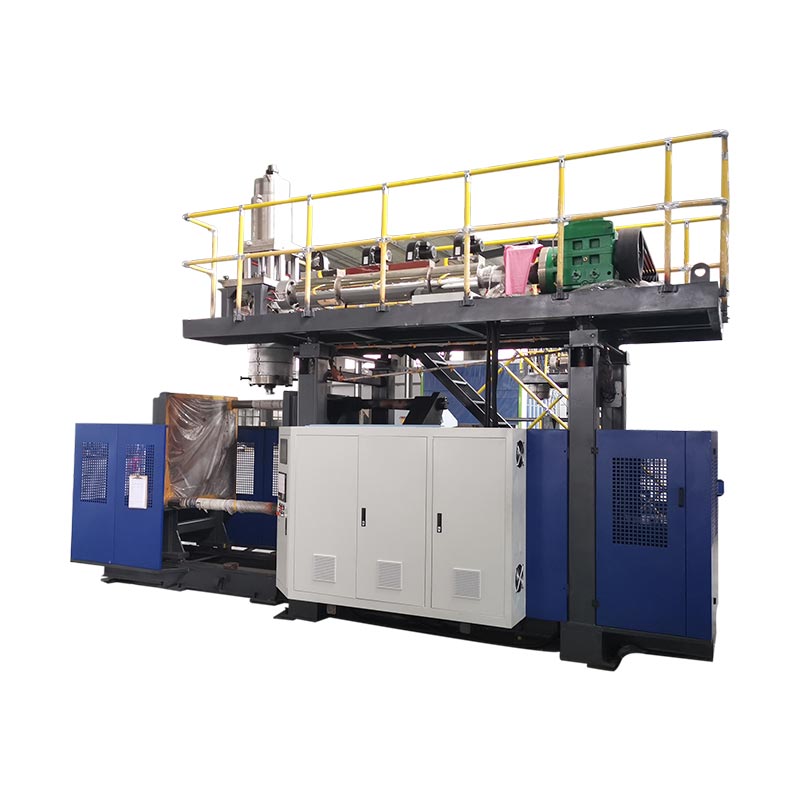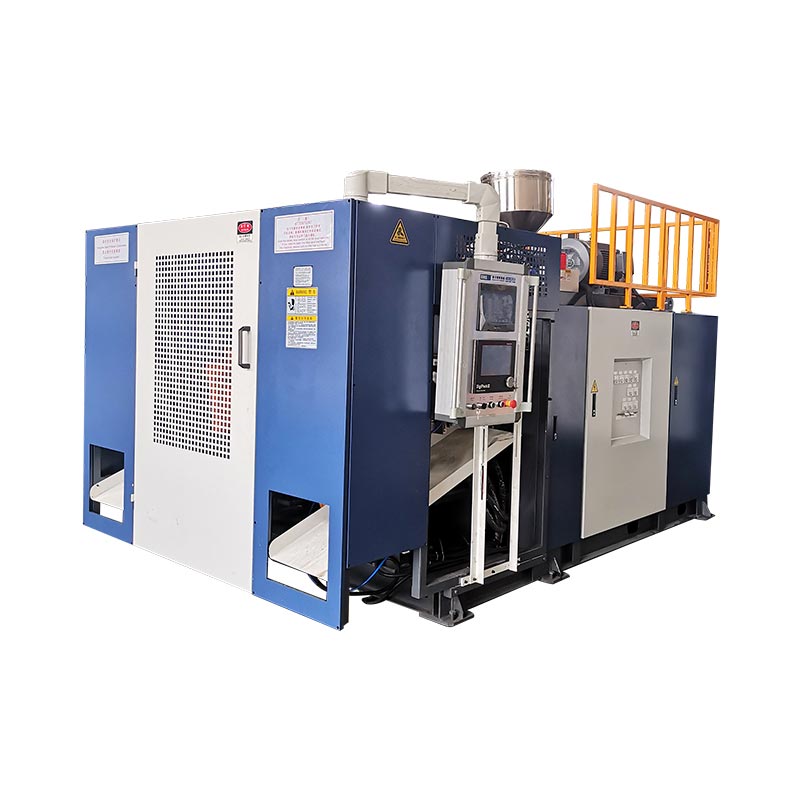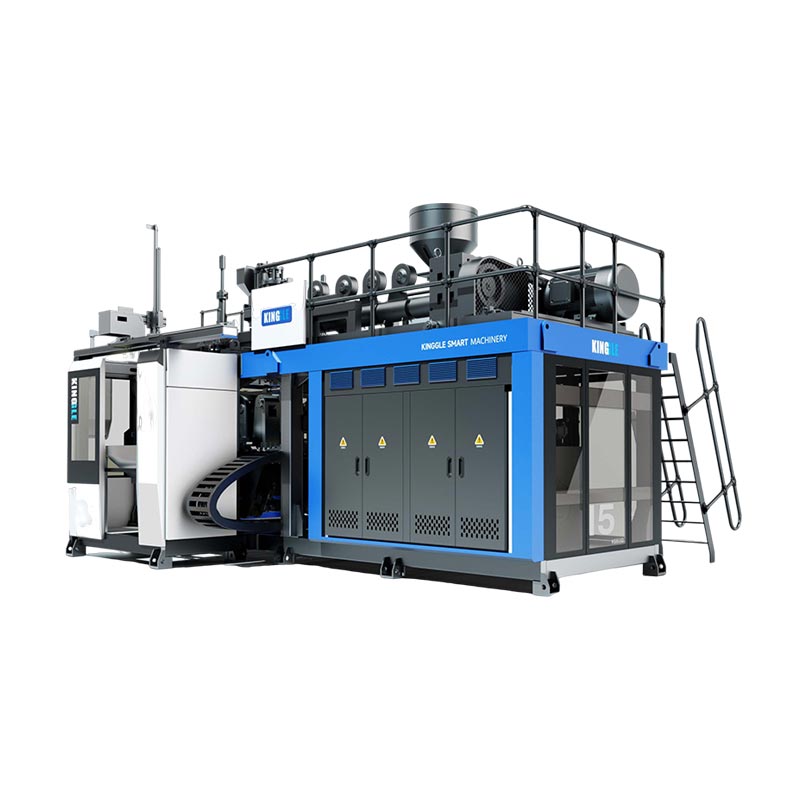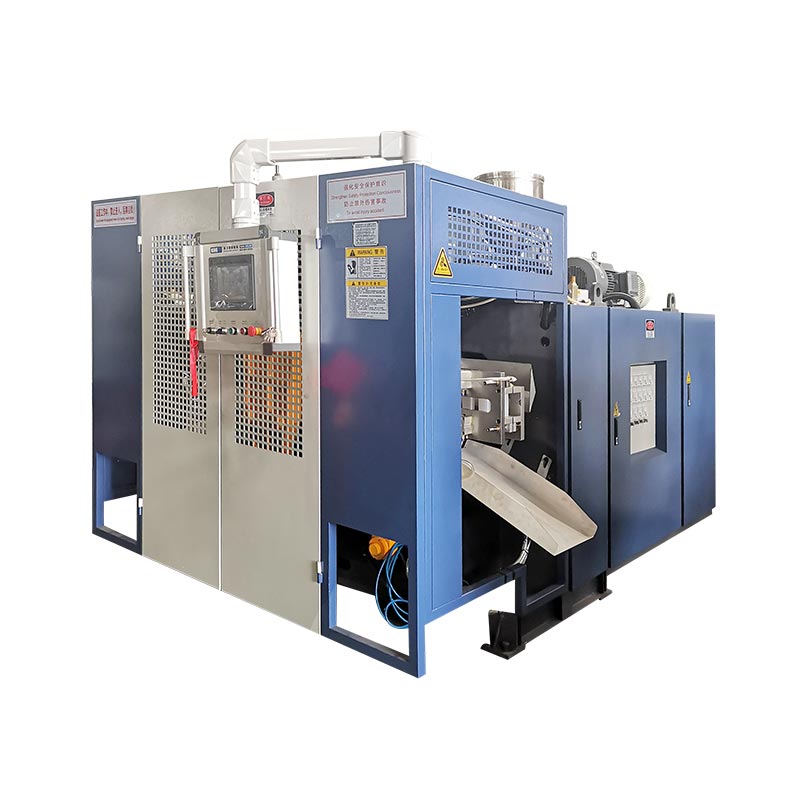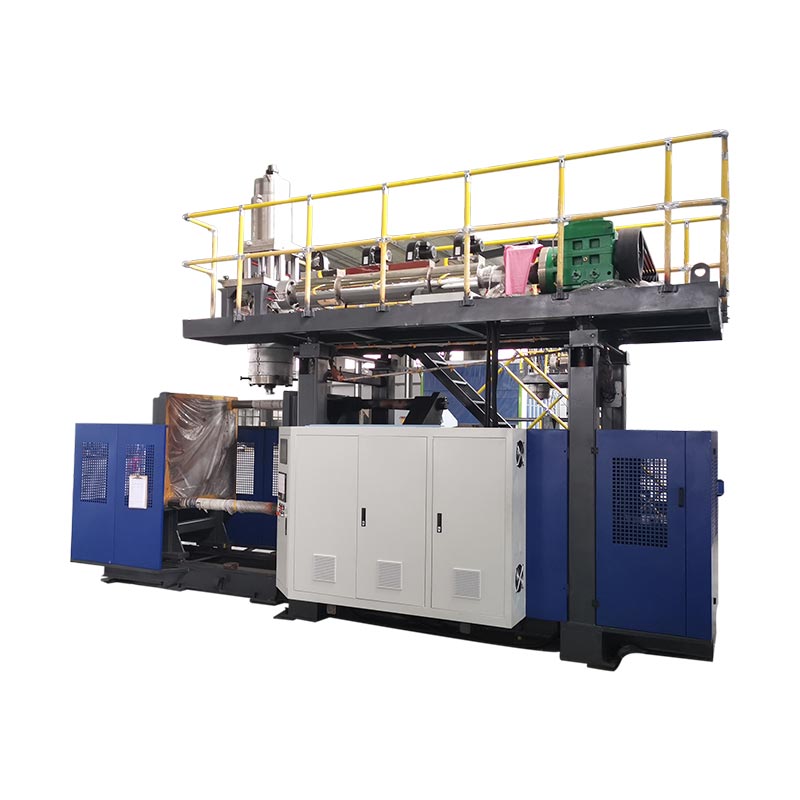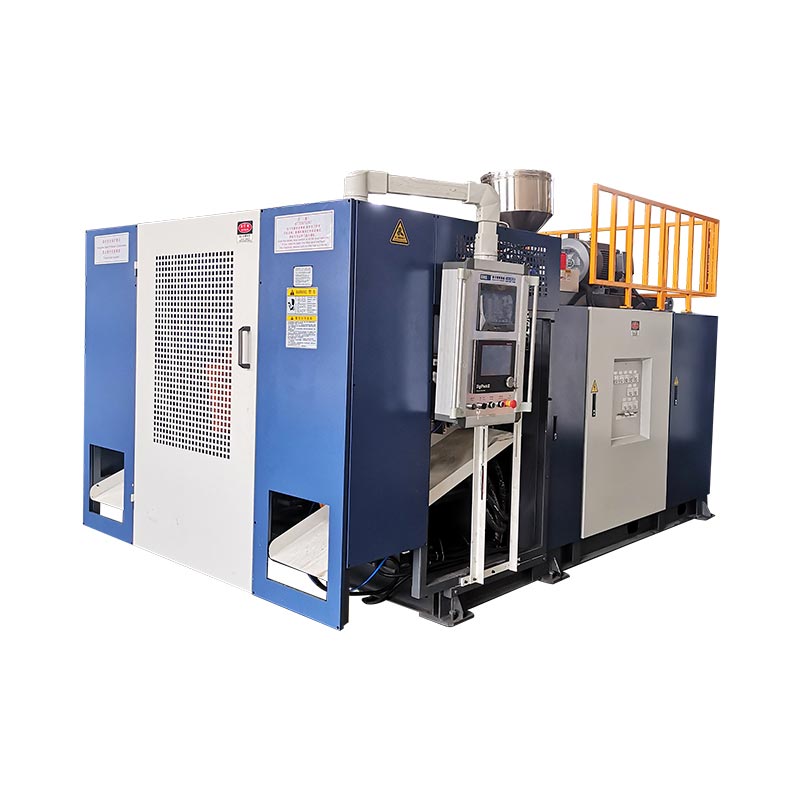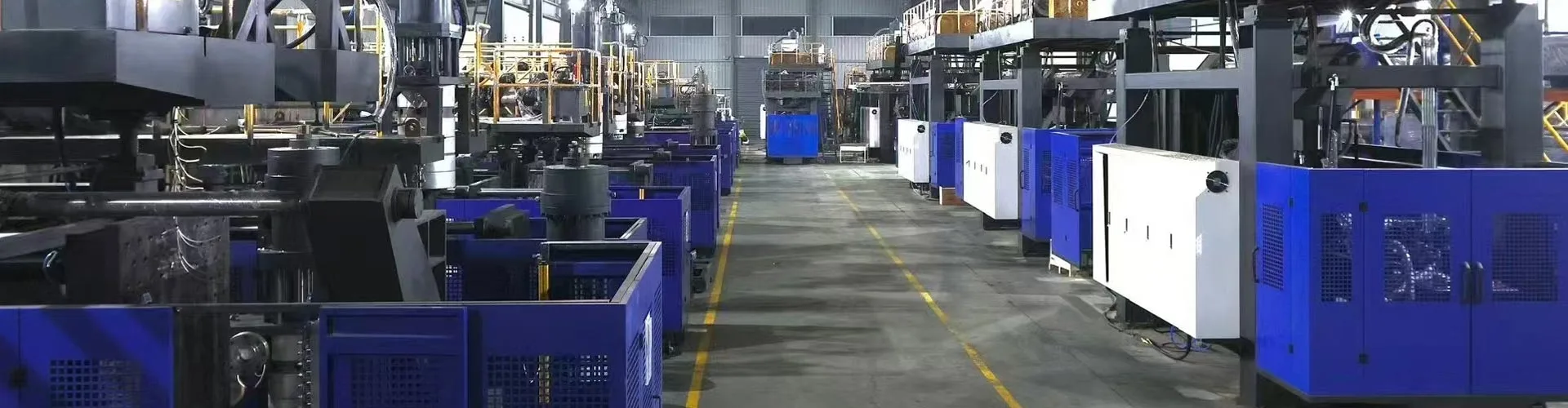
The three main types of blow molding machines are extrusion blow molding (EBM), injection blow molding (IBM), and injection stretch blow molding (ISBM). EBM covers the widest range — from small bottles to 2000-liter tanks — and splits into continuous machines for small parts and accumulator machines for large ones. IBM makes small bottles with precise necks. ISBM makes clear PET bottles. Your product decides the type. Find it in the table below.
Every hollow plastic product comes off one of three machine families. Pick the right one, and your line runs lean for years. Pick the wrong one, and no setting will save you.
Buyers often reach us after weeks of confusing research. Most articles list the three types, describe each in two sentences, and stop. Nobody explains the sub-types — and for large containers, the sub-type is the real decision.
This guide fixes that. We build extrusion blow molding machines, so we know that family from the inside. For the other two types, we tell you what they do well and when to look elsewhere — including away from us.
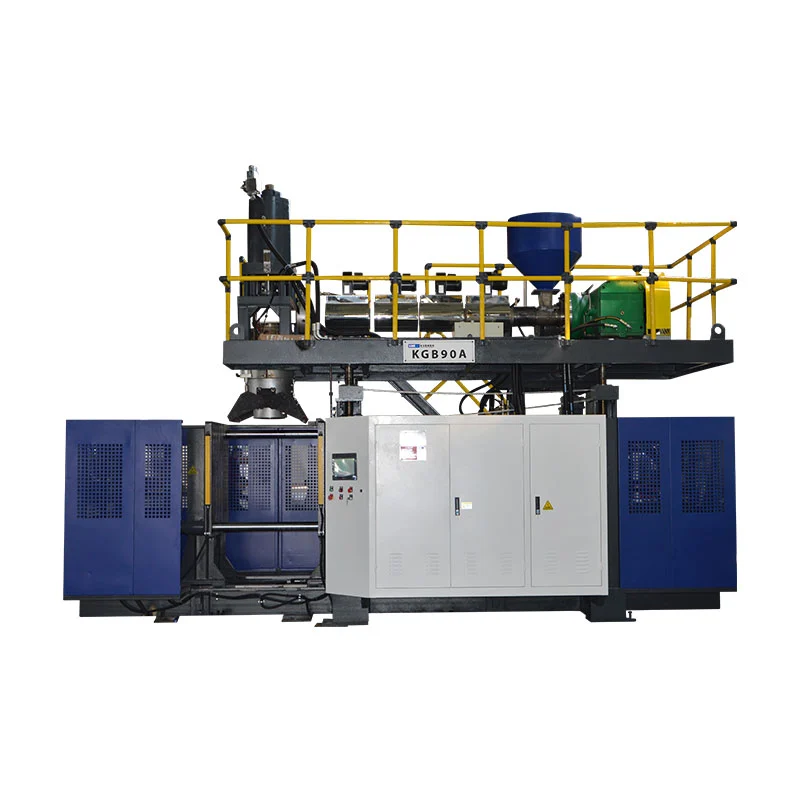
The three main types at a glance
| EBM | IBM | ISBM | |
|---|---|---|---|
| How it works | Extrudes a tube (parison), inflates it in a mold | Injects a preform, then blows it | Injects a PET preform, stretches and blows it |
| Size range | Widest — small bottles to 2000 L tanks | Small — typically under 1 L | Small to mid — water and beverage bottles |
| Signature strength | Large parts, handles, multi-layer walls | Precise necks, no trim scrap | Clear, strong, light PET bottles |
| Typical materials | HDPE, PP, PVC, HMWHDPE | HDPE, PP, PS | PET |
| Typical products | Jerry cans, drums, IBC tanks, fuel tanks, toys | Pill bottles, cosmetic jars, droppers | Water, soda, juice, edible oil bottles |
Extrusion blow molding (EBM)
An extrusion blow molding machine melts plastic, pushes it through a die as a hollow tube called a parison, then closes a mold around the tube and inflates it with air. The plastic takes the mold's shape, cools, and ejects.
EBM covers more products than the other two types combined. It handles handles (the built-in kind on jerry cans), multi-layer walls, and sizes no other process reaches. It also runs the cheapest tooling of the three for comparable parts.
The family splits into two branches, and this split matters more than most buyers realize. We compared them in depth in our accumulator vs continuous guide — here is the short version.
Continuous extrusion machines
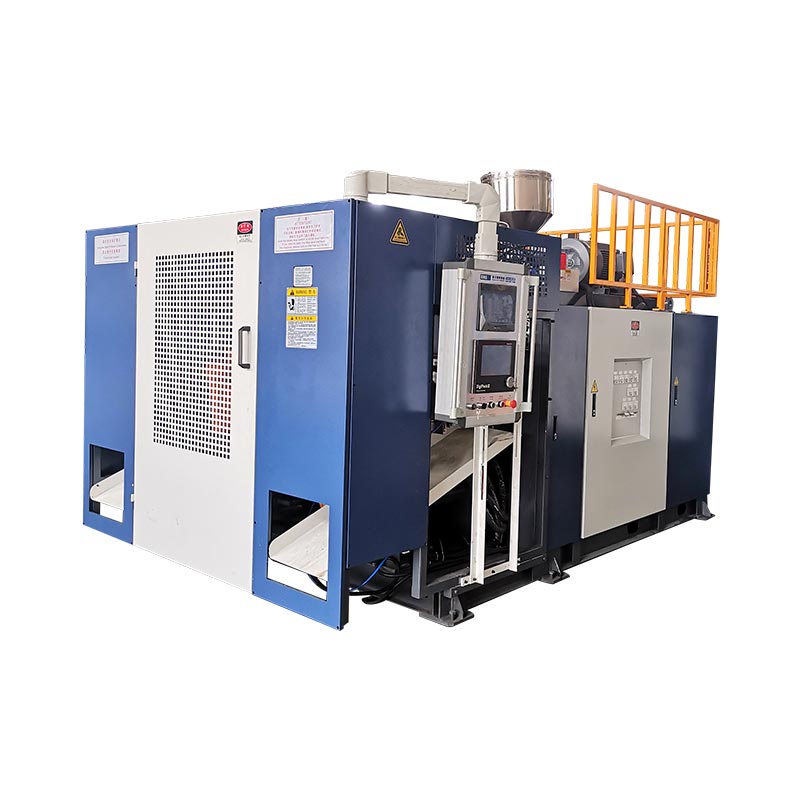
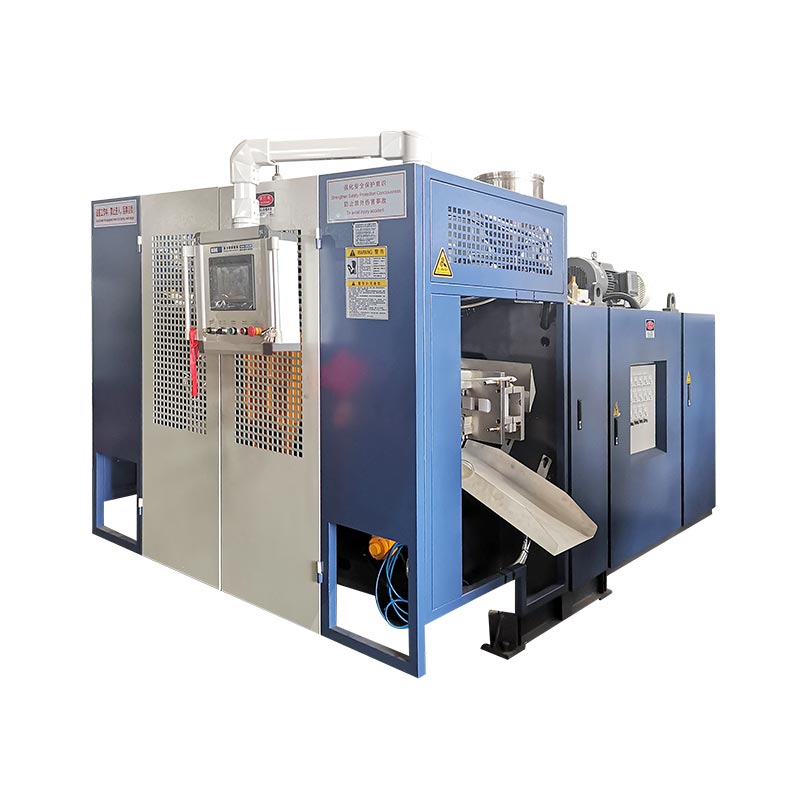
Continuous machines extrude the parison nonstop, and the molds shuttle in to catch it. They excel at small containers in high volumes — bottles, daily-chemical packaging, jerry cans up to about 15 liters.
Two builds exist in our range. Mold-moving machines handle 2–15 L with clamping from 40 to 165 kN. Curved-arm machines add speed and 1–6 layer co-extrusion for 5–30 L parts. Browse the continuous machine range for the full lineup.
Accumulator (storage head) machines
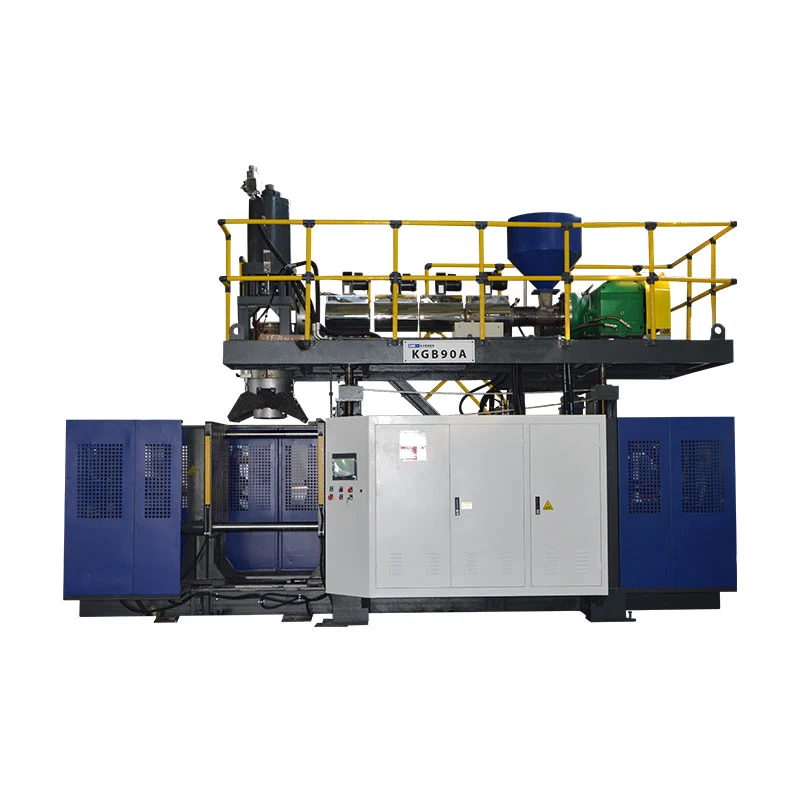
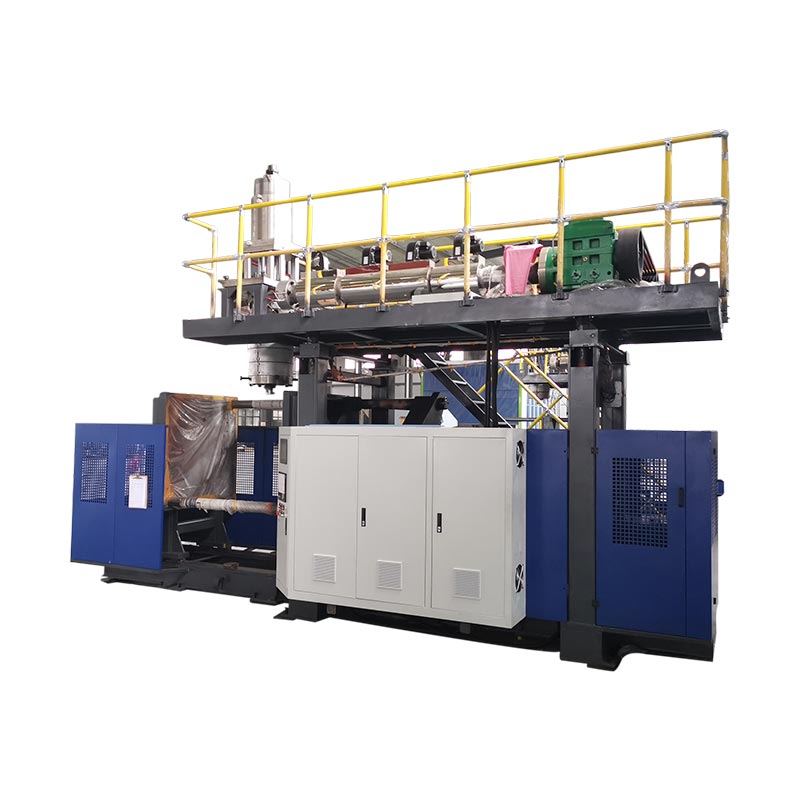
Accumulator machines collect a full charge of melt in a storage cylinder, then fire it out in one fast shot. That speed forms a large parison before gravity stretches and thins it. Large parts have no other route.
Real numbers show the scale. Our KGB80A makes 30 L drums with 215 kN of clamping and a 5 L accumulator. The three-cylinder KGS1000L-IBC makes 1000 L IBC tanks with 1000 kN of clamping and twin 100 mm screws. The accumulator range tops out at 2000 L containers and 1800 kN.
Injection blow molding (IBM)
An injection blow molding machine works in two steps on one machine. First, it injection-molds a solid preform with a finished neck. Then it transfers the hot preform to a blow station and inflates the body.
The payoff is precision. The neck comes out injection-molded, so threads and sealing surfaces hit exact dimensions every shot. IBM also produces no pinch-off scrap, since nothing gets trimmed.
The trade-off is size. IBM suits small containers, typically under one liter — pill bottles, cosmetic jars, dropper bottles. For anything with a handle or real volume, EBM takes over. Kinggle focuses on EBM; if your product is a 100 ml pharma bottle, an IBM specialist serves you better, and we will say so.
Injection stretch blow molding (ISBM)
An injection stretch blow molding machine makes the clear PET bottles you drink from. It heats a PET preform, stretches it lengthwise with a rod, and blows it outward at the same time. That two-direction stretch aligns the polymer chains.
Alignment is the magic. It gives PET its glass-like clarity, its strength, and its light weight — a soda bottle survives pressurized carbonation at a few dozen grams.
ISBM runs in two setups. Single-stage machines mold and blow the preform in one machine, which suits smaller runs and custom shapes. Two-stage lines buy or mold preforms separately and blow them at high speed — the standard for mass beverage production. PET beverage work lives here, not in EBM.
Which machine type makes your product?
Readers arrive with a product, not a process. So flip the table. Find your product on the left, and read your machine type on the right.
| Your product | Machine type | Why |
|---|---|---|
| PET water / soda bottle | ISBM | Stretch gives PET clarity and strength |
| Pill bottle, cosmetic jar | IBM | Exact necks, no trim scrap |
| Detergent / shampoo bottle | EBM — continuous | Fast cycles, handles, colors, view stripes |
| Jerry can (1–15 L) | EBM — continuous | Built-in handles, high output |
| Chemical drum (30–250 L) | EBM — accumulator | Heavy parison needs a stored shot |
| IBC tank (1000 L) | EBM — accumulator, 3-cylinder | Only route to a parison this large |
| Automotive fuel tank | EBM — accumulator, multi-layer | Six-layer wall blocks fuel vapor |
| Water tank, kayak, road barrier | EBM — accumulator | See our blow vs rotational molding comparison |
One more fork sits upstream of all this. If your part could be solid instead of hollow, read our blow molding vs injection molding guide first.
Buying considerations by type
Machine type sets the shape of your investment, not just the process. Purchasing managers should weigh four factors before requesting a quotation from any blow molding machine manufacturer.
Price structure. Within EBM, price scales with container size, clamping force, station count, and layer count. A bottle machine and an IBC line differ by an order of magnitude. No honest supplier quotes a price before seeing your part — cost depends on machine model and production requirements.
Energy consumption. Energy scales with machine size. Our catalogue lists real averages: 12–18 kW on a 2 L machine, 27–37 kW on the 30 L KGB80A, 110–150 kW on the IBC line. Ask every supplier for the same figure, then compare energy per finished part, not per hour.
Lead time and after-sales. Large custom machines take longer to build than standard bottle machines. Ask who installs the machine, who trains your operators, and how fast spare parts ship to your country. A machine without support is a future problem with a nameplate.
Supplier depth. Ask how many engineers the manufacturer employs and which component brands sit inside the machine. Kinggle builds with Mitsubishi PLCs, MOOG servo control, and OMRON and Schneider electrics, and lists them openly. A supplier who hides the component sheet has a reason.
Three mistakes first-time buyers make
Choosing the type by price instead of product. A cheaper machine of the wrong type makes zero sellable parts. Lock the type first. Negotiate price second.
Ignoring the EBM sub-type. "An extrusion machine" is not a specification. A continuous machine cannot form a 60 L drum, and an oversized accumulator wastes energy on bottles. Our five-step selection guide walks the sizing math.
Skipping the defect conversation. Each type fails in its own way, and the machine spec decides how often. Undersized clamping brings flash on every shot. Read our defects troubleshooting guide before you sign, and ask your supplier how the machine prevents each failure.
Frequently asked questions
What are the main types of blow molding machines?
The three main types of blow molding machines are extrusion blow molding (EBM), injection blow molding (IBM), and injection stretch blow molding (ISBM). EBM covers the widest product range and splits into continuous machines for small containers and accumulator machines for large parts like drums and IBC tanks. IBM makes small bottles with precise necks. ISBM makes clear PET bottles.
What is the difference between extrusion and injection blow molding?
Extrusion blow molding forms a hollow tube of molten plastic, then inflates it inside a mold. Injection blow molding first injection-molds a solid preform with a finished neck, then blows the preform into its final shape. EBM handles the widest size range, from bottles to 2000-liter tanks. IBM suits small bottles that need exact neck dimensions, such as pharmaceutical containers.
Which blow molding machine type is best for large containers like drums and IBC tanks?
Accumulator (storage head) extrusion blow molding machines make large containers. The accumulator stores a full charge of melt, then fires it out fast — before the heavy parison stretches and thins under its own weight. Kinggle's accumulator range runs from 20-liter machines to three-cylinder systems for 1000-liter IBC tanks and 2000-liter containers.
What type of blow molding machine makes PET water bottles?
Injection stretch blow molding (ISBM) machines make clear PET water and beverage bottles. The process stretches a heated preform lengthwise while blowing it, which aligns the polymer and gives PET its clarity and strength. Two-stage ISBM, where preforms are molded separately and blown later, dominates high-volume beverage production.
What does a blow molding machine cost?
Cost depends on the machine type and specification. Within extrusion blow molding, price scales with container size, clamping force, station count, layer count, and the automation around the machine. A small bottle machine and a 1000-liter IBC line differ by an order of magnitude. The fastest route to a real number is a specified quotation based on your part's volume, material, wall thickness, and target output.
Know your product, not sure about the machine?
If you are evaluating a blow molding machine for your production line, our engineering team can help you confirm the right type and configuration based on your product size, material, and production goals. Send the part details and we will respond with a specified recommendation — including an honest referral if your product belongs on a machine we do not build. Building extrusion blow molding machines since 2002, with 15 engineers on the team.
Ask which machine fits your product →Three types, one rule: the product picks the machine. PET bottles go to ISBM. Precise small necks go to IBM. Everything else — from shampoo bottles to 2000-liter tanks — belongs to extrusion blow molding, split between continuous and accumulator machines. Find your product in the lookup table, then size the machine with the selection guide.