Calculate blow molding cost per unit by adding all costs assigned to a defined production period, then dividing by the containers that pass the agreed acceptance checks in that same period. Include resin consumed by flash and rejects, electricity, paid labor, machine overhead and tooling allocation. A low material price or fast dry cycle means little if accepted output falls.
A unit-cost estimate should survive questions from purchasing and production. Where did the resin go? Which meter was read? Did paid idle time count? How many bottles passed inspection? This method makes those questions answerable without pretending there is a universal price per bottle.
Begin with one production boundary
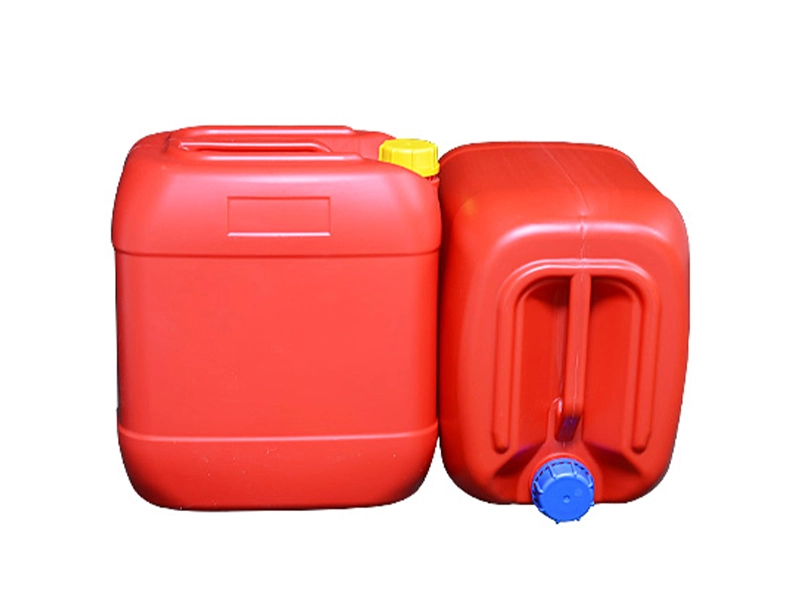
“Cost per bottle” is incomplete until the bottle and accounting boundary are named. A container taken directly from a mold is different from a trimmed, leak-tested, packed container. If a quotation promises saleable units, the denominator should match that promise. Count accepted units at the agreed exit point and list every downstream operation paid for in the numerator.
Choose a practical period: one shift for a trial, an entire order for a commercial run, or a month for a stable product family. Record start and end timestamps. An eight-hour payroll shift might have seven hours of actual molding after a nonproduction break and a stop. Labor and overhead may still apply to all eight booked hours. Show both clocks instead of quietly selecting the more flattering one.
Decide what the machine cell includes. Is resin fed into the extruder? Does the cell include a compressor, chiller, grinder, trimming station and leak tester? A buyer comparing two offers needs the same boundary for both. If one cost sheet includes factory compressed air and another treats it as free, the difference is accounting, not necessarily machine efficiency.
First-pass acceptance is usually the cleanest operational measure. A rejected bottle reworked into a saleable part can be recorded separately, with its added rework cost. Do not count it as both an original good bottle and a later recovered bottle. Parts produced before the period but inspected during it need an opening-work-in-process adjustment.
Product mix matters. If a machine runs 500 ml, 1 L and 2 L containers in one shift, one blended average hides material and cycle differences. Record each product revision, material, color and mold separately where possible. Allocate truly shared costs by a stated rule, such as occupied machine hours, rather than spreading them evenly across products with different demands.
For equipment selection, compare this worksheet with the machine quotation and its itemized scope. A purchase quote identifies supplied equipment and services. A manufacturing cost sheet estimates recurring cost to make accepted containers on a defined configuration. They answer related but different decisions.
Resin cost starts at the hopper, not at the finished bottle
The finished part's net mass is only one destination for material. Extrusion blow molding also creates flash at the neck, tail and parting line; startup purge, rejected containers and line-cleaning material may add further loss. Multiply net bottle weight by accepted count and the result can understate purchased resin. The strongest figure comes from weighed opening inventory, documented additions and weighed closing inventory.
Gross mass per molded unit = material processed during the run ÷ total molded units
Weigh representative untrimmed moldings when the process is stable. Separate the bottle from top and bottom flash, then weigh each stream. Record purge and reject weight separately. If a grinder returns trim to the process, keep a mass balance for recovered material; a grinder does not turn scrap into a zero-cost input. It uses electricity, requires handling, and must fit the approved material specification.
A correct worksheet distinguishes purchased resin from material circulated internally. If 20 kg of trim is ground and later fed back into the job, subtracting 20 kg as an immediate cash credit exaggerates savings if the material remains in inventory or cannot be used. Count virgin and approved recycled input, usable opening inventory, closing inventory and any verified scrap-sale credit. Rework and contamination losses need their own record.
Do not cut the entire parison weight before checking the part. Kinggle's parison programming guide explains that die-gap control can place material at corners, handles, shoulders and pinch-off areas without thickening the full container. The practical target is the lightest repeatable part that passes the approved minimum-wall and functional tests, not the lightest isolated sample.
That judgment needs measurements. Compare a thickness map at fixed locations, part weight, flash weight, leak-test result and any required drop or load test. A lower average weight with thin critical corners can raise reject cost. A slightly heavier design with a stable passing process may cost less per accepted bottle. Capture recipe revision and resin lot so an improvement remains traceable after a material change.
Material is particularly sensitive to the denominator. If gross resin consumption stays unchanged while first-pass yield declines, cost per accepted unit rises even before labor or power changes. A plant that records only “kg per molded bottle” misses that commercial effect. Maintain both figures: kg per gross molding for process control and kg per accepted bottle for costing.
Measure electricity and paid time on the same run
Energy cost is measured in kilowatt-hours, not kilowatts. A catalog power figure is not a complete electricity invoice. Read a meter at the beginning and end of the period, subtract the start reading, and multiply the measured kWh by the applicable tariff. If the meter serves several machines, use a documented allocation or submeter. Note whether the compressor, chiller, grinder, robot and inspection equipment are inside the electrical boundary.
The industry recommendation EUROMAP 46.2, “Determination of Product Related Energy Consumption”, defines a method for a given extrusion blow molding machine making a specific product with a given mold. That product-and-mold condition is the useful lesson for cost comparisons. A generic energy number cannot replace measurement for the intended bottle and process. This illustrative shift is not claimed to follow the entire EUROMAP procedure.
For a production ledger, record the meter boundary and product's stable operating period. Measure heat-up, waiting and changeover energy separately if the decision concerns an entire order. A short stable-run sample describes behavior during production, while an order invoice must absorb nonproductive hours paid for by that order. Do not apply a stable-running kWh rate to idle periods without evidence.
Paid labor cost = paid hours × loaded hourly labor cost
Labor needs its own boundary. Two assigned operators paid for an eight-hour shift represent 16 paid person-hours, even if the press molds for seven hours. If one operator also serves another line, allocate documented time instead of charging both lines for the full shift. A loaded labor rate may include benefits and payroll charges if that is how the factory budgets work. Keep its definition consistent across alternatives.
Compressed air and cooling water are easy to omit because they arrive from shared plant utilities. Charge them once: through submetered usage, a defensible allocation or a clearly labeled utility-overhead rate. The Kinggle utility requirements guide identifies project information to specify. It cannot replace the buyer's actual tariff, compressor efficiency or chiller load.
Compare energy on accepted units as well as machine hours. A faster setting that raises rejects can lower kWh per gross molding but raise kWh per good bottle. Quality counts belong next to meter readings, taken over the same window and product. Keep the meter boundary and part-inspection record together when the recipe changes.
Allocate tooling, overhead and changeovers without double counting
Tooling is not free because its invoice was paid last month. A mold, die-head modification or product-specific fixture can be allocated over approved planning volume, expected usable production hours, or a documented per-shift reserve. The treatment depends on accounting policy and whether the tool is dedicated to one customer. State the method and life assumption before presenting a per-container result.
Do not charge the full mold purchase price to the first day's bottles and then keep charging a full tooling allowance each shift. Do not add separate machine depreciation if the hourly machine-overhead rate already contains it. Read account descriptions. “Overhead” must say whether it covers depreciation, floor space, supervision, maintenance, utilities and financing.
A practical order sheet may use booked machine hours for overhead and a fixed allowance for a dedicated mold. If that allowance is $30 for a shift, the figure is an accounting input, not a claim about every mold's cost. The illustrative example below uses exactly that assumption and lists overhead, labor, electricity and tooling as nonoverlapping lines.
Changeovers create two costs. Technicians spend paid time installing and proving a mold, and the cell loses the opportunity to make accepted bottles. The first belongs in assigned labor; the second appears through fewer accepted units while booked machine cost continues. Adding a separate “lost profit” amount to manufacturing cost may count lost capacity twice. Report lost contribution separately if the business case requires it.
Startup purge and first-off inspection belong to the order that causes them. A short order may cost much more per accepted bottle than a long stable run with identical resin and equipment. Quote quantities should be tied to realistic campaign length. If jobs share a setup, allocate it by an explicit rule rather than hiding it in whichever job ran first.
Maintenance deserves similar care. Routine maintenance can sit in hourly overhead. An exceptional tool repair caused by a specific job may belong directly to that job. For procurement comparisons, ask which tool and spare-parts costs are included in the supplier offer and which remain with the factory after commissioning.
An allocation rule can change reported cost without changing the physical process. Retain a physical dashboard beside the financial sheet: gross kg processed, kWh, paid person-hours, booked machine hours, molded units and accepted units. Those counts make later accounting changes auditable.
Worked example: one hypothetical HDPE bottle shift
Every number in this section is invented to show the method. It is not a Kinggle quotation, customer case, machine trial, current material price, utility tariff or industry average. Replace the assumptions with the buyer's invoice, payroll policy and measured shift record before making an investment decision.
Assume an eight-hour paid and booked shift. A half-hour break is outside planned production, and stops consume another half-hour, leaving seven running hours. The cell molds 240 bottles per running hour, so gross output is 1,680. First-pass yield is 95%, giving 1,596 accepted bottles and 84 rejects. The cost denominator is 1,596, not 1,680.
Assume each molding uses 100 g of HDPE before trimming. Total processed mass is 168 kg, or 24 kg per running hour. The finished bottle body weighs 80 g, so the difference is a theoretical 33.6 kg of trim across all moldings. The 84 rejects also contain 6.72 kg of finished-body material. These figures show where 168 kg went; they are not extra resin purchases.
| Input | Assumption or result | Verify with |
|---|---|---|
| Paid / booked shift | 8 hours | Payroll and booking |
| Running time | 7 hours | Timestamped log |
| Gross rate | 240 moldings/running hour | Counter and time |
| Gross molded | 1,680 bottles | Reconciled count |
| First-pass acceptance | 95%; 1,596 good; 84 rejected | Inspection log |
| Gross / net mass | 100 g / 80 g | Weighed samples |
| Resin charged | 168 kg; no scrap credit | Issued and closing stock |
Next assume fresh HDPE costs $1.30/kg and all 168 kg is charged to this shift. A dedicated meter records 120 kWh, billed at an illustrative $0.12/kWh. Two assigned operators are paid for eight hours at a hypothetical loaded $18 per person-hour. The factory books eight machine hours at an assumed $25/hour overhead rate that expressly excludes electricity, those operators, tooling and the separate utility/consumable allowance.
| Cost line | Arithmetic | USD/shift |
|---|---|---|
| Fresh HDPE | 168 kg × $1.30/kg | $218.40 |
| Electricity | 120 kWh × $0.12/kWh | $14.40 |
| Assigned labor | 2 people × 8 h × $18/h | $288.00 |
| Machine/factory overhead | 8 booked h × $25/h | $200.00 |
| Tooling allocation | Assumed shift allowance | $30.00 |
| Air, water and consumables | Assumed separate allowance | $20.00 |
| Total shift cost | Six costs added | $770.80 |
| Cost per accepted bottle | $770.80 ÷ 1,596 | $0.483 |
Rounding $0.48296 to $0.483 is adequate for this demonstration. It does not imply the assumptions are accurate to a tenth of a cent. In a real quote, retain full precision in the workbook, then present a sensible rounded result with its recorded assumptions beside it.
The example excludes packaging, freight, sales tax, finance charges, bad debt and profit margin. Add those only if the business question requires a delivered selling price rather than defined manufacturing cost. State any scrap resale credit explicitly, backed by an actual recovery record or price agreement.
The lowest input price may not make the cheapest good bottle
A cost sheet becomes useful when it exposes the decision that changes the answer. Hold every hypothetical shift cost and gross count above constant, but lower first-pass yield from 95% to 90%. Accepted output falls from 1,596 to 1,512. The same $770.80 shift now costs about $0.510 per accepted bottle. That is about $0.027 more per good bottle without an increase in resin invoice or hourly labor.
Restore 95% yield and imagine a $0.10/kg resin discount. The 168 kg of material saves $16.80 in the shift, or about $0.011 per accepted bottle. Under these specific assumptions, losing five percentage points of yield costs more than that resin discount saves. This is a scenario comparison, not a claim about every blow molding plant. The outcome depends on local costs and the actual defect mechanism.
| Scenario | Accepted count | Shift cost | Cost/good bottle |
|---|---|---|---|
| Base: 95% yield | 1,596 | $770.80 | $0.483 |
| 90% yield, other inputs unchanged | 1,512 | $770.80 | $0.510 |
| 95% yield, resin $0.10/kg cheaper | 1,596 | $754.00 | $0.472 |
Improving yield is not automatically free. A slower cycle, heavier part or extra inspection could improve quality while raising costs. The correct test changes actual process inputs together, then recalculates accepted output and total assigned cost. Do not take a reject-rate improvement from one trial and a cycle-rate improvement from another, then combine them as though they occurred in one run.
Other sensitivities belong on the same sheet. At a fixed accepted count, extra booked time adds machine cost and potentially labor. At fixed gross output, a heavier parison raises resin use. At fixed shift length, longer cooling can reduce gross output. Each link should be measured. Kinggle's cycle-time optimization guide explains why finding the actual limiting step matters before asking operators to run faster.
When comparing equipment, run the model at the same bottle drawing, resin specification, acceptance test and annual schedule. Use a range for uncertain inputs instead of a single confident-looking estimate. A conservative case with more stops and lower acceptance can reveal whether a project still works. This is more useful than an unsourced “typical cost per bottle” copied from another product.
What Kinggle's KGB2L specifications can tell a cost model
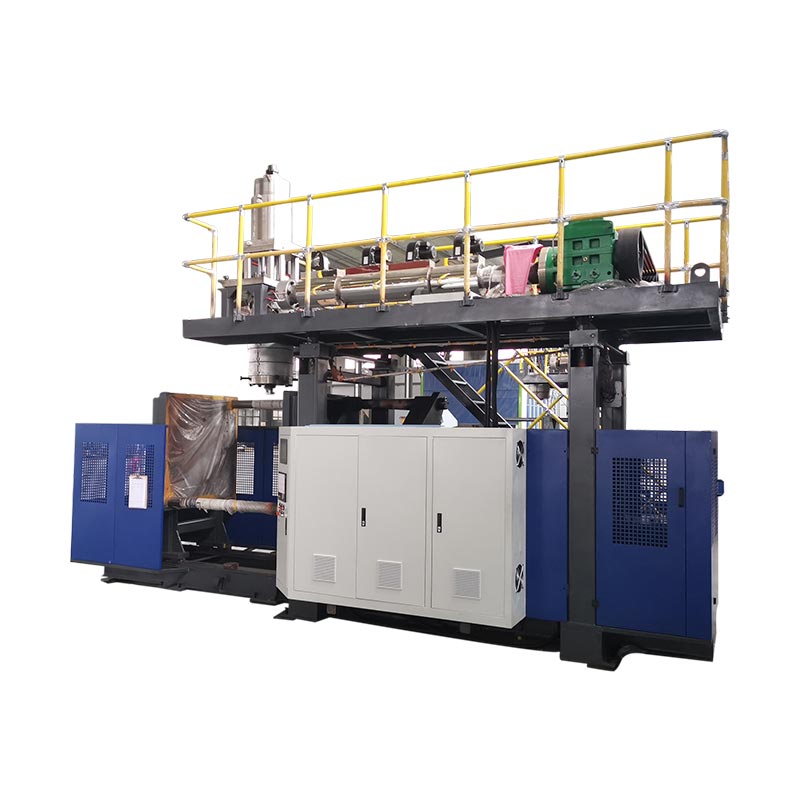
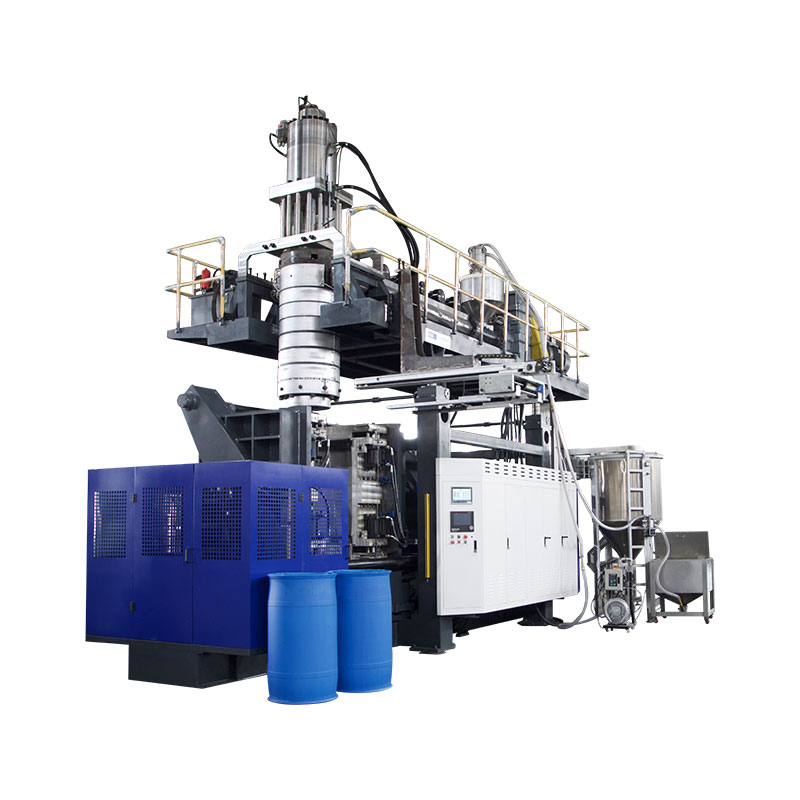
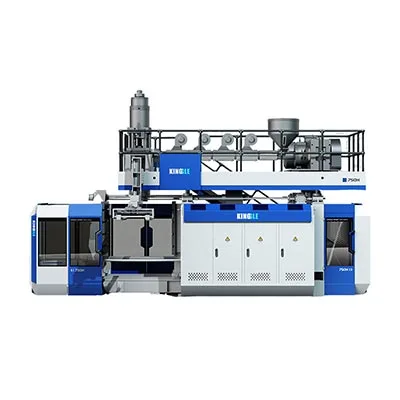
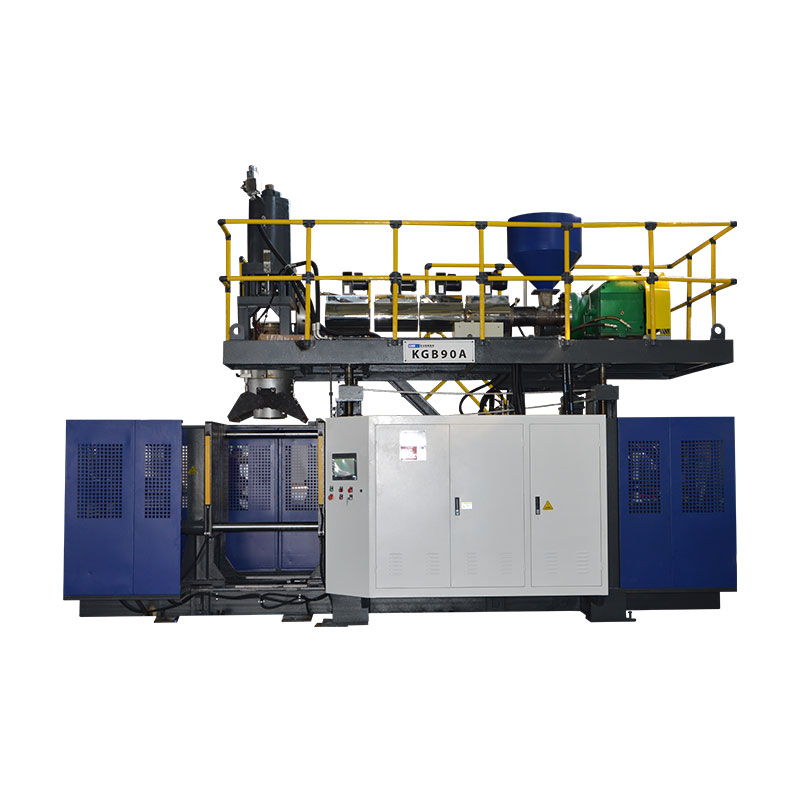
Kinggle's KGB2L 2L single-station product page identifies maximum container capacity of 2 L, a 600 PC/HR field explicitly labeled “Output(dry Cycle),” an HDPE melting-capacity field of 30 kg/h, and an “average energy consumption” field of 12–18 kW. These are published specifications. They do not name the bottle, mold, material grade, utility boundary or accepted output required for real unit cost.
The hypothetical example uses 24 kg/h of gross material during seven running hours, below the KGB2L page's published 30 kg/h HDPE melting-capacity figure. That is only preliminary throughput screening. It does not prove this bottle, mold and recipe can sustain 240 gross bottles per hour, reach 95% acceptance or fit any specific KGB2L configuration.
Likewise, the example's 120 kWh is an invented meter reading over a stated cost period. It is not derived from or validated by the KGB2L catalog 12–18 kW field unless measurement time and equipment boundary match. A kW power figure multiplied by assumed hours can screen a budget, but it is not a meter result for an installed line.
Do not enter 600 PC/HR as saleable output. The product page calls it a dry-cycle figure. Resin extrusion, parison formation, blowing, cooling, removal, trimming and inspection affect the actual count. Calculate accepted rate with the chosen mold and product, then check gross resin demand against applicable throughput specifications.
Machine specifications still narrow candidate equipment and show what needs a product-specific trial or supplier explanation. Ask for actual die-head arrangement, intended cavities, mold envelope, utility scope and accepted-output test conditions. Keep the answers with the cost sheet instead of copying a catalog value into a financial cell without its label.
The strongest procurement question is whether the machine makes the approved container repeatedly at the accepted output needed for the order. Kinggle's factory acceptance test guide sets out the record needed to defend an output and quality conclusion. A cost model is only as strong as that production record.
Build the cost sheet before approving a production estimate
A useful worksheet is brief enough for a supervisor to complete during a run and precise enough for finance to audit later. Put product identity, mold revision, resin lot and currency at the top. Then label source values as measured, documented invoice/payroll value or assumption. A cell without a source should not silently become a promised customer result.
- Define acceptance. Record the drawing, test criteria and whether counting occurs after molding, trimming, leak testing or packing.
- Log time. Capture booked, planned and running hours, stops, startup and changeover time with timestamps.
- Reconcile material. Weigh resin issued and remaining; record purge, trim, rejects, approved regrind and verified scrap credit.
- Read meters and staffing. Record electricity readings, equipment within the meter boundary, paid person-hours and shared utility allocation.
- Assign costs once. Enter documented material, energy, labor, machine overhead, mold allocation and consumables; check for duplicates.
- Count accepted bottles. Reconcile gross count, rejects, rework and work in process, then divide assigned cost by accepted count.
- Test the decision. Recalculate with lower yield, longer stops, heavier parison and shorter order. List assumptions needing trial evidence.
The acceptance definition should travel with the number. “$0.483 per bottle” is not transferable; “$0.483 per accepted trimmed bottle under this hypothetical eight-hour ledger” is interpretable. A real factory should substitute its data and state whether results include upstream handling, downstream inspection, packing and shared utilities.
Reconcile before presenting results: accepted plus rejected plus unresolved molded parts should explain gross count. Opening stock plus additions minus closing stock and documented transfers should explain resin consumed. Meter intervals should coincide with the production period or be allocated transparently. If those checks fail, fix the record before debating pennies in final unit cost.
Factory perspective is in those checks. A sample bottle can show geometry; a timed and weighed run shows whether a process is repeatable and economic. Keep baseline recipe, settings, inspection results and trial report together. If a supplier revises a cost estimate, ask which assumption changed: accepted output, gross mass, energy, labor scope, tooling or overhead.
Request a product-specific machine and cost review
Send Kinggle the bottle drawing or sample, material grade, target weight, planned production hours, accepted output target and inspection requirements. Ask the team to identify suitable configuration and evidence still needed for a defensible cost estimate. Local resin prices, tariffs, wages and overhead should come from the buyer's records.
Use Kinggle's official contact page. It lists Ningbo Kinggle Machinery Co., Ltd., Yuyao City, Ningbo, Zhejiang, China, sales@kinggle.com and +86-574-87103665. No customer testimonial or unverified project outcome has been added here.
Frequently asked questions
These answers use the same boundaries as the worksheet. For a different process, product or accounting policy, rename the denominator and adjust cost lines before comparing results.
How is blow molding cost per unit calculated?
Add material, measured utilities, paid labor, nonoverlapping machine overhead, tooling allocation and other assigned manufacturing costs for one defined period. Divide that total by containers accepted at a stated inspection point in the same period. Retain the input record so the calculation can be checked and repeated.
Should flash and rejected bottles be counted in material cost?
Yes. Material consumed to make flash and rejected bottles belongs in the period's resin balance. Do not add the same resin again as a separate waste charge after its purchase cost is included. Record approved regrind, remaining inventory and verified resale credit separately so recovery does not become an unsupported discount.
Can a machine's dry-cycle rate be used to estimate bottle cost?
Only as a limited mechanical reference. A dry-cycle rate does not prove the product's molding, cooling, trimming or accepted output. Kinggle's KGB2L page labels its 600 PC/HR figure as dry cycle. Use a product-specific run or a clearly stated scenario for the cost denominator, and keep catalog data separate from measured results.
Is electricity cost based on kW or kWh?
Use kWh consumed over the defined period and multiply by the applicable electricity tariff. kW describes power, while kWh describes energy used over time. Identify whether the meter includes the blow molding machine alone or also the compressor, cooling system, grinder, robot and inspection equipment. Add shared utilities once, using a documented allocation.
What is the fastest reliable way to reduce cost per good bottle?
There is no universal first lever. Reconcile the mass balance and reject log, then identify the largest avoidable loss. A stable parison profile, corrected cooling bottleneck or resolved leak-test failure may help more than a small resin discount, but a change must pass approved product tests and be evaluated on accepted output and total cost from the same run.
Source boundary: Kinggle's linked pages support cited specifications, company details and related methods. EUROMAP 46.2 supports product-specific energy measurement. All worked-example prices, rates, weights, yields and costs are hypothetical editorial inputs.