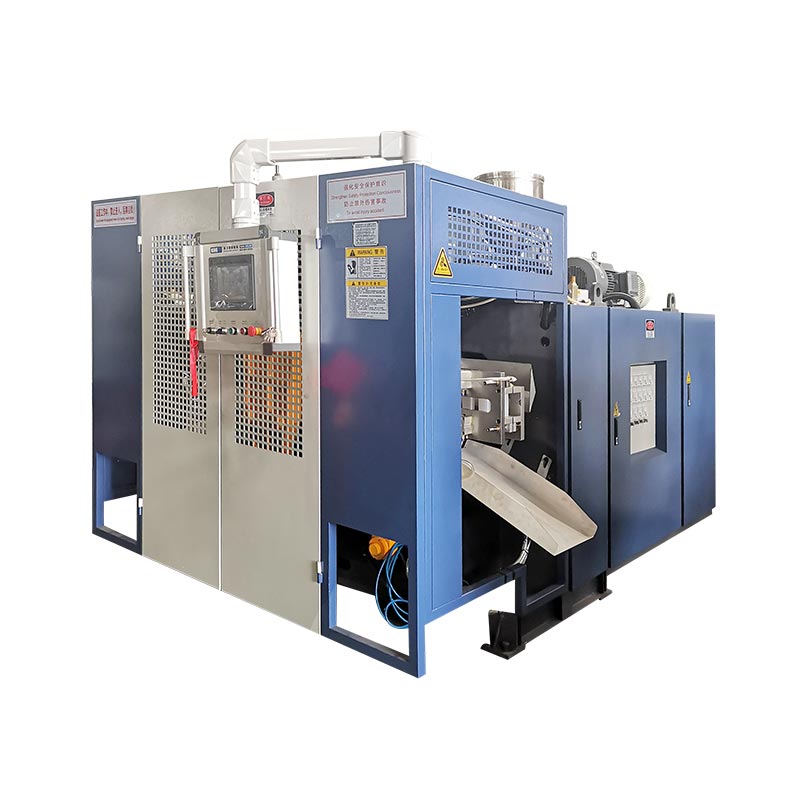
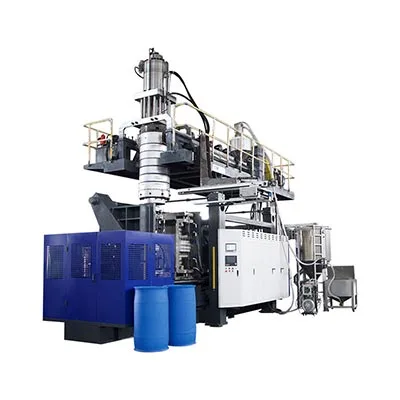
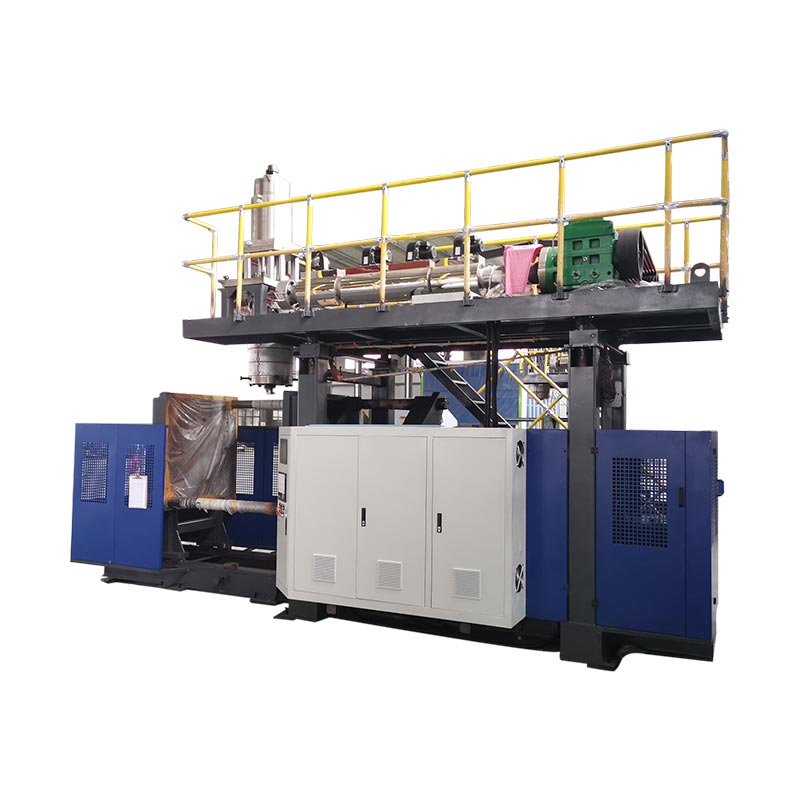
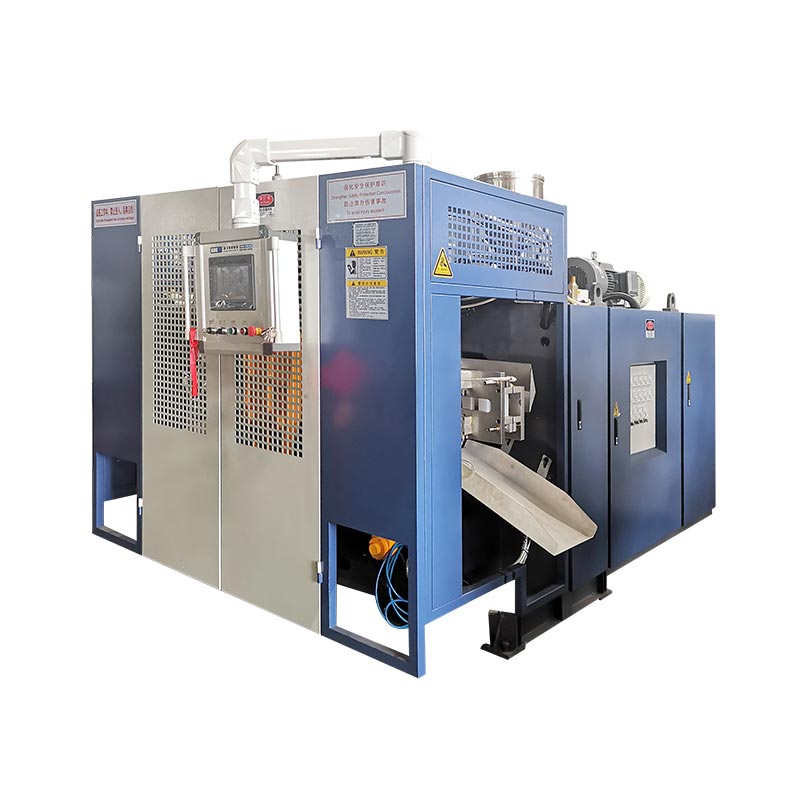
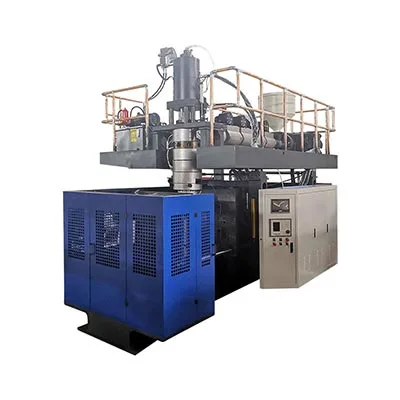
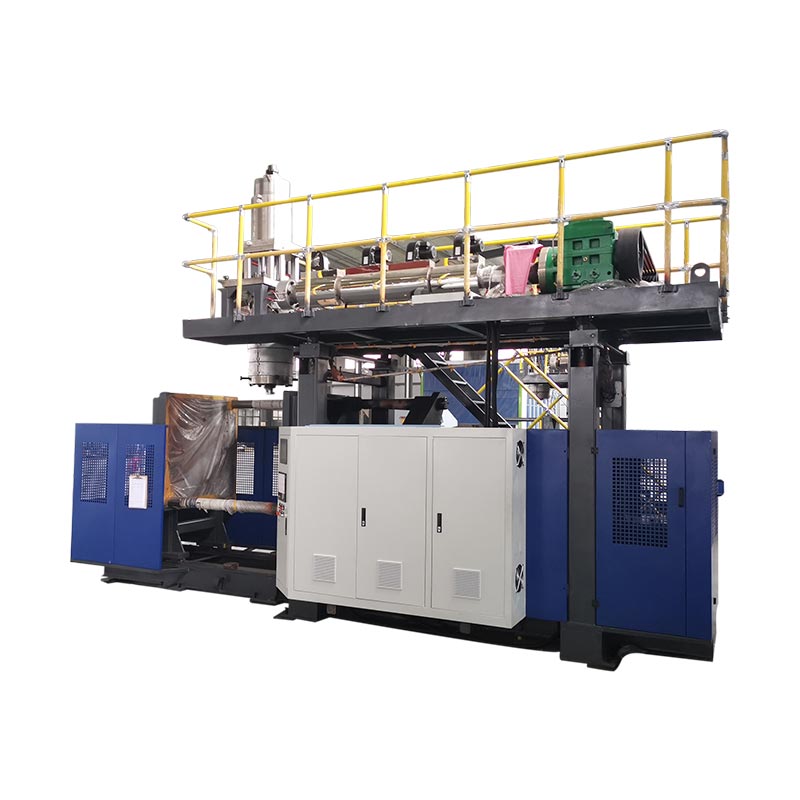
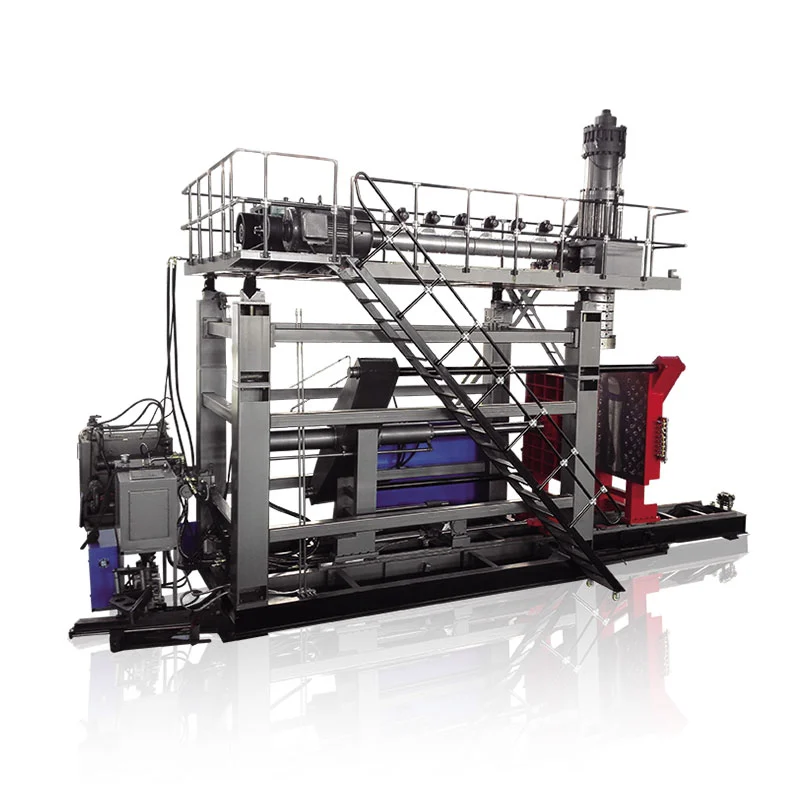
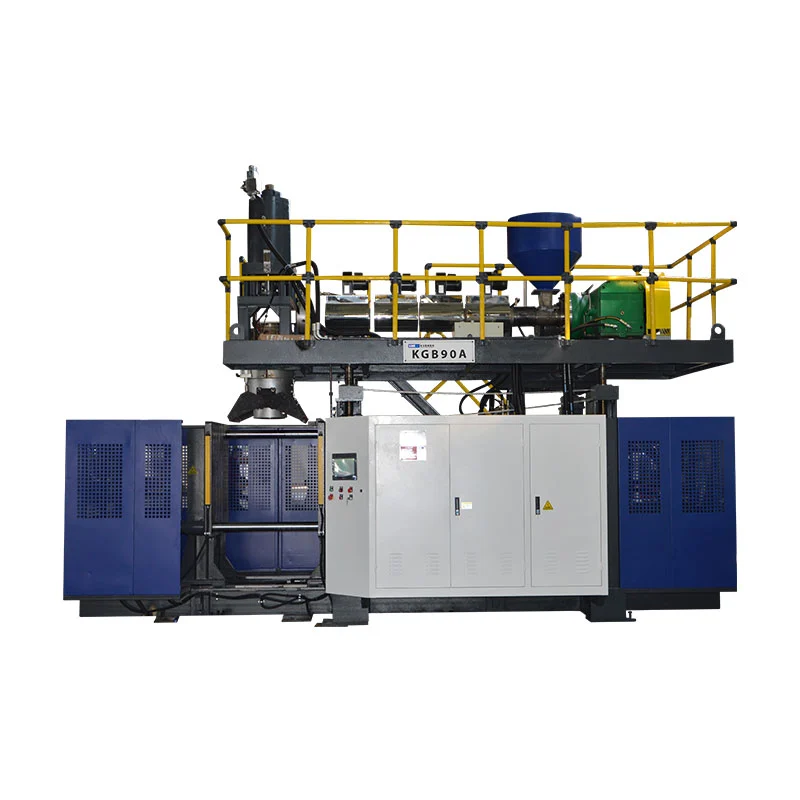
Choose an HDPE bottle blow molding machine by matching the bottle drawing, resin grade, mold layout and required good-part output. For an extrusion bottle project, the machine's stated liter capacity is only an initial filter; the final specification must also cover the neck, wall distribution, tooling and downstream handling.
A request for a bottle machine becomes much more useful when it includes a drawing and a weight target. Those details let the equipment discussion move beyond machine size. They also expose questions that are expensive to discover after the mold has been built.
Start with a bottle drawing that someone can quote
A bottle's nominal volume leaves many decisions open. A tall, narrow container and a short, wide container can hold the same amount. Their mold envelopes, neck positions and handling arrangements still need separate reviews. Send the full drawing rather than asking a supplier to select equipment from capacity alone.
Include the maximum outside dimensions, target finished weight and closure drawing. Identify the label panel, shoulder, base and any handle. Mark dimensions that matter to filling, capping or packing. If a sample bottle is the only reference, say which features must stay and which may change.
Separate nominal fill volume from brimful volume. Also define whether the stated weight includes any removable flash. A drawing with an unclear weight basis can lead the mold maker and machine supplier to work toward different targets.
| Input | What the equipment review needs |
|---|---|
| Bottle body | Dimensions, volume basis, shape, handle and approved weight range. |
| Neck and closure | Finish drawing, cap or pump details, sealing surface and inspection method. |
| Material | Resin grade, color, additives and proposed regrind or PCR content. |
| Production plan | Required accepted output, shifts, product mix and planned changeovers. |
| Quality requirements | Critical walls, dimensions, appearance and applicable package tests. |
From the machine-building side, the useful question is whether one agreed setup can meet all these requirements together. A buyer may approve the bottle's appearance while the filling team still needs a different neck height. Resolving that issue early keeps it out of the equipment acceptance stage.
For an existing bottle, send its current drawing revision and representative samples together. Explain any known problem, such as difficult capping or a weak bottom seam. The goal is to preserve the right features while giving the supplier a clear problem to solve.
Kinggle's extrusion blow mold design guide connects these product inputs to the mold, pinch-off, cooling and machine interfaces. Keep that drawing package attached to the quotation, so later configuration changes have a visible reference.
Specify the HDPE grade, not just the polymer name
HDPE describes a material family. It does not identify a complete processing specification. LyondellBasell lists HDPE grades for several processes, including extrusion blow molding, injection molding and rotational molding. A purchasing note that says only "HDPE" leaves the actual grade unresolved. Source: LyondellBasell HDPE overview.
Send the resin supplier's current technical data sheet with the bottle drawing. Record the grade designation and the test conditions beside its melt-flow value. Give the machine supplier the proposed color masterbatch and additive information as well. These inputs belong in the trial plan, even when the bottle looks simple.
For a detergent or household chemical bottle, discuss environmental stress crack resistance with the resin and packaging teams. ExxonMobil describes trade-offs between ESCR, processability, stiffness and other bottle properties in its HDPE technical program. A resin choice should reflect the finished package's requirements rather than a single material property. Source: ExxonMobil PE Innovation Week, HDPE bottle and container session.
Regrind and post-consumer recycled material also need clear definitions. State the source, planned proportion and handling method. Keep a record of the material batch used for approval. If a quotation assumes virgin resin but production uses a different blend, the original trial no longer represents the full production condition.
A useful request asks the supplier to document the material used for its output proposal. That makes later changes easier to assess. It also gives both sides a common reference if weight, appearance or process stability changes during commissioning.
Material selection and machine selection should therefore move together. If the choice between HDPE and PP is still open, resolve that with the product requirements first. The HDPE versus PP comparison explains that earlier decision; this guide assumes an HDPE bottle project is the intended route.
Make sure the machine name describes the right process
Buyers use several names for similar equipment: HDPE bottle making machine, HDPE bottle blowing machine and HDPE blow moulding machine. Those terms help describe the intended product. The quotation still needs to identify the actual molding process and equipment arrangement.
In extrusion blow molding, the extrusion system forms a molten tube called a parison. The mold captures it, air expands it against the cavity, and the part cools before removal. Trimming and inspection then prepare the bottle for its next operation. Kinggle explains the equipment sequence in its continuous blow molding machine guide.
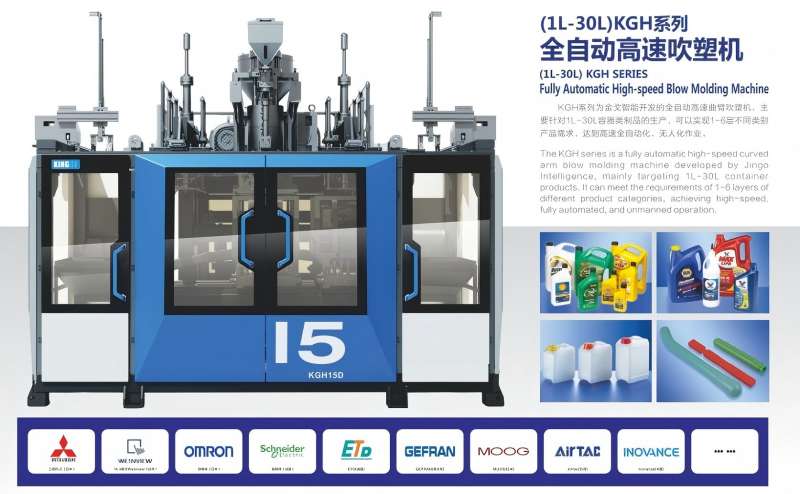
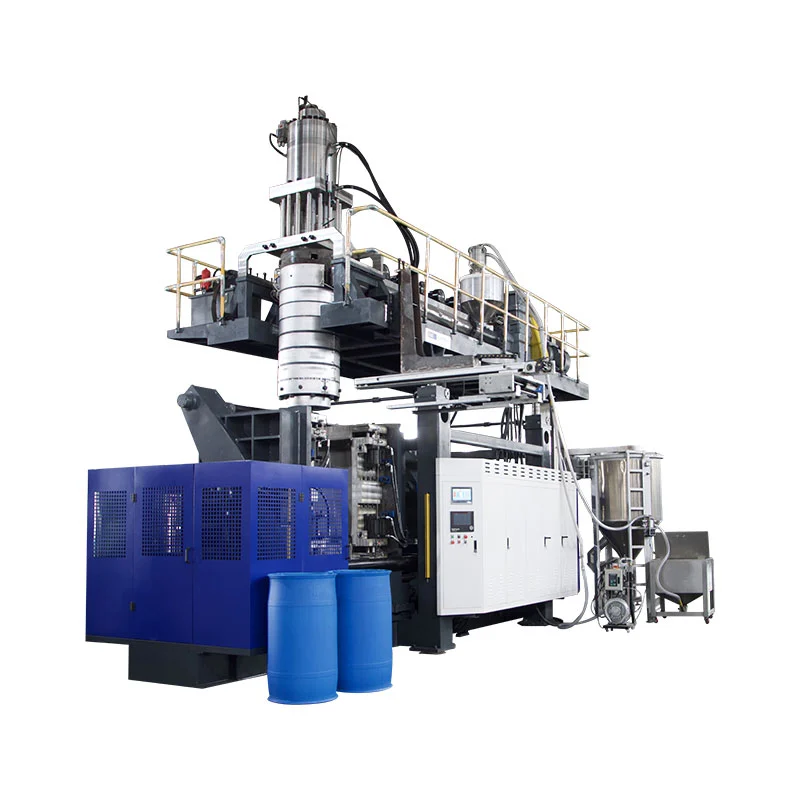
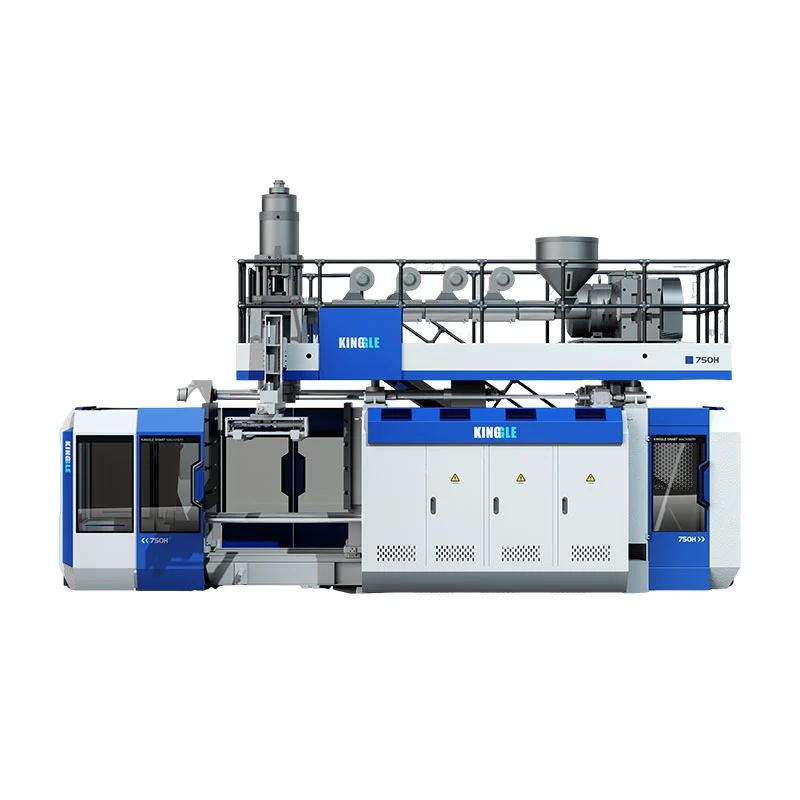
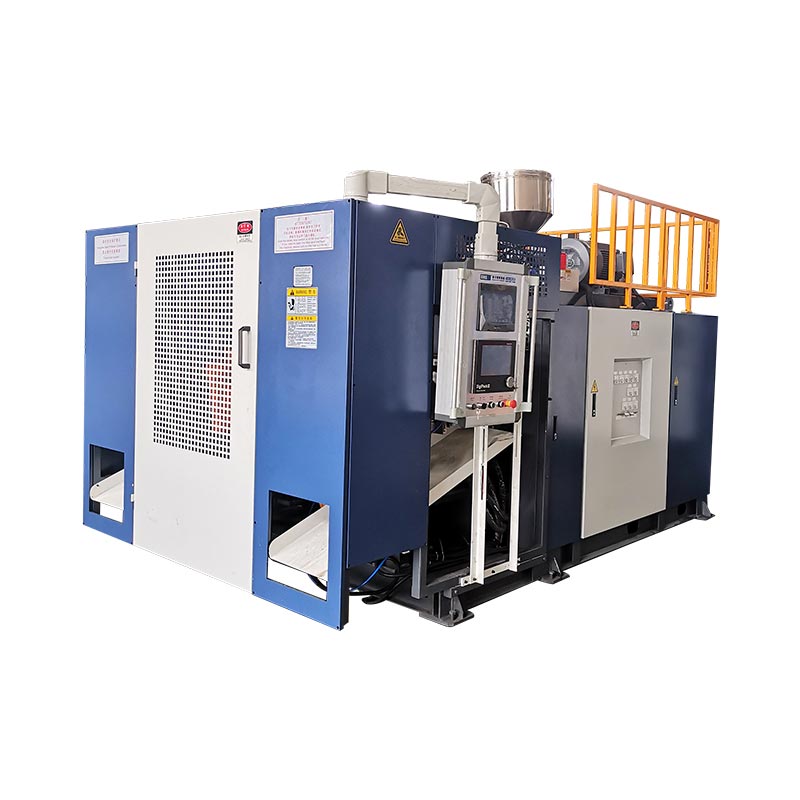
For the bottle projects discussed here, begin the review with the continuous extrusion machine range. Then match the mold-and-head arrangement to the part. The presence of a handle, an unusual shoulder or a large neck should become a tooling question, rather than disappear under a generic machine description.
A search for a plastic bottle making machine can also return preform-based systems. Those results do not establish compatibility with an extrusion bottle project. Ask whether the proposed system starts with resin pellets and forms a parison, or starts with a separate preform. Put the answer in the technical offer.
For the same reason, do not select machinery from a demonstration video alone. Identify the resin, bottle weight, head arrangement and finished product shown. A machine forming a different package can demonstrate its sequence without proving the cycle or quality required for your bottle.
If the process choice remains open, use the broader blow molding machine guide before narrowing the specification. Once the route is agreed, the quotation should name the model, tooling, material system and included operations. That gives the buyer a usable equipment description instead of a collection of search terms.
Three Kinggle references show why liters are only a starting point
The table below brings together selected values from three Kinggle product pages. These are published machine references, checked on September 29, 2026. They help screen an equipment proposal; the bottle and tooling still require a project review.
| Published field | KGB2L | KGB5L | KGB5D |
|---|---|---|---|
| Station arrangement | Single | Single | Double |
| Maximum container capacity | 2 L | 5 L | 5 L |
| HDPE melting capacity | 30 kg/h | 55 kg/h | 80 kg/h |
| Screw diameter | 50 mm | 60 mm | 70 mm |
| Clamping force | 40 kN | 65 kN | 65 kN |
| Maximum mold size, W × H | 360 × 380 mm | 410 × 450 mm | 410 × 450 mm |
| Mold thickness | 160 to 300 mm | 200 to 310 mm | 200 to 310 mm |
| Double die-head center distance | 130 mm | 150 to 180 mm | 150 to 180 mm |
Sources: the three linked Kinggle product pages. Published melting capacity is a material-throughput reference. It is not a guaranteed finished-bottle rate. The die-head spacing row describes that configuration; it does not establish that a double head is included in every base quotation.
Compare the two 5 L entries. Both publish the same maximum mold dimensions and clamping force. Their screw diameters and HDPE melting capacities differ. Choosing the double-station platform therefore involves more than adding another mold position to an otherwise identical specification.
For a buyer, that comparison leads to a practical request: show the proposed mold layout and material-demand calculation beside the chosen model. A machine can pass the nominal bottle-volume check while the proposed cavity layout still needs adjustment.
The smaller KGB2L reference also has a different tooling envelope and published double-head spacing. A bottle suitable for that platform as a single part may need a separate review when the buyer requests several parts per molding event. Bottle volume alone cannot settle that question.
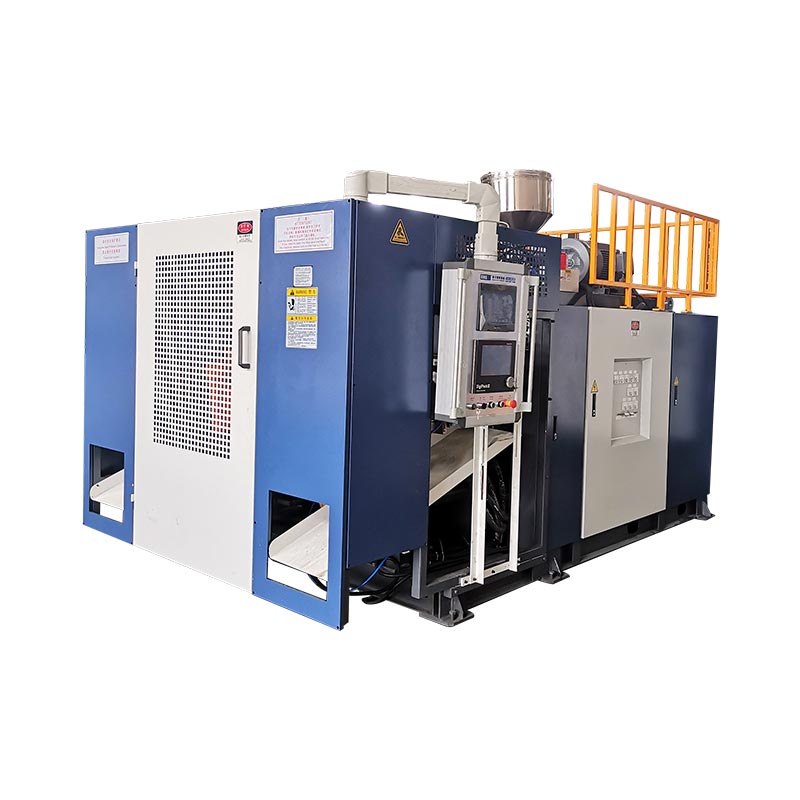
Keep the model comparison attached to the product brief. If the bottle grows wider, its weight changes or the production target increases, revisit the affected fields. This is more useful than selecting the largest machine on the list and assuming that every smaller bottle will suit its standard configuration.
Check the mold, die heads and stations on the same drawing
Station count, head count and cavity count describe different parts of the production arrangement. A second station provides another mold position. Multiple die outlets provide multiple parisons. Mold cavities define the products formed during a molding event. The proposal needs to show how these parts work together.
Kinggle's multi-head versus multi-cavity guide explains the terminology. Use it to read the layout drawing, then ask for the actual outlet count and spacing. The words "double machine" leave too much room for misunderstanding.
Start with the physical fit
Compare the mold dimensions with the approved machine drawing. Include mounting details, thickness, opening clearance and connections. Leave the final clearance review to the equipment and mold suppliers; a catalog maximum does not show every hose, fitting or moving component.
Head spacing is a separate check. Several narrow bottles may fit across a mold where the same number of wider bottles would not. Ask for the cavity centers and die outlets on one view. That lets the suppliers check the arrangement before either tooling package is released.
Then review the production sequence
Choose station count from the planned workload and the proposed cycle. A double-station machine can alternate mold positions, but the extrusion system and downstream equipment must support that sequence. Kinggle's single- versus double-station comparison gives the broader configuration discussion.
Consider the product mix as well. A factory with repeat orders for one bottle has a different scheduling problem from a factory changing molds and colors frequently. Ask the supplier to explain what equipment changes between the proposed products. Keep that answer separate from the fastest demonstration cycle.
For a new production cell, request one layout that identifies both the forming equipment and the removal path. Show where bottles and flash go after each mold opens. A clear drawing gives purchasing, production and tooling teams the same arrangement to review.
Connect bottles per hour to the material the extruder must process
Write the production target as accepted bottles per hour, with a defined measurement period. Then work backward through rejects, gross molded material and the machine sequence. This gives the supplier a demand to evaluate instead of an unexplained speed request.
Finished bottle weight and gross molded weight are different inputs. The extruder also processes material that becomes removable flash. Recovering that material may affect the material balance and purchasing cost, but it does not remove the initial extrusion work.
Illustrative planning example, not a Kinggle production test
Assume a target of 600 accepted bottles per hour, a 95% acceptance rate and 90 g of gross molded material per bottle position. Assume the finished bottle weighs 70 g.
Required formed bottles: 600 ÷ 0.95 ≈ 632 per hour
Gross melt demand: (600 ÷ 0.95) × 0.090 ≈ 56.8 kg/h
Material in accepted bottles: 600 × 0.070 = 42.0 kg/h
The difference includes material outside the accepted finished bottles. It is not a calculation of permanent material loss or the amount of virgin resin to purchase.
These assumptions produce gross melt demand above the KGB5L's published 55 kg/h reference. That is a reason to revisit the proposal. The KGB5D's published 80 kg/h clears this preliminary mass-flow comparison, but a bottle trial must still establish cycle time, quality and downstream capacity.
Do not turn that comparison into a promise of 600 good bottles per hour. The example is a screening calculation using assumed inputs. Actual production requires the approved resin, mold, weight, cooling conditions and machine configuration.
State how stops are handled in the output record. A stable running interval and a complete shift are different measurement windows. If the customer needs a shift commitment, include the agreed treatment of startup, inspection, planned breaks and changeovers.
Kinggle's product tables label their speed reference as dry cycle. Record that label accurately and ask for a separate accepted-output proposal for your bottle. The buyer should be able to trace the quoted result back to a trial condition and a counting method.
The bottle must pass at the neck, wall and base
A useful approval sample represents the package the customer will fill and ship. Start with the bottle and its intended closure together. Ask the packaging team to identify the sealing features, dimensions and test methods that will decide acceptance.
For the neck, include the finish drawing and the approved cap, pump or other closure. Record which gauges or measurements will check the result. A visual inspection of the bottle body cannot answer whether the closure interface meets its drawing.
For the wall, define the locations that matter and how they will be measured. Average bottle weight is helpful for production control, but it does not locate the material within the part. An agreed wall map makes the shoulder, handle region and base easier to discuss during a trial.
The parison programming and wall-thickness guide explains how profile control relates to material distribution. Use that discussion to define the required result. The number of controller points alone is not a substitute for measured bottles.
At the base, agree on the relevant seam, standing surface and appearance checks. Include any required leak, drop or top-load testing in the acceptance plan, with its method and criteria. The applicable requirements come from the package's use and customer specification.
Take samples in a way that keeps their origin visible. Identify the cavity and station, record the settings, and preserve the material batch details. If a result differs between positions, the team can then trace it to a specific part of the setup.
Keep approved samples and inspection records with the final drawing revision. They give commissioning teams something more precise than a photograph to reproduce. The machine factory acceptance test guide provides a framework for documenting the run and the evidence behind acceptance.
Request a bottle production cell with a defined scope
A base machine quotation may leave several project items outside its price. Ask the supplier to identify the included mold, head tooling, material handling and downstream operations. Put buyer-supplied equipment on the same list so the installation team can see the full boundary.
Check the air and water requirements against the proposed configuration. Record the required supply conditions and connection locations in the project documents. Kinggle's utility and factory layout guide covers the information needed for site preparation.
Decide where trimming and leak testing will happen. Explain how bottles reach the filling or packing operation, and how rejected parts leave the line. When an automatic function is requested, ask the supplier to name the equipment that performs it and its interface with the molding machine.
Use the following sequence to prepare a request for quotation. Each step produces something the supplier can review, rather than a general preference for a fast or fully automatic machine.
- Attach the bottle and closure drawings, or send clearly identified samples.
- List the resin grade, finished weight and proposed material blend.
- Set the accepted-output target and explain the shift and product-change schedule.
- Describe existing molds, auxiliaries and factory services that the new equipment must use.
- Define the required inspection, trial records and equipment included in the delivery.
Ask the technical offer to answer each item. It should identify the proposed model and tooling layout, then explain the conditions behind its production proposal. Any open input should remain visible until it is agreed.
For a project with several bottles, submit the full range at the start. Mark which product will run most often and which sets the largest tooling requirement. This helps the supplier review the production schedule alongside the equipment envelope.
Planning an HDPE bottle line?
Send Kinggle your bottle drawing and production target. Include the resin grade, closure details and any existing mold information. These inputs support a configuration review and a quotation tied to your actual product.
Frequently asked questions
Which machine should I consider for HDPE bottles?
For an extrusion bottle project, start with a continuous extrusion blow molding machine and review the bottle drawing, resin, mold and required output together. Kinggle's KGB2L, KGB5L and KGB5D provide small-container reference points. Final selection depends on the approved tooling and production conditions.
Can a 5 L blow molding machine produce smaller bottles?
Possibly, if the mold, die tooling, spacing and removal arrangement suit those bottles. Maximum container capacity does not define every compatible product. Send the smaller bottle drawings and production targets, then ask the supplier to confirm the complete configuration for each product.
Does a double-station machine need a double die head?
No. Stations are mold positions, while die outlets determine how many parisons are supplied at a molding event. A quotation should identify both separately. Check the proposed cavity layout, die-head spacing and mold sets before comparing two machine offers.
How many HDPE bottles can the machine make per hour?
The answer depends on the bottle, gross molded weight, material, tooling, cycle and acceptance criteria. Specify the target as accepted bottles per hour under agreed conditions. Use published melting capacity for an initial material-demand check, then verify the finished-bottle rate in the trial.
Can the machine run recycled HDPE?
Confirm the actual material source and intended blend with the supplier. Include that material in the trial and assess the resulting bottles against the approved requirements. A generic HDPE machine description does not establish an acceptable recycled-content percentage for every package.
What information is needed for an HDPE bottle machine quotation?
Provide bottle and closure drawings, resin grade, target weight, accepted-output requirement and product-change schedule. Add existing mold details, site utilities and the required downstream equipment. Agree on the trial and inspection criteria so the quotation describes a production result that both sides can evaluate.
Machine references link to Kinggle's published product pages. The numerical production example uses stated assumptions and is not a measured machine result. For a specific order, use the agreed technical specification, tooling drawings and acceptance records.