On this page
What is a plastic blow molding machine?
Blow molding is a manufacturing process for hollow plastic parts. The machine melts plastic resin, forms it into a soft shape, and uses compressed air to inflate that shape against the walls of a mold; when it cools, the part holds the mold's form. Four stages define every machine — heating (plasticizing), forming (parison or preform), blowing, and cooling — and the differences between machine types come down to how the soft shape is created before air is introduced.
Plastic blow molding machines produce a huge range of everyday and industrial goods: beverage and pharmaceutical bottles, lubricant and chemical jerry cans, industrial drums and IBC tanks, automotive fuel tanks and air ducts, road barriers, and countless containers. The material depends on the part: PET for clear beverage bottles, HDPE and HMW-HDPE for cans, drums and tanks, PP for heat-resistant and thin-wall packaging, and PVC or engineering resins such as PA for specialty and barrier applications.
Types of plastic blow molding machines
There are three core process types, plus a fast-growing drive category that buyers now weigh separately in 2026.
Extrusion Blow Molding Machine (EBM)
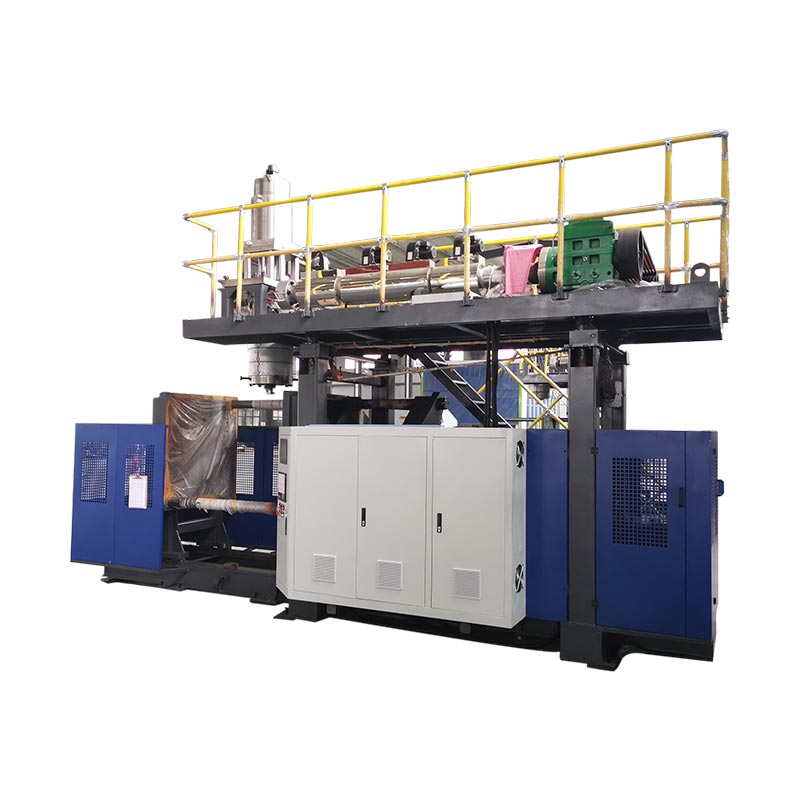
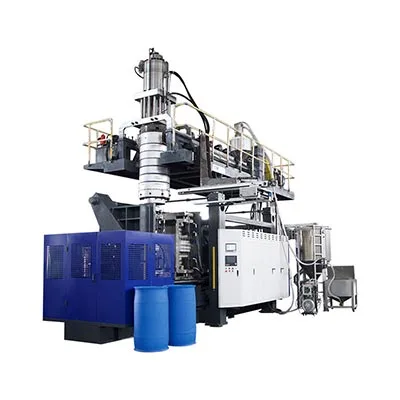
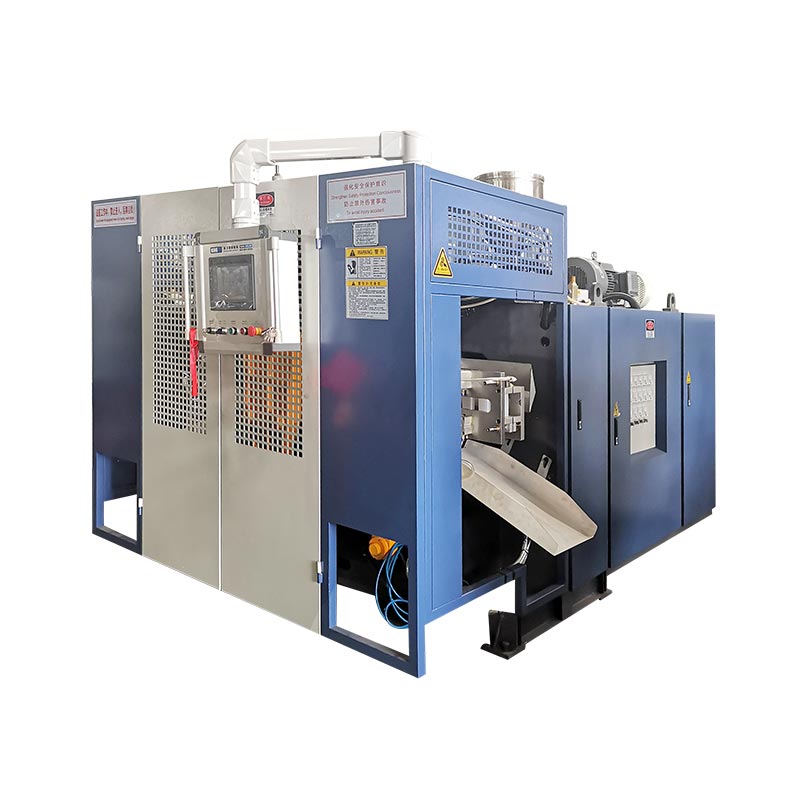
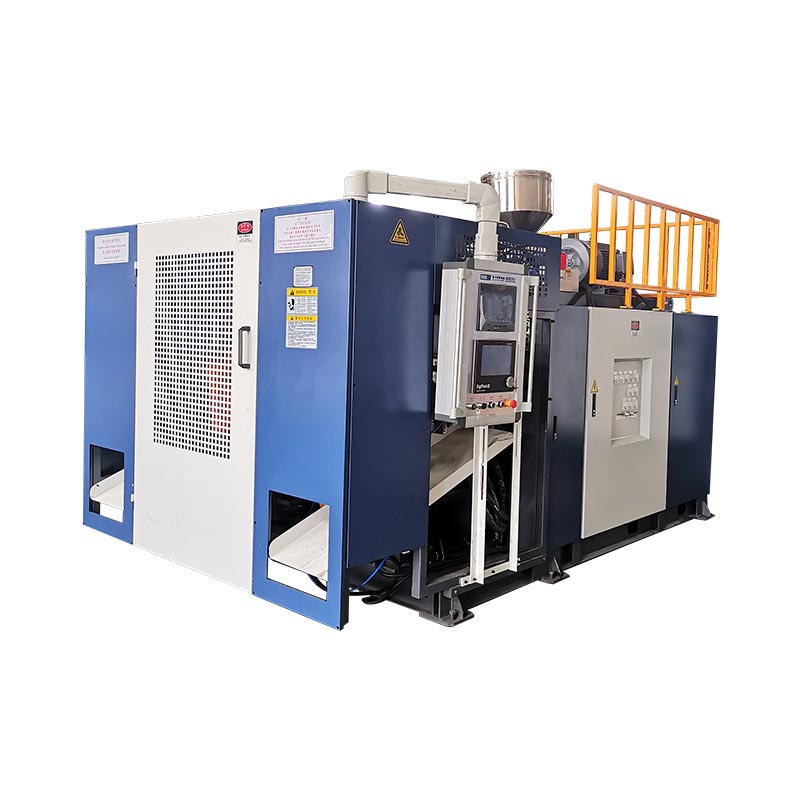
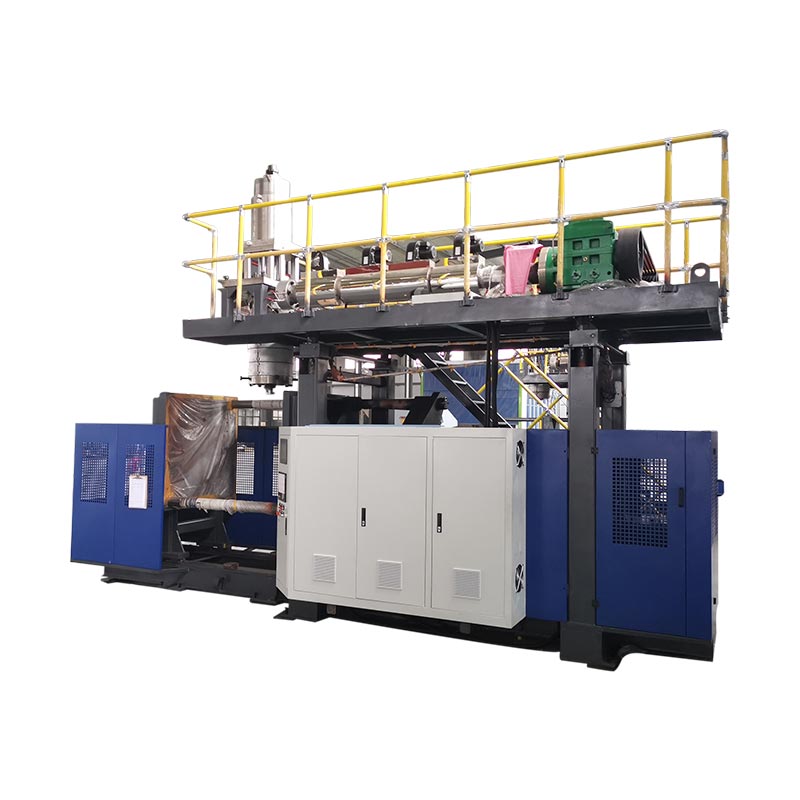
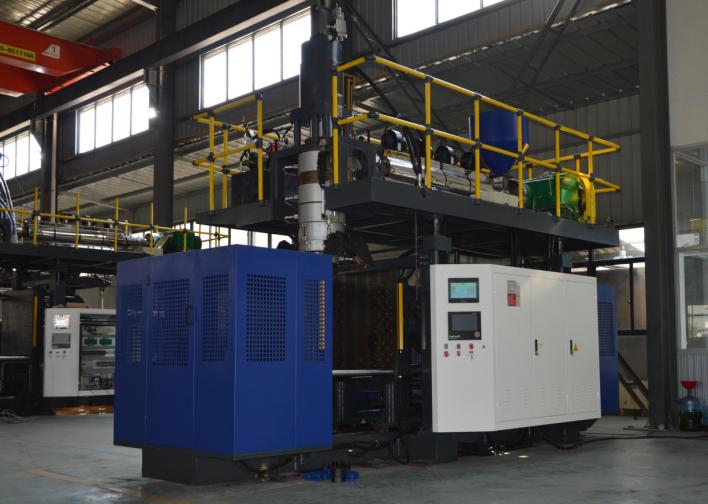
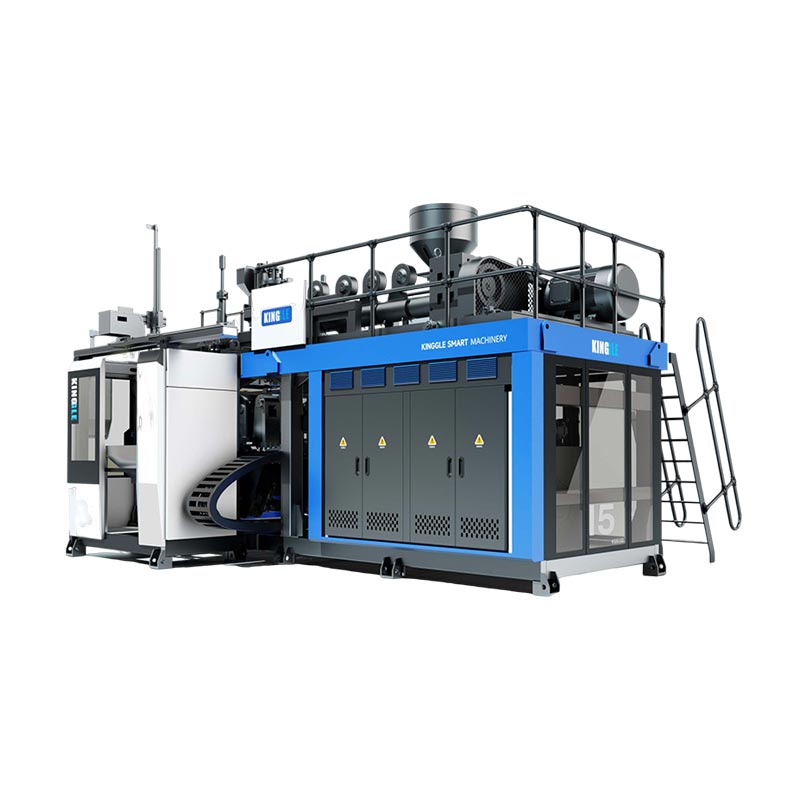
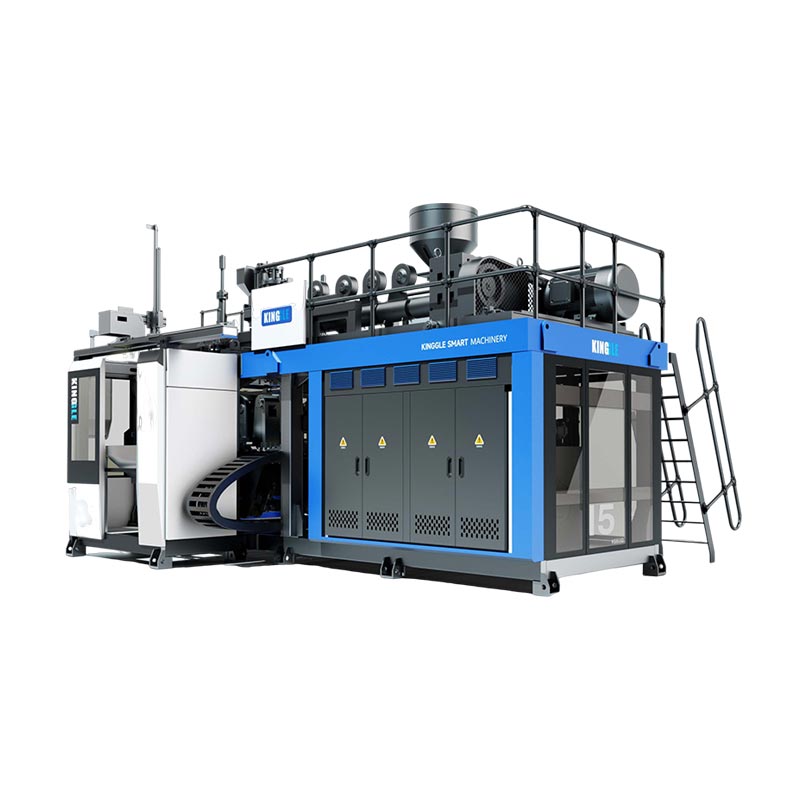
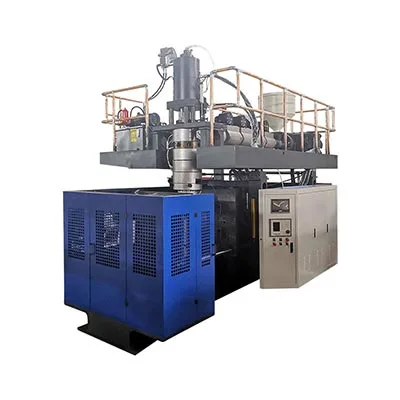
How it works: the extruder melts resin and pushes it through a die head to form a hanging tube, the parison; the mold closes around it and air inflates it against the cavity. Because the body, handle and neck form in a single shot, extrusion blow molding is the process for handled and large parts. Advantages: low tooling cost, fast changeovers, and the widest part-size range — from 100 ml bottles up to 220 L drums and beyond. Applications: jerry cans, chemical drums, water and fuel tanks, toolboxes, road barriers, toys. It is the natural fit for high-volume industrial containers, and the process we specialize in; see our continuous and accumulator extrusion machines.
Injection Blow Molding Machine (IBM)
How it works: a precise preform is injection-molded on a core rod, then transferred to a blow station where air inflates it. Because the neck is injection-molded, IBM gives excellent neck accuracy and a smooth finish. It suits small, high-precision bottles and jars — pharmaceutical vials, cosmetic containers — in low volumes with very low scrap. It does not produce handled containers and is not suited to large parts.
Injection Stretch Blow Molding Machine (ISBM)
How it works: a PET preform is injected, then stretched axially while it is blown. This biaxial orientation aligns the polymer, producing a wall that is clearer, stronger and lighter for a given weight. ISBM is the standard for PET water and soft-drink bottles, where lightweighting and transparency are decisive. It is a different product family from HDPE industrial parts.
2026: All-Electric and Servo-Driven Blow Molding Machines
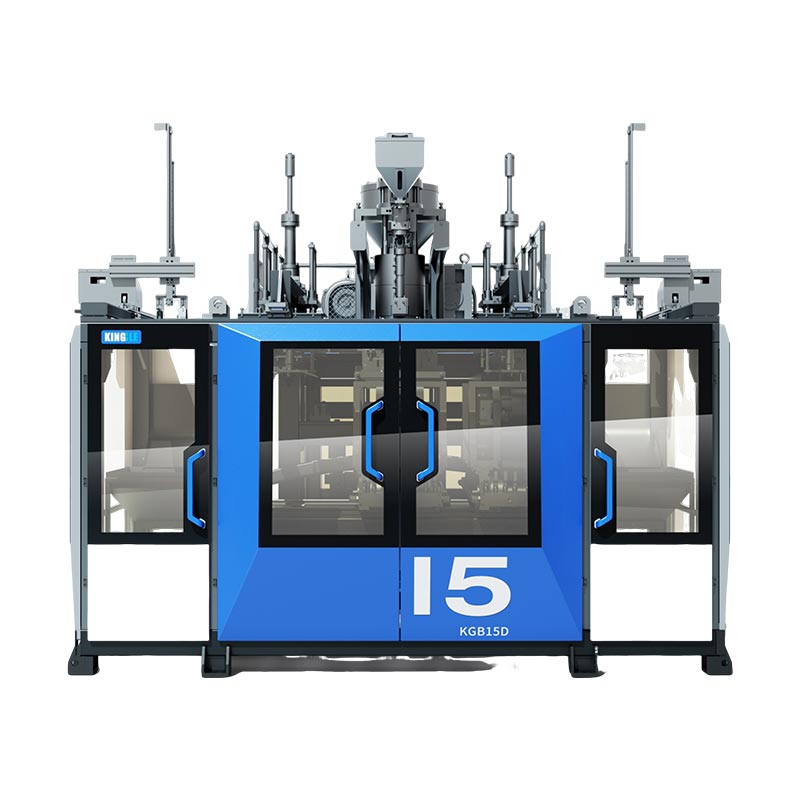
Beyond process type, buyers in 2026 increasingly compare drive technology. Traditional machines use fixed-displacement hydraulics that run at full power regardless of load. All-electric machines replace hydraulics with servo motors, and servo-driven hydraulic machines drive the main pump on demand — both cut energy use sharply and improve repeatability. All-electric designs are common on small, high-precision machines; for large industrial parts that need very high clamping force, a servo-driven hydraulic machine typically gives the best balance of energy saving and tonnage. Our machines use a servo main pump with frequency-conversion control for exactly this reason.
Table 1 · Machine type vs material, capacity, application and 2026 advantage
| Type | Materials | Typical capacity | Best applications | 2026 advantage |
|---|---|---|---|---|
| Extrusion (EBM) | HDPE, HMW-HDPE, PP, PVC, PA | 100 ml – 2,000 L | Jerry cans, drums, tanks, auto parts | Multilayer heads run PCR / regrind layers |
| Injection (IBM) | PE, PP, PS | ≤ ~0.5 L | Pharma and cosmetic small bottles | Very low scrap, precise necks |
| Injection stretch (ISBM) | PET | 0.2 – 10 L | Water and soft-drink bottles | Lightweighting, clarity |
| Servo / all-electric | Any (drive tech) | Varies | Energy-critical, high-volume lines | Biggest energy-efficiency lever |
Key components and how they affect output
Two machines can share a headline capacity yet perform very differently, because quality and output live in the components. A cheaper machine with weak wall control usually turns out to be the expensive one — the resin it wastes on every part outweighs the price gap within months.
- Screw / plasticizing unit. Melts and meters the resin. Screw diameter (typically 50–100 mm) and L/D ratio (24–25) determine melt homogeneity and throughput; an unstable melt shows up as inconsistent parts downstream.
- Die head and parison control. Forms the parison and profiles its wall along its length. A high-resolution wall-thickness controller (for example a 100-point MOOG system) is the single biggest lever on both resin cost and part strength.
- Clamping unit. Closes and holds the mold against internal blow pressure. Synchronous clamping with direct-pressure locking keeps platens parallel; too little tonnage produces flash and weak parts.
- Cooling system. Sets the part against the mold. Cooling is usually the longest step in the cycle, so cooling design — not the extruder — sets real output and controls warpage.
- Control system and automation. Runs and automates the line. A reliable PLC/HMI (Mitsubishi, Weinview) plus robot take-out and deflashing protect consistency and OEE on unmanned runs.
Table 2 · Component vs function, quality metric and what to ask when buying
| Component | Function | Quality metric affected | Ask the supplier |
|---|---|---|---|
| Screw / plasticizing | Melt and meter resin | Melt homogeneity, output | Screw diameter, L/D, HDPE kg/h? |
| Die head / parison control | Form and profile parison | Wall-thickness uniformity, resin use | How many wall-thickness points? |
| Clamping unit | Close and hold mold | Flash, part integrity | Clamping force and locking type? |
| Cooling system | Set the part | Cycle time, warpage | Cooling design and water spec? |
| Control / automation | Run and automate | Consistency, OEE | PLC/HMI brand, robot take-out? |
2026 trends in blow molding
PCR and recycled resin compatibility
Brand and regulatory targets are pushing recycled content (PCR) up across packaging. Running variable, sometimes contaminated recycled melt demands tighter parison and temperature control, and often a multilayer die head so a regrind or PCR core can be sandwiched between virgin skins. Machines with precise wall-thickness control and stable temperature zones handle recycled resin far more forgivingly.
AI and smart monitoring
The line is getting more instrumented. OEE dashboards, predictive maintenance, remote diagnostics and automatic parameter adjustment are moving from premium options to expectations. Even a basic on-board alarm system that lets the supplier diagnose faults remotely can turn a multi-day stoppage into a same-day fix — which, on a 24/7 line, is worth more than a modest difference in machine price.
Energy efficiency
Energy is a recurring cost that runs for the life of the machine, so it increasingly drives purchase decisions. The main levers are a servo main pump, optimized compressed-air use (air is one of the most expensive utilities in a plant), and efficient cooling. Because energy is a real component of cost per bottle, an efficient drive often pays back faster than any other upgrade on a high-volume line.
Table 3 · 2026 trend vs factory impact, buying point and ROI
| Trend | Impact on the factory | Buying point | ROI value |
|---|---|---|---|
| PCR / recycled resin | Must run variable, contaminated melt | Multilayer head + strong wall control | Meets brand / regulatory recycled targets |
| AI / smart monitoring | Less downtime, faster setup | OEE dashboard, remote diagnostics, alarm system | Higher uptime, lower scrap |
| Energy efficiency | Ongoing energy = ongoing cost | Servo pump, optimized air, efficient cooling | Lower cost per part, faster payback |
How to choose the right plastic blow molding machine
The most reliable way to specify a machine is to work from the part outward, and to judge on total cost of ownership rather than sticker price:
- Define the product first. Largest size, whether it has a handle, the resin, the wall spec and any certification (drop-test, UN).
- Then define output. Convert dry-cycle to real output and daily volume before choosing single vs double station or an accumulator.
- Match the machine type. Handled/large → extrusion; small precise → injection; clear PET → stretch.
- Weigh energy and automation. Servo drive and robot take-out raise price but lower running cost.
- Check service, spares, install and training. A machine is a decade-long relationship; support decides uptime.
- Judge on TCO, not price. Resin, energy, scrap and downtime dwarf the price gap between two machines over their life.
Table 4 · Buyer's checklist
| Criterion | What to confirm |
|---|---|
| Capacity | Max part volume + realistic daily output |
| Energy | Servo drive, installed kW, air and water use |
| Material compatibility | HDPE / PP / PVC / PA / PCR content |
| Changeover speed | Mold change time, single vs multi-die |
| After-sales support | Warranty, install, training, spare parts |
| Safety and compliance | Light curtain, CE, drop-test / UN where required |
Installation, wiring and commissioning
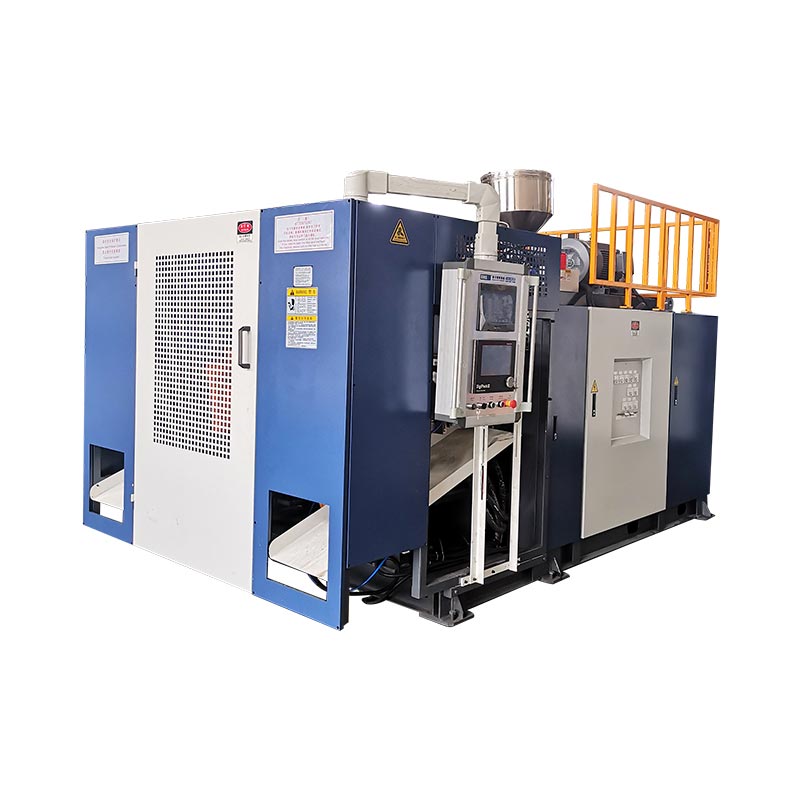
A blow molding line is a utilities-heavy install, and most start-up delays come from site readiness rather than the machine itself. Confirm the essentials before the machine arrives:
- Utilities. Correct power supply and wiring, clean compressed air at the required pressure, cooling-water flow and pressure, and hydraulic connections where applicable.
- Site and foundation. A level, load-rated floor for the machine weight, plus clear space around the platen, extruder and take-out for operation and maintenance.
- Commissioning sequence. Start the oil pump, bring the machine up to temperature (allowing several hours with cooling water on), start extrusion and the wall-thickness controller, then run manual cycles before switching to auto.
- Acceptance (trial run). Verify dry-cycle output, wall-thickness uniformity, part weight and finish, and safety functions before sign-off.
Our engineers travel to your factory to install, commission and train operators, so the line reaches stable production faster than a self-install.
Common problems and troubleshooting
Most blow molding defects trace back to four levers — wall-thickness profile, melt temperature, clamping force and cooling. This table maps the defects buyers ask about most to their usual causes and fixes.
Table 5 · Defect vs likely cause and fix
| Defect | Likely cause | First fix to try |
|---|---|---|
| Leakage | Weak pinch-off / thin wall at weld | Adjust wall profile and pinch-off, blow timing |
| Uneven wall thickness | Parison profile off / die not centered | Re-profile parison, center the die head |
| Unstable parison | Melt temperature / storage stroke | Check temperature zones and storage stroke |
| Haze / whitening | Melt temp or cooling too aggressive | Tune melt temperature and cooling rate |
| Rocker bottom | Base cooling / blow pressure | Adjust base cooling and blow pressure |
| Excess flash | Insufficient clamp / worn mold | Verify clamping force, inspect mold |
| Warpage / deformation | Insufficient cooling | Extend cooling time, lower water temp |
When output falls rather than quality, the cause is more often the storage stroke or cooling than the extruder — that's the first place to look. Persistent scrap and unplanned stops are also the biggest hidden drag on OEE, which is why stable wall control and reliable automation pay back well beyond their headline cost.
Market outlook 2026–2030
Demand is steady and broad-based. According to Grand View Research, the global plastic blow molding machine market was about USD 3.2 billion in 2024 and is projected to reach roughly USD 4.0 billion by 2030, a CAGR of about 4.2%. Growth is driven by packaging, automotive components, industrial containers and healthcare, with Asia-Pacific the largest region at around 39% of the market. Extrusion remains the largest process segment for industrial hollow parts, while PET stretch blow molding leads in beverage packaging.
For buyers, the practical signal is that this is a modernization market, not a boom: growth is concentrated where machines add efficiency, recycled-content capability and automation. That's why a 2026 purchase decision is less about basic specs and more about energy efficiency, PCR compatibility, uptime and total cost of ownership.
Get a plastic blow molding machine quote
Tell us your product, size, resin and daily output — we'll recommend the right type and configuration, with real specs and cycle figures.
Get a Quote Chat on WhatsAppFrequently asked questions
What is a plastic blow molding machine?
It makes hollow plastic products by heating resin, forming it into a soft shape, inflating it with compressed air inside a mold, and cooling it — producing bottles, jerry cans, drums, tanks and containers. The main types are extrusion, injection and injection stretch blow molding.
What are the main types of blow molding machines?
Extrusion (EBM) for handled and large HDPE parts, injection (IBM) for small precise bottles, and injection stretch (ISBM) for clear PET bottles. Machines are also described as continuous, accumulator, multilayer and servo/all-electric.
Which materials can be used?
HDPE and HMW-HDPE, PP, PVC and PA on extrusion machines; PET on injection stretch machines. HDPE is standard for cans, drums and tanks; PET for clear bottles.
How much does a plastic blow molding machine cost?
Cost is driven by part size and clamping force, number of die heads, single vs multilayer walls, and automation. Small single-station machines are the most affordable; large accumulator drum lines cost far more. Total cost of ownership — energy, scrap and maintenance — usually matters more than the sticker price.
What's the difference between extrusion and injection blow molding?
Extrusion extrudes a hollow parison and blows it, making handled and large parts. Injection molds a precise preform first, then blows it — ideal for small, accurate bottles but not for handles or large parts.
How do I choose the right machine size?
Start from your largest part volume and daily output. Multiply dry-cycle output by an efficiency factor of 0.75–0.85 and your running hours to check real capacity, then choose single vs double station, or an accumulator for large parts.
How do I reduce defects and scrap?
Most defects trace to wall-thickness profile, melt temperature, clamping force or cooling. Precise parison wall-thickness control, correct clamp tonnage and adequate cooling remove the majority of leakage, flash, uneven-wall and warpage issues.
Are all-electric blow molding machines worth it in 2026?
All-electric and servo-driven machines cut energy use and improve repeatability, so they pay back fastest on high-volume, energy-intensive lines. For large industrial parts, a servo-driven hydraulic machine often gives the best balance of energy saving and high clamping force.
Conclusion
Choosing a plastic blow molding machine is a sequence, not a single spec: define the part, size the output, match the process type, then weigh energy, automation and support. Extrusion covers most industrial containers, injection suits small precise bottles, and stretch blow molding owns PET beverages — with servo and all-electric drives now cutting across all three on energy. In 2026 the decisions that separate a good purchase from a costly one are energy efficiency, PCR compatibility, automation, OEE and total cost of ownership — backed by real service support. Get those right and the machine earns its keep for a decade.