Common blow molding materials include HDPE, LDPE, LLDPE and PP, with PET, extrusion-grade copolyesters, PVC and specialist engineering materials serving different product and process requirements. Start with the part's function, then select a documented resin grade and confirm the machine, tooling and auxiliaries it needs.
A polymer name alone leaves too much unresolved for an equipment order. A machine that makes an acceptable natural-color HDPE sample still needs evaluation with the intended colorant, additives and permitted regrind. The useful purchasing question is: can this configuration repeatedly produce the specified part with the complete production formulation?
Which plastics are used in blow molding?
Use a material comparison to build a shortlist. For extrusion blow molding, the shortlist must account for how the molten tube, or parison, forms and holds its shape before inflation. Injection blow molding and stretch blow molding introduce different preform and tooling requirements. The University of Michigan's blow molding overview explains these process distinctions.
| Material family | Product reason to investigate it | What must be confirmed |
|---|---|---|
| HDPE | Rigid bottles, chemical containers and other hollow parts | Blow molding grade, stress-crack requirements, parison behavior and finished-part tests |
| LDPE / LLDPE | Flexible or squeezable blow-molded plastic products | Stiffness, recovery, geometry and the specific grade or blend |
| PP | Parts where stiffness, appearance or temperature requirements change the brief | Homopolymer/copolymer or modified grade, forming conditions and actual service requirements |
| PET | Container projects specifying PET and a defined forming route | Whether the project uses preforms and stretching or a documented extrusion grade; specify the process before quoting equipment |
| PETG / other EBM copolyesters | Clear extrusion-blown containers or parts | Exact grade, drying instructions, screw design and head conditions |
| PVC | Applications supported by a PVC bottle or blow molding grade | Complete compound and supplier processing instructions, with an equipment-specific review |
| PA / selected thermoplastic elastomers | Specialist technical hollow parts | A documented blow molding grade, conditioning requirements and the proposed process configuration |
The polyolefin directions above follow LyondellBasell's polyolefin blow molding guide. The specialist examples discussed below come from the relevant resin manufacturers. These are selection directions, not a universal compatibility list for one machine.
A material family is a starting point, not an approved grade
Record the producer, full grade designation and formulation. An injection grade, film grade or profile-extrusion grade does not become an extrusion blow molding grade because its family name matches. Even two grades with similar melt flow values can require different processing conditions.
How to choose a blow molding material for your product
Write the product brief before requesting a resin recommendation. “A detergent bottle” describes an application, but leaves the contents, closure, storage conditions and handling loads unresolved.
| Requirement | Useful information to provide | Decision it affects |
|---|---|---|
| Contents and contact | Actual formulation, contact duration, filling and storage conditions | Chemical compatibility, stress cracking, permeation and documentation |
| Mechanical function | Drawing, closure interface, handling and stacking requirements | Grade, weight distribution, local wall thickness and test plan |
| Appearance | Approved color/appearance reference and transparency or opacity target | Resin family, colorant and dispersion requirements |
| Temperature and exposure | Filling, transport and service conditions, including outdoor exposure where relevant | Grade selection, stabilizer requirements and finished-part validation |
Separate chemical resistance from barrier performance. A container may retain its shape while allowing an unacceptable amount of a substance to permeate. Likewise, a published heat-deflection value is not an automatic hot-fill or long-term service rating for the bottle.
For U.S. food-contact use, review the components and intended conditions of the complete formulation. FDA's guidance on food-contact material components distinguishes substance identity, specifications and conditions of use, and explains the manufacturer-specific scope of food contact notifications. A statement about a base resin does not automatically cover every colorant, additive or recycled formulation.
HDPE, LDPE and PP: choosing common blow molding resins
HDPE and HMW-HDPE for bottles and larger containers
HDPE is a practical starting point for many rigid blow-molded polyethylene containers. Grade selection still has to balance forming behavior with the part's mechanical and contact requirements. Baystar, for example, identifies its HDPE 5502 grade for small-part blow molding applications including detergent and industrial chemical containers. That application listing does not establish compatibility with every detergent or solvent.
For large-part blow molding, review the proposed high-molecular-weight HDPE grade against parison support, delivery rate and extruder design. LyondellBasell discusses different barrel arrangements for HMW-HDPE processing. The label “HMW” alone cannot establish whether an existing screw and head will deliver the required part.
LDPE and LLDPE for flexible or squeezable parts
LDPE and LLDPE belong in a flexibility-focused shortlist. Translate “soft” into the required squeeze force, recovery and handling behavior. A thin wall or a different geometry can change the product response, so compare completed designs rather than judging resin pellets alone.
Where blending is proposed, obtain a defined formulation and qualify it as a blend. An informal addition of softer resin should not become a standard recipe without checking its effect on processing and the finished product.
PP when stiffness, appearance or temperature changes the brief
PP requires a more specific description than “higher-temperature plastic.” LyondellBasell distinguishes PP grades and copolymer structures with different optical and impact behavior. Specify the grade and actual use conditions before making claims about clarity, impact resistance or filling temperature.
For a focused comparison between these two material families, use the HDPE vs PP blow molding selection guide. Here, the objective is to establish a shortlist across materials and identify what the equipment review must resolve.
PET, PETG and specialty blow molding materials
PET and PETG need a defined process and grade
A request for a clear container should include the intended forming route. Preform-based stretch blow molding and extrusion blow molding impose different requirements. There are also documented copolyester grades for extrusion blow molding, so clarity alone does not decide the process.
Eastman's packaging FAQ discusses extrusion blow molding with Eastar 6763 and calls for a low-work screw. It warns that the high-compression screws commonly used for HDPE are generally unsuitable for that application. Eastman's 2016 EBM guide also addresses grade-specific drying and hardware requirements.
This is a useful equipment-selection example, not a recipe for all PET or PETG. Obtain the applicable grade instructions and reconcile the processing scope of each document before specifying temperatures or drying conditions.
PVC requires a compound and equipment review
Westlake's PVC resin information lists grades for blow-molded bottles and explains that PVC resin is combined with other ingredients to produce a compound with particular processing and end-use properties. Request the compound specification, not just “PVC.”
Have the material and machine suppliers review feeding, temperature control, residence conditions, material-contact components and changeover procedures for that compound. A catalogue material entry is the beginning of this discussion.
Engineering materials belong in a specialist shortlist
Envalior's Durethan PA6 portfolio includes blow molding grades for technical applications; its Arnitel TPC portfolio includes materials with rheology tailored to different processing routes, including blow molding. These portfolio descriptions call for grade selection, not substitution between all PA or TPE products.
Complex hollow parts may also need a different forming arrangement. Toray's explanation of 3D suction blow molding links material viscosity and parison shape retention to that specific process. Review such projects separately from conventional bottle production. Other requested families, including ABS or PC, need their own grade and configuration assessment.
Which resin properties matter on the machine?
Read MFR, MFI and HLMI with temperature and load
A melt flow result needs its unit, temperature, load and test method. The public scope of ASTM D1238-26 explains that the result depends on the prescribed measurement conditions and is not a fundamental polymer property. Its relationship to actual processing or other properties needs an appropriate basis.
One grade illustrates the problem clearly. Baystar's HDPE 5502 data sheet reports 0.35 g/10 min at 190°C/2.16 kg and an HLMI of 30 g/10 min at 190°C/21.6 kg. Both values describe the same grade under different loads. They are not competing quality scores, and their ratio is not a universal conversion for other resins. The data sheet cites D1238; it does not identify the 2026 edition as its original test basis.
Compare ESCR only with matching conditions
The same Baystar data sheet reports D1693 condition B, F50 results of 35 hours with 10% Igepal and 50 hours with 100% Igepal. The test medium is part of the result. Copying only “50 hours” into a resin comparison removes information needed to interpret it.
These are typical laboratory values, not specification limits or bottle service lives. The public scope of ASTM D1693-21 also identifies the influence of specimen preparation, stress and thermal history, and limits direct engineering interpretation. Verify the container against its actual contents and intended use.
Check shrinkage, specimens and local wall thickness
A compression-molded specimen, an injection-molded test bar and a finished bottle answer different questions. Keep the specimen description with mechanical data. Baystar explicitly notes that its compression-molded specimen results may differ from samples taken from molded articles.
For blow molding wall thickness variation, investigate grade behavior together with geometry, extrusion conditions and parison control. A local thin area is not proof that the resin family is unsuitable. Mark the measurement positions and compare trials under recorded conditions; use the parison programming and wall thickness guide for the control work.
Can one blow molding machine process different materials?
It may, provided its configuration supports the exact grades and formulations. Evaluate the installed components and the intended part before accepting a material list as evidence of production capability.
Review the screw, head and auxiliaries
Eastman's 6763 example shows why changing temperature settings may be insufficient: screw work, melt temperature and parison strength interact. Ask the supplier to identify the screw and head arrangement, applicable material instructions and any required modifications. Avoid assuming either that every material change needs a new screw or that every change needs only a new recipe.
Review feeding, mixing and drying alongside the extruder. Then check mold fit, neck formation, cooling, trimming and inspection. An HDPE plasticizing capacity or a dry-cycle figure cannot establish accepted output with another formulation.
Match drying to the exact grade
LyondellBasell describes polyolefins as non-hygroscopic, while emphasizing clean handling. Surface moisture, condensation or a mixed formulation still needs assessment. For moisture-sensitive grades, follow the applicable resin instructions and verify the material condition reaching the extruder.
Dryer set temperature, dew point, airflow, hopper residence and actual pellet moisture are different checks. Eastman's grade-specific guidance illustrates this distinction. Do not transfer one copolyester's drying schedule to every clear resin.
Factory review: establish a baseline before making adjustments
When reviewing color streaks, an unstable parison or a local thin wall after a material change, I would first check the actual formulation. The review starts with the full base-resin grade, colorant identification, regrind source and dosing records, alongside the screw, head and mold condition. During a trial, I would keep a baseline and change one purposeful variable at a time so the effect remains traceable.
Uniform color is only one acceptance check. Part weight, wall distribution, neck dimensions and the relevant sealing and mechanical tests also matter. For a grade requiring drying, hopper residence, airflow and resin moisture belong in the review. A production window needs evidence from the target formulation under agreed conditions; forming a natural-color sample cannot approve every later color or regrind recipe.
Use the Kinggle catalogue as a starting point
| Platform | Published product information | Confirm for the actual project |
|---|---|---|
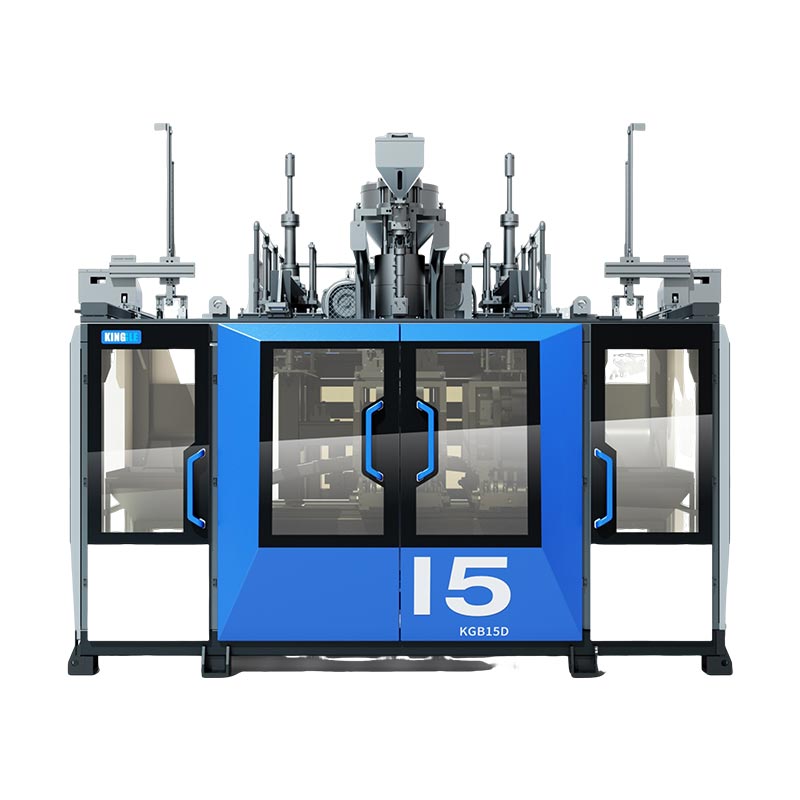
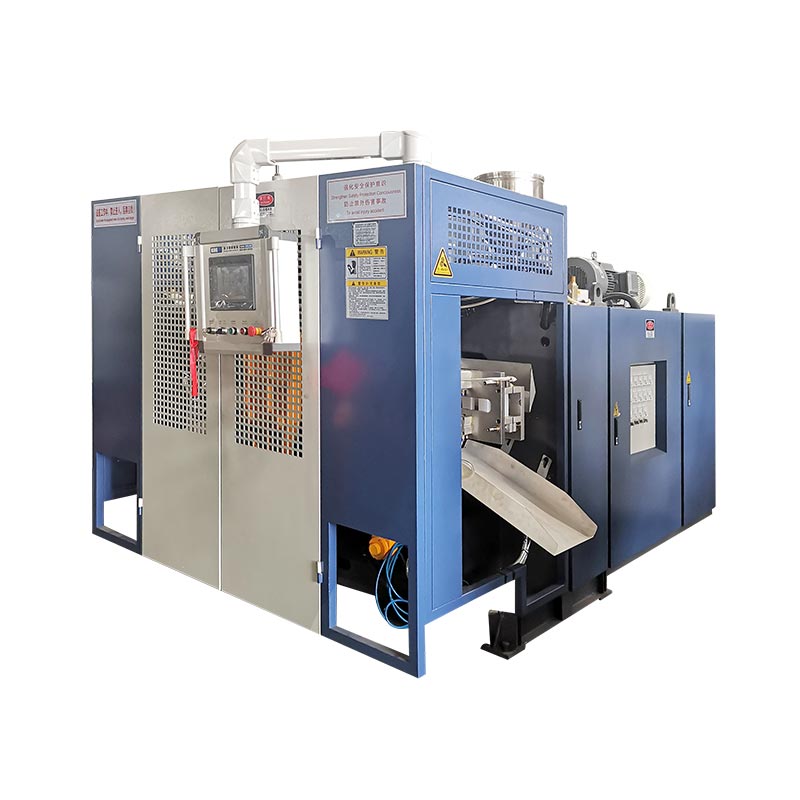
| KGB2L single station | Maximum container capacity 2 L; material column lists PE, PP, PVC and PA, among others | Grade and formulation, supplied hardware, auxiliaries, mold and target-part trial |
| KGB5L single station | Continuous extrusion platform for containers up to 5 L; material column lists PE, PP and ABS, among others | Material-specific configuration, thermal conditions, tooling and accepted production output |
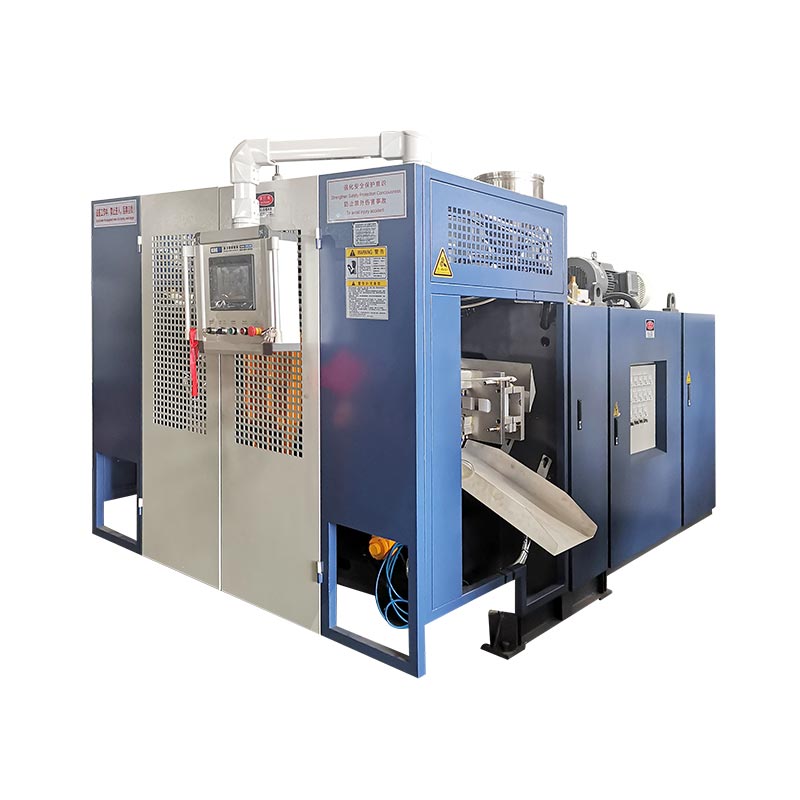
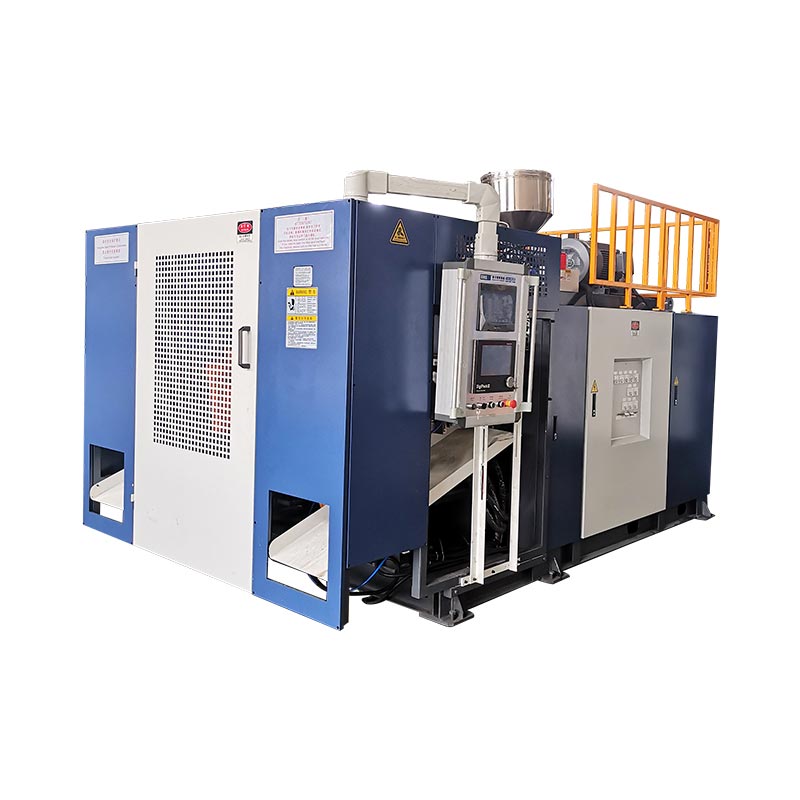
For tooling changes, check capacity, shrinkage and cooling against the mold design and machine-interface requirements. Reusing the existing mold is a decision to validate with the proposed grade.
Additives, colorants and compounds for blow molding
Selecting the base resin leaves the production formulation unfinished. Colorants and functional additives introduce their own identification, dosing and end-use requirements.
Distinguish base resins, masterbatch and compounds
A masterbatch supplies concentrated colorant or additives for controlled addition to a base resin. A compound supplies a prepared formulation; its specification determines what further additions are permitted. Ask which form the supplier is offering, including any carrier-resin requirements and the recommended addition method.
LyondellBasell's guide discusses colorants, antistatic agents, thermal stabilizers and UV stabilizers in polyolefin blow molding. Such additives address defined functions. Their presence does not establish unlimited outdoor life, a particular temperature rating or suitability for a contact application.
| Input | Material-side information | Equipment and part check |
|---|---|---|
| Base resin | Producer, full grade, applicable TDS and processing instructions | Screw/head suitability, material conditioning and forming behavior |
| Color or functional concentrate | Product identification, carrier compatibility, supplier's addition instructions and relevant use documents | Metering, mixing, dispersion and final appearance/function |
| Prepared compound | Compound specification and permitted further additions | Qualification of the supplied formulation on the proposed configuration |
| Permitted regrind or recycled input | Source, identity, condition, recipe limits and end-use requirements | Handling, consistency, traceability and finished-part acceptance |
Check dosing, blending and the finished formulation
The guide's colorant and additive blending section describes combining base resin, concentrates and regrind using volumetric or gravimetric feeding. Specify the feeding arrangement and verify it at the intended operating conditions. Stored recipe settings need to correspond to the materials actually entering the machine.
Use the target color and additive formulation for qualification. Inspect color uniformity and visible streaks, then complete the functional checks. Do not approve all colors from one natural-resin trial or prescribe a universal masterbatch percentage. The material supplier's instructions and the actual product requirements must define the formulation.
Keep recycled resin, in-house regrind and layers separate
These inputs have different histories and control needs. Record each one explicitly rather than treating all reused material as equivalent. The recycled-HDPE qualification guide covers incoming checks and controlled trials in more detail.
A multilayer structure adds another decision: which material performs each function, and how the layers work together. A virgin surface layer alone cannot establish acceptance of the entire package. Use the multilayer machine selection guide when the brief calls for separate contact, structural, recycled or barrier layers.
Material price vs cost per accepted part
Compare formulations using the cost of producing an accepted design. A lower resin price per kilogram can be offset by greater part weight, slower forming, drying costs or additional rejects.
For a defined production period, record net material consumption, colorants and additives, energy and auxiliaries, changeover losses, conversion costs and accepted output. Account for inventory changes and permitted internal regrind consistently. Circulating trim through the process should not be counted as fresh purchased resin on every pass, or treated as having no handling cost.
Cost per accepted part = attributable material and conversion costs ÷ accepted parts
Include color-change purging and qualification material when comparing alternatives. Use current project quotations instead of a generic price table for polymer families. The cost-per-container guide develops the full costing method.
How to qualify a resin before ordering equipment
Build a grade and product evidence file
Send the machine supplier a drawing or representative sample, the resin producer and full grade, the complete formulation, and the part's acceptance requirements. Include applicable material instructions, contact-use documents and batch-control information. Keep the drawing and recipe revisions identifiable.
Use each document for its purpose: a safety data sheet addresses handling information; a technical data sheet describes published material properties and guidance; a certificate of analysis reports the supplier's specified batch results. None automatically replaces the finished-part acceptance plan.
Agree the trial and finished-part acceptance
Record the machine, screw/head, mold, auxiliaries, material batch and formulation. Agree the measurement methods, sample locations and relevant conditions before the run. Include color/dispersion where applicable, as well as weight, local walls, neck interfaces and required functional tests.
Use three separate outcomes: retain the candidate, modify the configuration and repeat the trial, or stop to resolve a material/product issue. A successful first sample supports further evaluation; sustained output under the agreed conditions supports a production decision.
Project planning example: qualify output with the final formulation
Consider a hypothetical 2 L colored-HDPE container project using one cavity. If I were evaluating the equipment, I would ask for the conditions behind both the natural-resin trial and the final-formulation trial before accepting an output estimate.
The following assumptions illustrate the calculation; they are not measured Kinggle machine performance or customer project results. Each shift lasts 8 hours, and actual running time occupies 85% of the shift. The cycle is the complete machine cycle, while the acceptance rate applies to pieces produced during running time.
| Planning scenario | Cycle | Acceptance rate | Accepted parts per shift |
|---|---|---|---|
| Natural-resin trial assumption | 30 seconds | 98% | About 800 |
| Final-formulation trial assumption | 32 seconds | 95% | About 727 |
Accepted parts = cavities × 3,600 ÷ cycle seconds × shift hours × running-time fraction × acceptance rate
The calculations give 799.68 and 726.75 parts, or a difference of about 73 accepted parts per shift. This assumed difference is large enough to matter to a production plan. It does not predict that adding a colorant will cause those changes. The 85% input represents running time only; do not multiply again by a full OEE figure that already includes overlapping losses.
LyondellBasell's blending guidance explains why the actual formulation deserves a controlled review. It does not supply the cycle times or acceptance rates in this example. For the equipment order, specify the formulation and acceptance method that will establish the agreed output.
Send an RFQ the machine supplier can evaluate
Combine the product evidence file with annual demand, shift pattern and available production time. Ask the quotation to identify supplied hardware, auxiliaries, tooling interfaces and trial responsibilities. Resolve material-specific changes before treating two quotations as equivalent.
Frequently asked questions
Can injection molding grades be used for extrusion blow molding?
Only when the specific grade and formulation are supported for the proposed process and part. A shared polymer name or similar melt flow value does not establish parison stability, machine suitability or finished-part performance.
What is the difference between PET and PETG in blow molding?
The name alone does not identify the forming route or required hardware. Specify the exact grade and whether the process uses a preform or an extruded parison. Documented EBM copolyesters have their own drying and screw requirements; these cannot be transferred to every PET or PETG material.
Do all blow molding resins need drying?
No. Polyolefins are generally non-hygroscopic, but handling conditions and the complete formulation still matter. Moisture-sensitive grades require their supplier's conditioning instructions. Check actual material condition rather than relying only on a dryer setting.
Does a lower melt flow index always mean a better blow molding resin?
No. Compare results with the same test conditions and consider the other material properties, process requirements and part tests. A lower value by itself cannot establish better processing or finished-part suitability.
Can the same color masterbatch be used with every blow molding resin?
Do not assume so. Obtain the colorant supplier's guidance on the base resin, carrier compatibility, addition method and intended use. Qualify the final formulation for appearance, processing and relevant product performance.
Can the same mold be used after changing material?
Possibly, after reviewing the grade, shrinkage, cooling, geometry and required dimensions. Confirm the machine interfaces and validate the finished part. A mold that closes correctly does not by itself prove the new material will meet the drawing.
Prepare the material brief before choosing the machine
For a Kinggle equipment review, send the part drawing, resin grade, complete formulation and required output to sales@kinggle.com. The KGB2L and KGB5L product pages provide platform starting points; the project brief determines what configuration and trial evidence need to accompany a quotation.
Choose the material family for the product's function, then make the grade and formulation specific enough to evaluate. Keep material data, machine trials and finished-part tests distinct. Together, they provide a basis for committing to production equipment.