On this page
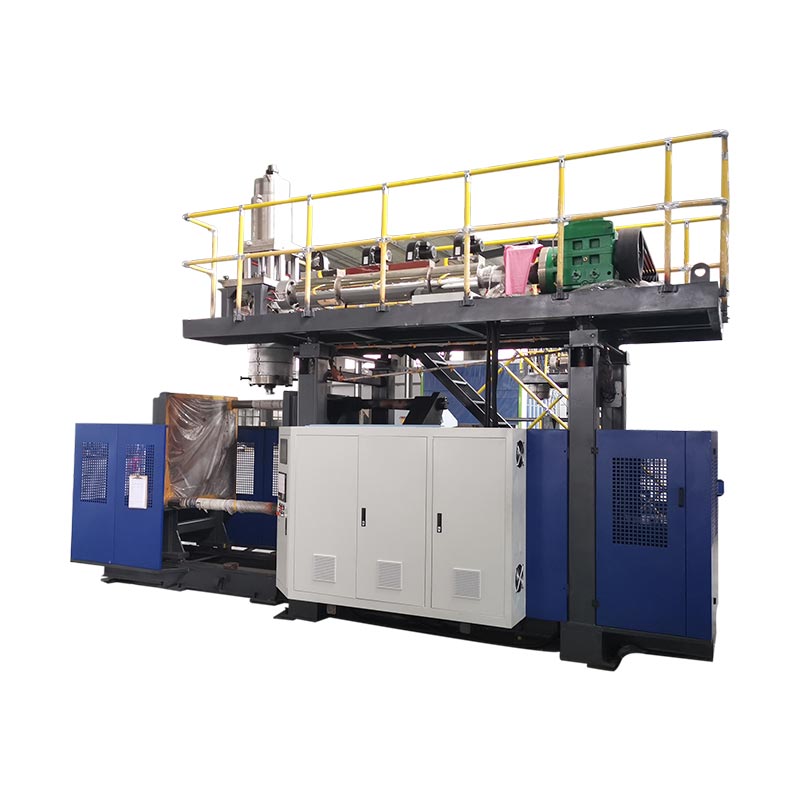
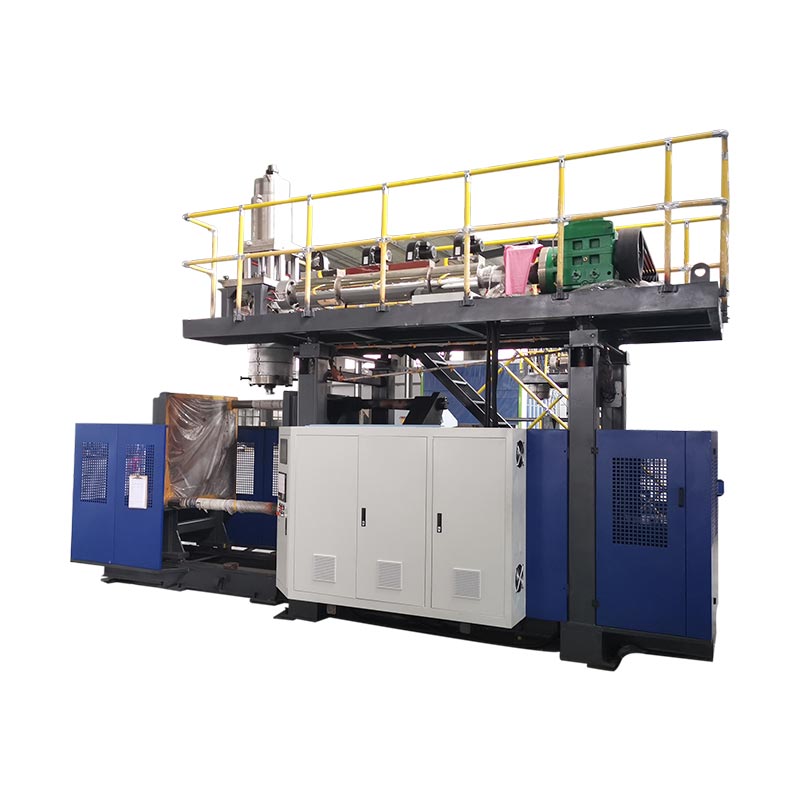
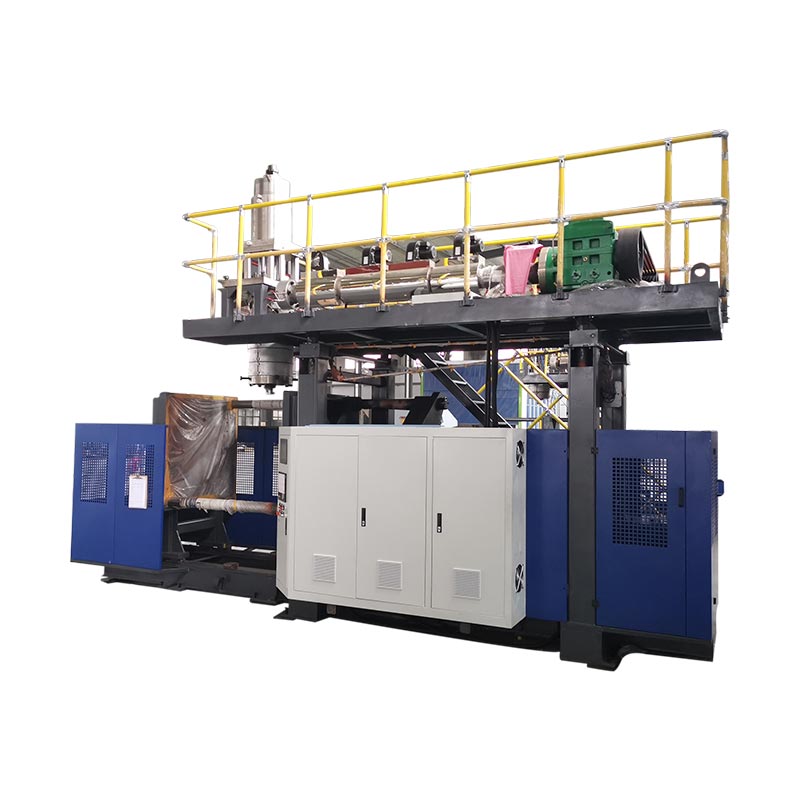
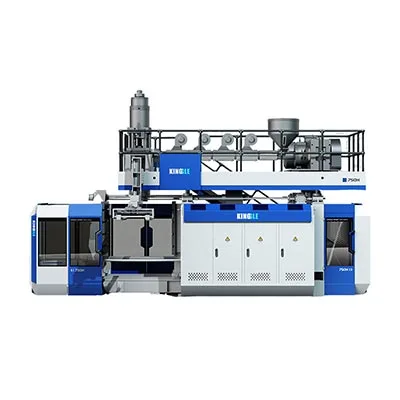
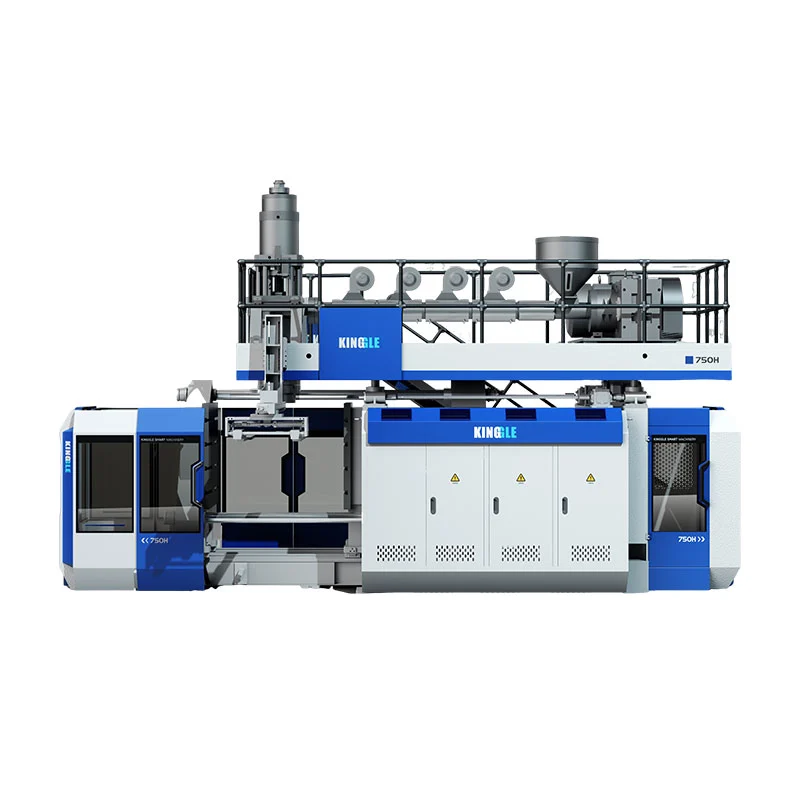
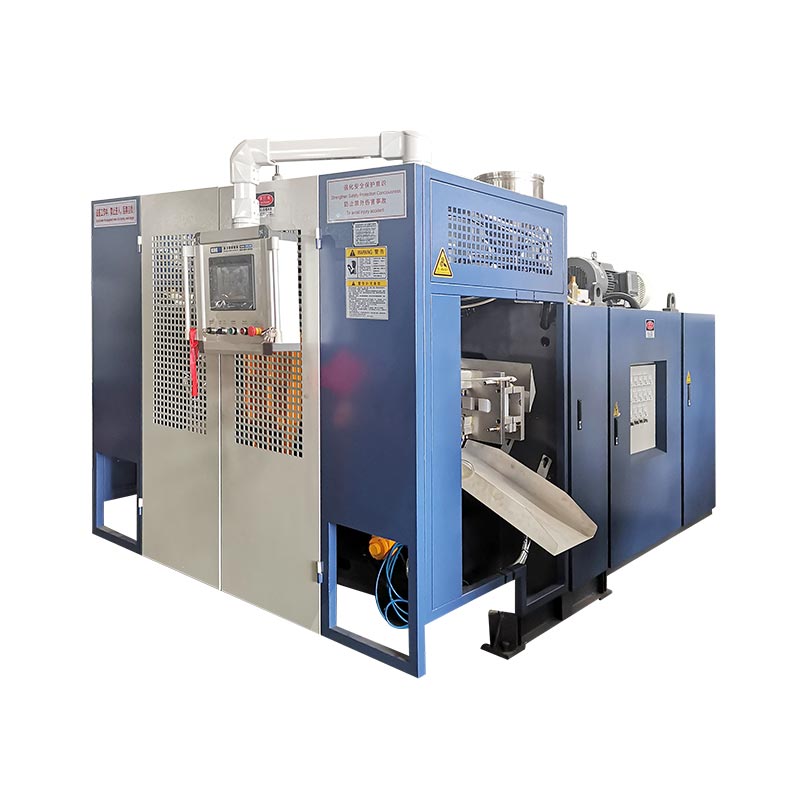
If you produce lubricant cans, agrochemical containers, detergent bottles or water carriers, the machine at the center of your line is a jerry can blow molding machine. It forms the body, handle and neck in one extrusion cycle, and the model you choose sets your output ceiling, your material cost per can and your energy bill for the life of the line. This guide walks through the decisions that actually move those numbers.
Machine configurations: single vs double station
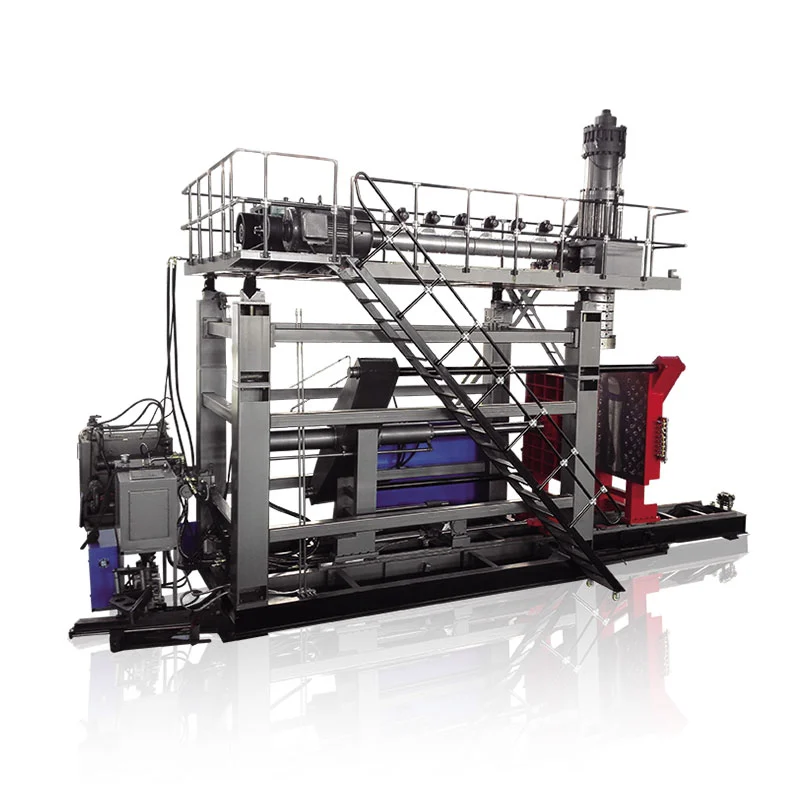
Jerry cans are made on two related platforms. A continuous blow molding machine extrudes the parison non-stop and is the standard choice for cans up to about 30 L. For larger drums and heavy-wall containers, an accumulate (accumulator) blow molding machine stores melt in a head and shoots it in one fast stroke. Within the continuous family, the key decision is single vs double station.
| Configuration | Cavities / cycle | Best for | Relative output | Investment |
|---|---|---|---|---|
| Single station | 1 | New lines, mixed or short runs, sampling | Baseline | Lower |
| Double station | 2 | High-volume single SKUs | ≈ 2× baseline | Higher, better cost per can at volume |
| Multi-die head | 2 / 3 / 4 | Small bottles (100 ml–1 L) run several-up | Multiplies small-part output | Depends on head count |
| Accumulate | 1 (large shot) | Heavy-wall & large cans (30 L+) | Size-driven, not speed-driven | Higher |
Small containers below ~1 L are usually run several-up on a multi-die head, which is why a 2 L machine can also make 100 ml–1 L bottles cost-effectively.
Model & size guide (1–30 L)
Match your can size and daily volume to the right machine. Double-station models run two cavities per cycle to roughly double output.
| Jerry can size | Single-station model | Double-station model | Machine weight (S / D) | Dry-cycle output* |
|---|---|---|---|---|
| 1 – 2 L | 2L Single Station | 2L Double Station | 2.5 t / 4.5 t | ~600 / 1,200 cans·h⁻¹ |
| 3 – 5 L | 5L Single Station | 5L Double Station | 3.0 t / 5.2 t | ~500 / 1,000 cans·h⁻¹ |
| 10 – 15 L | 15L Single Station | 15L Double Station | 7.5 t / 12.5 t | ~450 / 900 cans·h⁻¹ |
| 20 – 30 L | 30L Accumulate | — | on request | ~450 cans·h⁻¹ |
*Dry-cycle output is the theoretical maximum with no downtime. Real output is lower once cooling time and can weight are factored in — see the output math below.
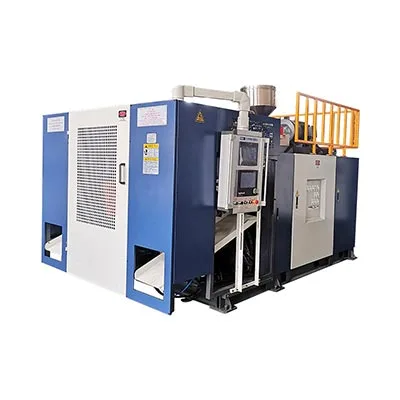
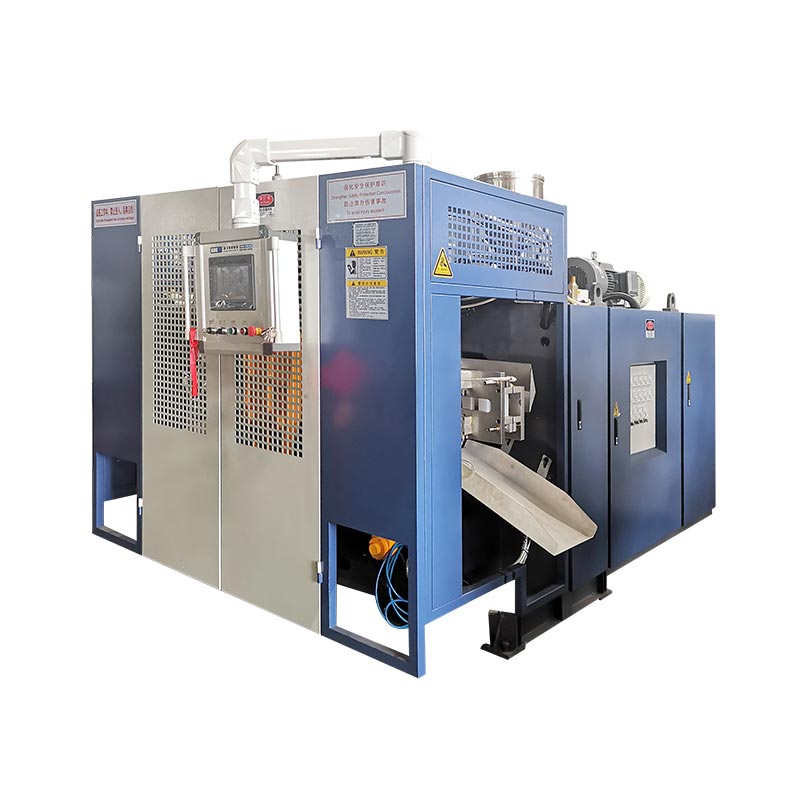 2L Single Station — 100 ml–2 L cans
 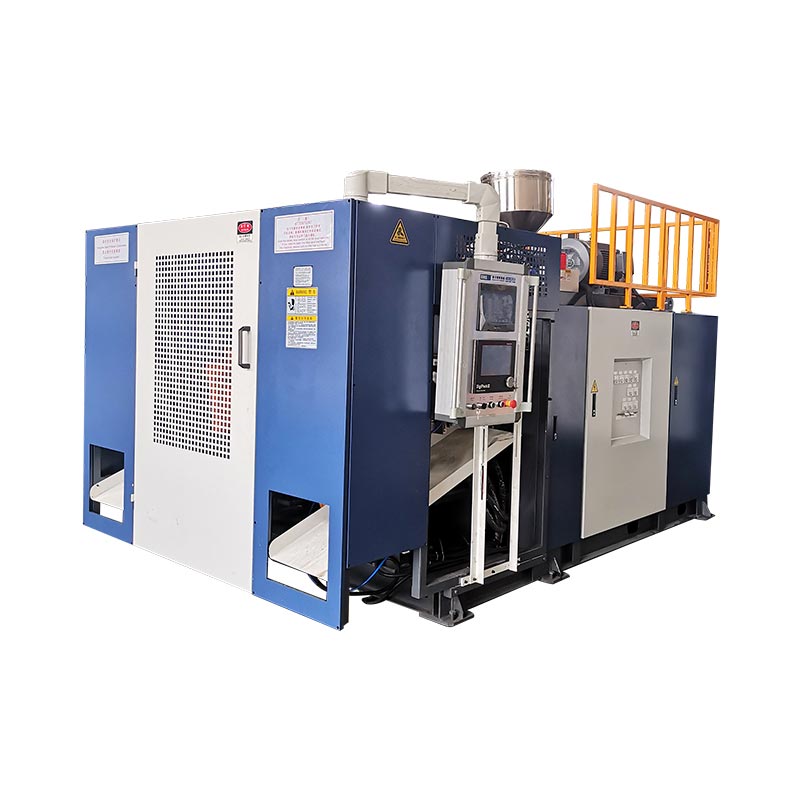 5L Single Station — oil & detergent cans
 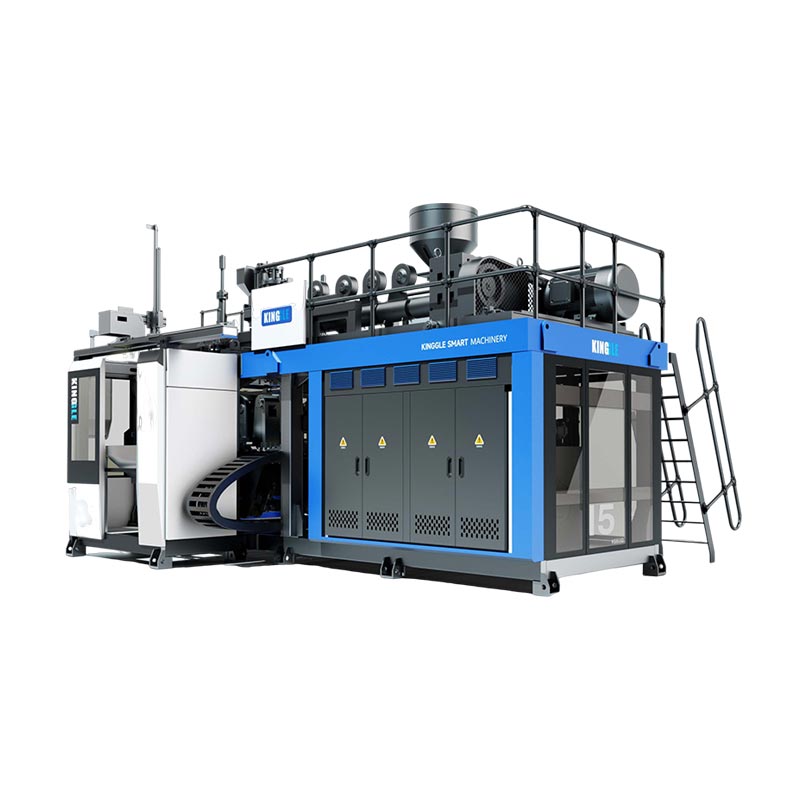 15L Single Station — chemical & water cans
Production output: the math that matters
The number printed on a spec sheet is the dry-cycle (free-air) rate — the machine running with no plastic and no cooling. Your real number is lower, and knowing how to convert it stops you from over- or under-buying capacity.
Real output = dry-cycle × efficiency (≈ 0.75–0.85)
Daily output = real output × running hours
Worked example — a 5 L single-station machine with a 7.2 s cycle:
Real at 80% efficiency: 500 × 0.8 = 400 cans/h
Two shifts (16 h): 400 × 16 = 6,400 cans/day
On a double station: ≈ 12,800 cans/day
Cycle time is driven mostly by wall thickness and cooling — a heavier 15 L chemical can cools slower than a 5 L oil can, so don't assume a bigger machine is a faster one. If your storage stroke feels slow, it is usually a die-head or cooling issue; we cover the causes in what causes slow material storage in blow molding machines.
Materials & jerry can design
Jerry cans are almost always HDPE, but the exact resin and wall design change with what goes inside. The machine runs PE, PP, PVC and PA; the mold and parison program do the rest.
| Jerry can type | Typical size | Material | Design note |
|---|---|---|---|
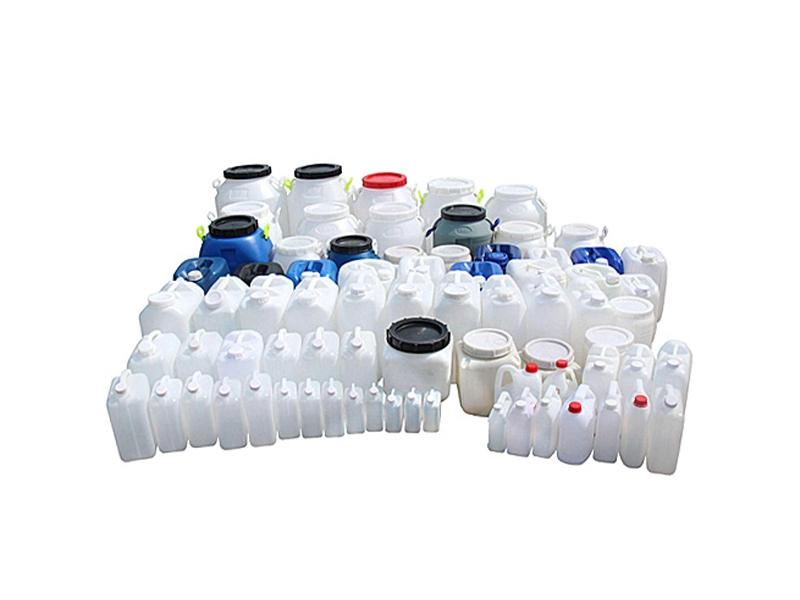
| Lube / motor-oil can | 1 – 5 L | HDPE | Integrated handle, F-style, print-ready face |
| Chemical / agrochemical | 5 – 30 L | HDPE / HMW-HDPE | Controlled wall thickness for UN transport rating |
| Water / carrier can | 5 – 20 L | HDPE (food-grade) | Smooth interior, tap-boss option |
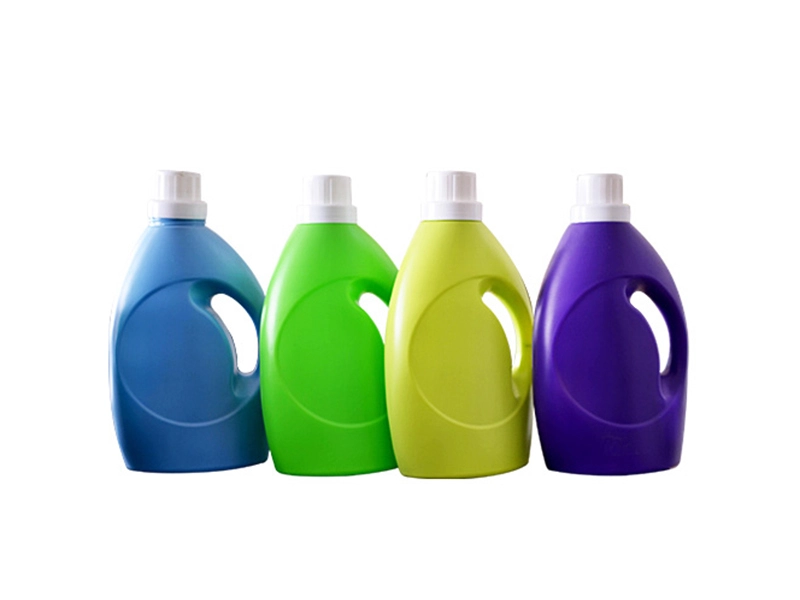
| Detergent / cleaning | 2 – 5 L | HDPE / PP | View-strip for fill level |
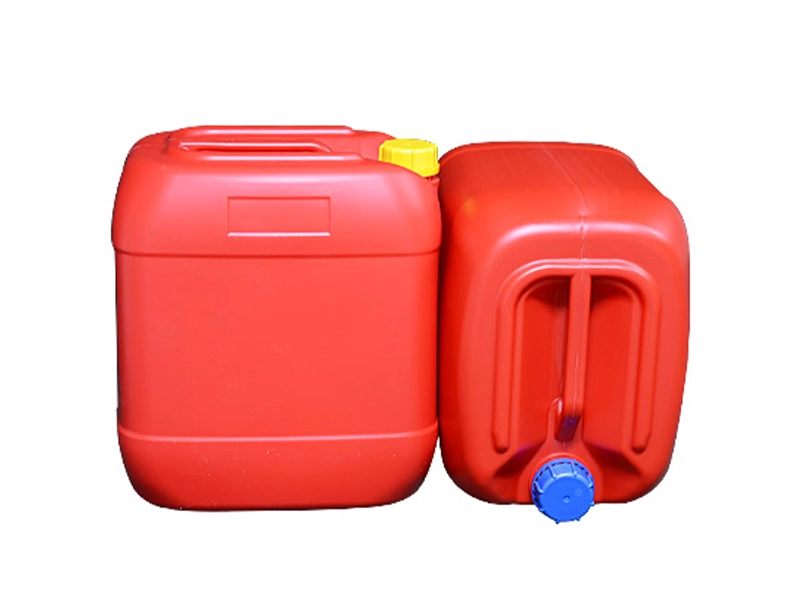
| Stackable canister | 10 – 30 L | HDPE | Nesting / stacking geometry, reinforced base |
The single biggest lever on cost per can is the parison wall-thickness program: it lays down plastic where the can needs strength (base, handle, neck) and thins it where it doesn't, so you hit your drop-test spec with the least resin. Chemical-barrel makers invest specifically in this control — see why chemical-barrel manufacturers invest in special blow molding machines.
Automation, controls and energy
What separates a stable jerry can line from a troublesome one is rarely the frame — it is the control and automation package around it.
- Parison wall-thickness controller. Point-by-point wall profiling for consistent cans and minimum resin use — the biggest single cost lever on the line.
- Servo energy-saving drive. A servo main pump draws power on demand instead of running full-tilt, cutting the electricity bill that follows the line for years.
- Robot-arm take-out & deflashing. Automated take-out, tail/flash trimming and inspection keep quality stable across long unmanned runs.
- Imported key components. Mitsubishi PLC, Weinview HMI, Omron, Schneider, MOOG and AirTAC for reliability and worldwide serviceability.
- Whole-plant integration. Central feeding, centralized water supply and centralized crushing can be supplied as one turnkey line, not a standalone machine.
Installed power scales with size — from around 11 kW on a 2 L machine to 75 kW or more on a 30 L machine — but real draw depends heavily on whether the main pump is servo-driven. For a deeper process comparison, see blow molding vs rotational molding for large hollow parts.
Running costs & cost per can
Machine price is a one-time number; cost per can runs forever. It breaks down into resin, energy, labor and overhead — and resin dominates.
Resin = can weight (kg) × resin price ($/kg)
e.g. 5 L HDPE can ≈ 0.20 kg × $1.30 = $0.26
Energy = machine kW × $/kWh ÷ cans per hour
e.g. 15 kW × $0.12 ÷ 400 = $0.0045
Labor with robot take-out ≈ fractions of a cent per can
The takeaway: energy and labor are small next to resin, so the fastest payback comes from a machine that lets you run thinner, more consistent walls — not from chasing a lower sticker price. Trim 5% of resin off a can that sells in the millions and the saving dwarfs the machine's energy cost.
Choosing your configuration
Work through four questions and the right machine usually picks itself:
- What size cans, and how many SKUs? One high-volume size favors a double station; a mix of sizes favors a flexible single station.
- What daily volume? Run the output math above against two-shift hours before deciding single vs double.
- What resin and wall spec? UN-rated chemical cans need strong wall-thickness control; food/water cans need clean interiors.
- Standalone or turnkey? If you're scaling, factor in central feeding, water and crushing from the start.
Get a jerry can machine quote
Send us your can size, daily target and resin — we'll recommend the exact model and cavity setup, with real cycle figures.
Get a Quote Chat on WhatsAppFrequently asked questions
What plastic is used for jerry cans?
Most jerry cans are blow molded from HDPE. Heavy-duty chemical cans use HMW-HDPE for extra impact and stress-crack resistance; some thin-wall or detergent cans use PP. Kinggle machines run PE, PP, PVC and PA.
Is it a blow molding or a blow moulding machine?
Same machine — "molding" is the US spelling and "moulding" the UK/Commonwealth spelling. A jerry can blow molding machine and a jerry can blow moulding machine are identical.
How do I calculate jerry can output per hour?
Dry-cycle output = die heads × (3600 ÷ cycle time in seconds). Multiply by a real-world efficiency factor of about 0.75–0.85 for actual cans per hour, then by daily running hours for cans per day.
Which materials can the machine run?
Kinggle jerry can machines process PE (HDPE / HMW-HDPE), PP, PVC and PA. HDPE is the standard for oil, chemical and water cans.
How much energy does a jerry can blow molding machine use?
Installed power ranges from roughly 11 kW on a 2 L machine to 75 kW+ on a 30 L machine. A servo main pump cuts real draw significantly, and energy is usually a small fraction of cost per can compared with resin.
Do you supply the mold and installation?
Yes. We supply the machine, can pair it with molds to your drawings, and provide installation, commissioning, operator training and after-sales support. Full turnkey lines are also available.