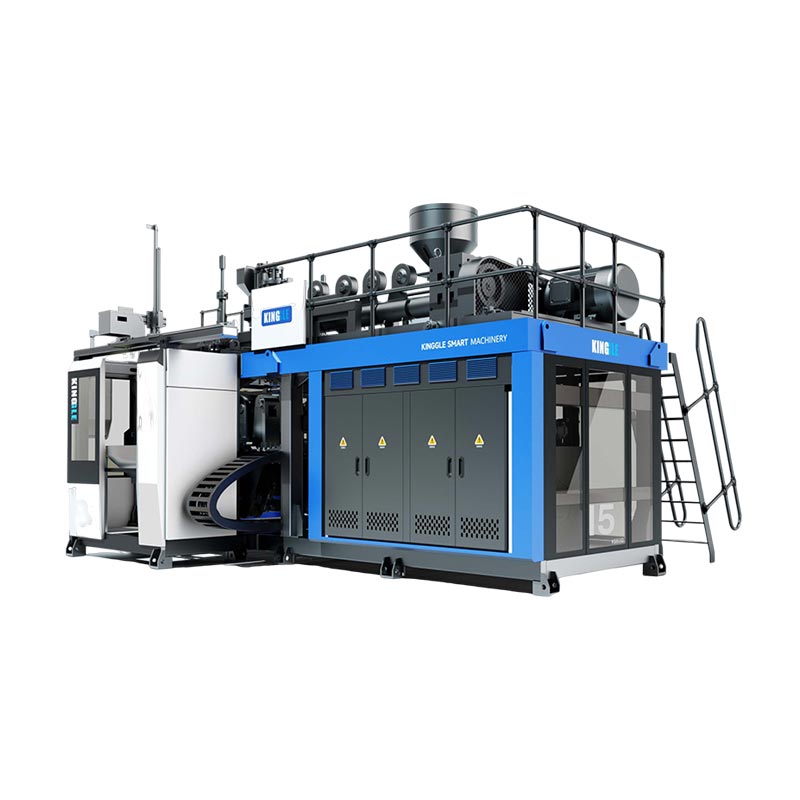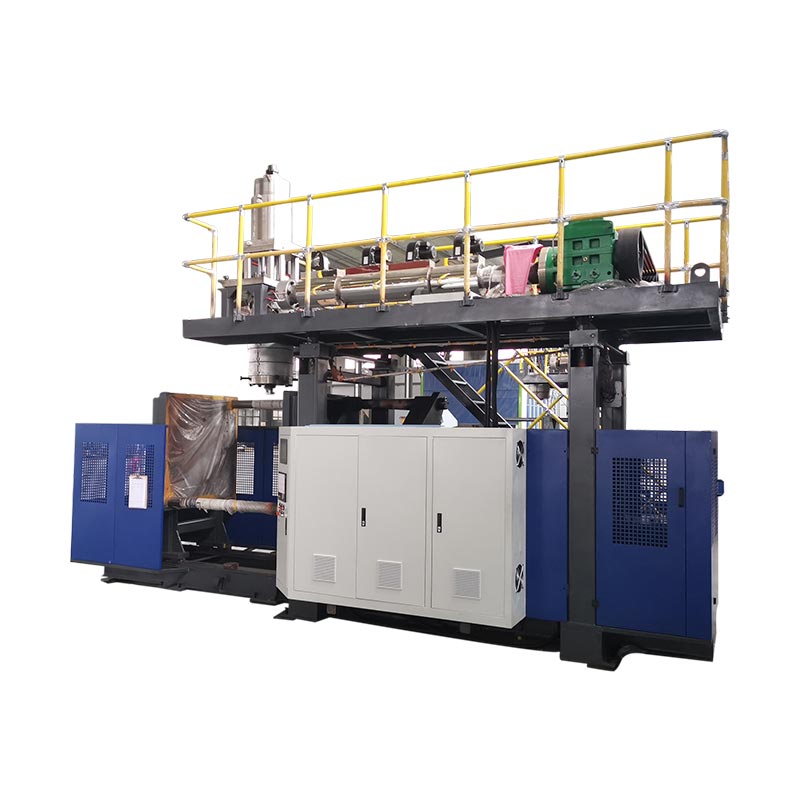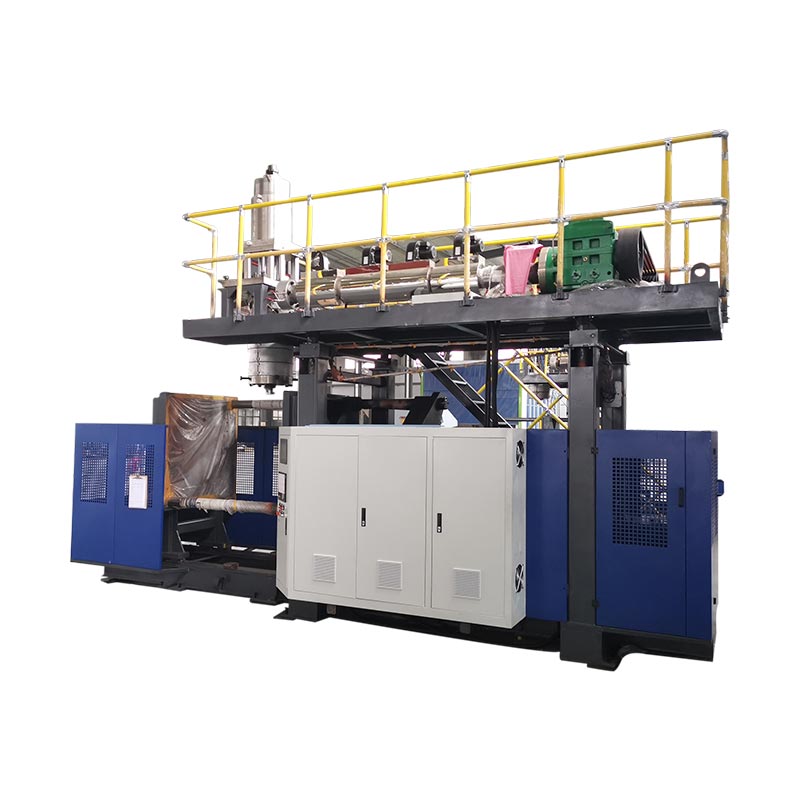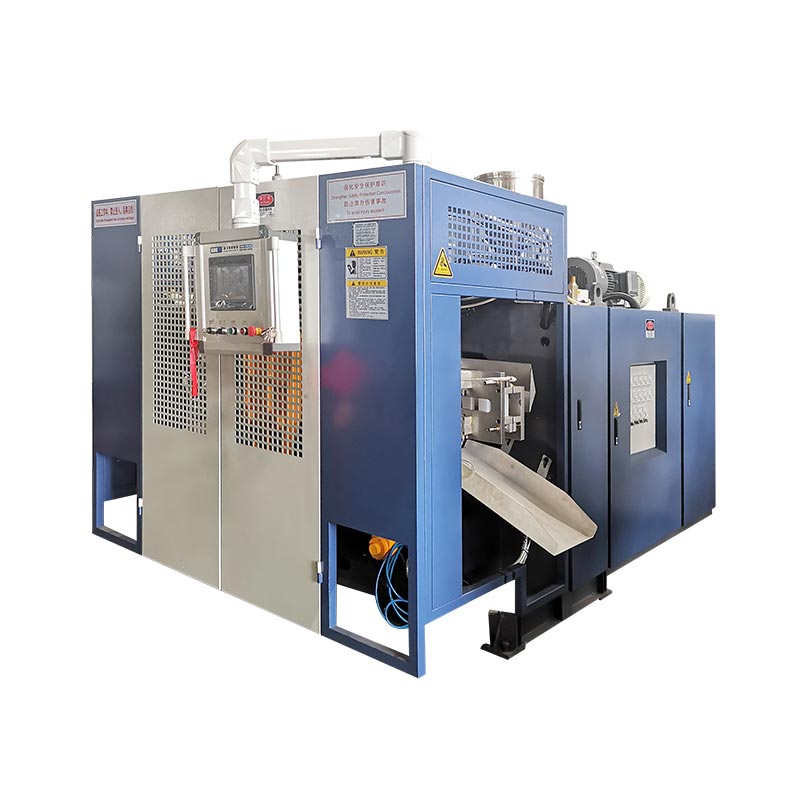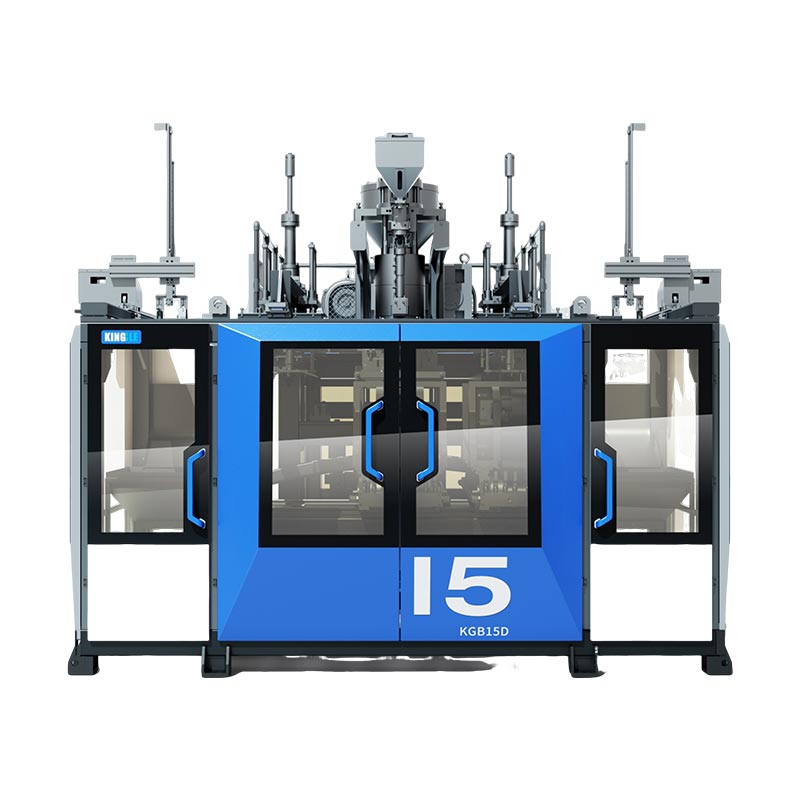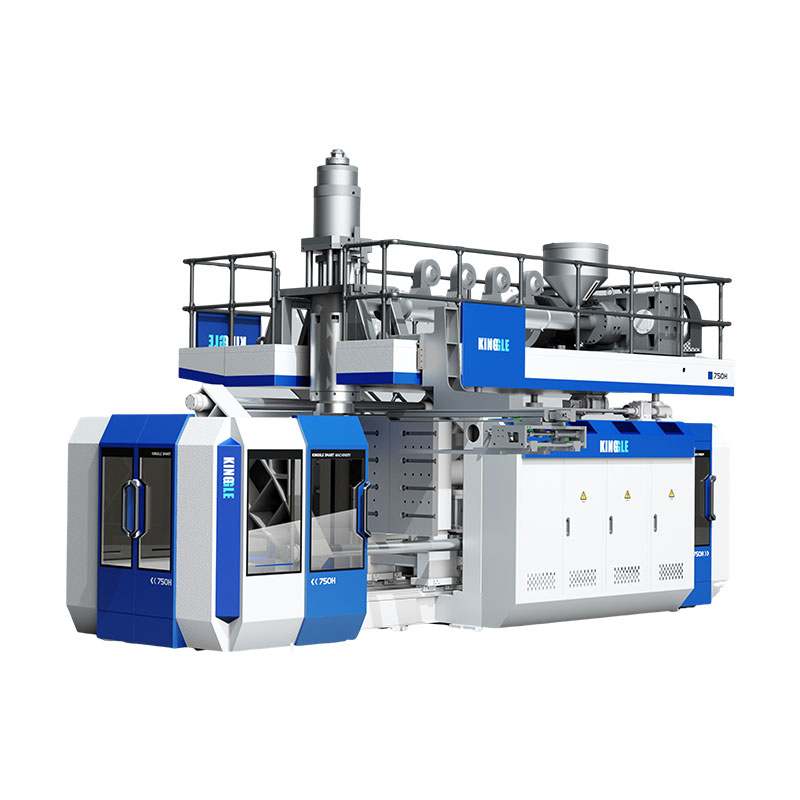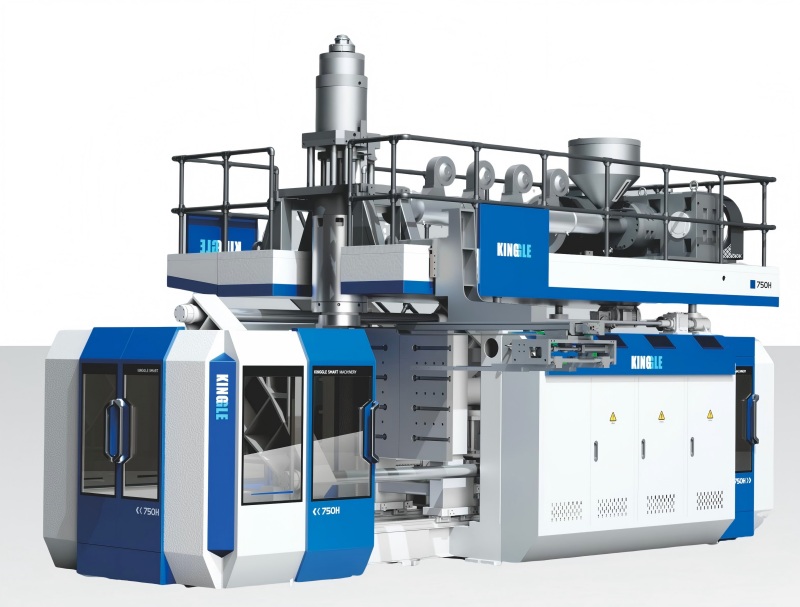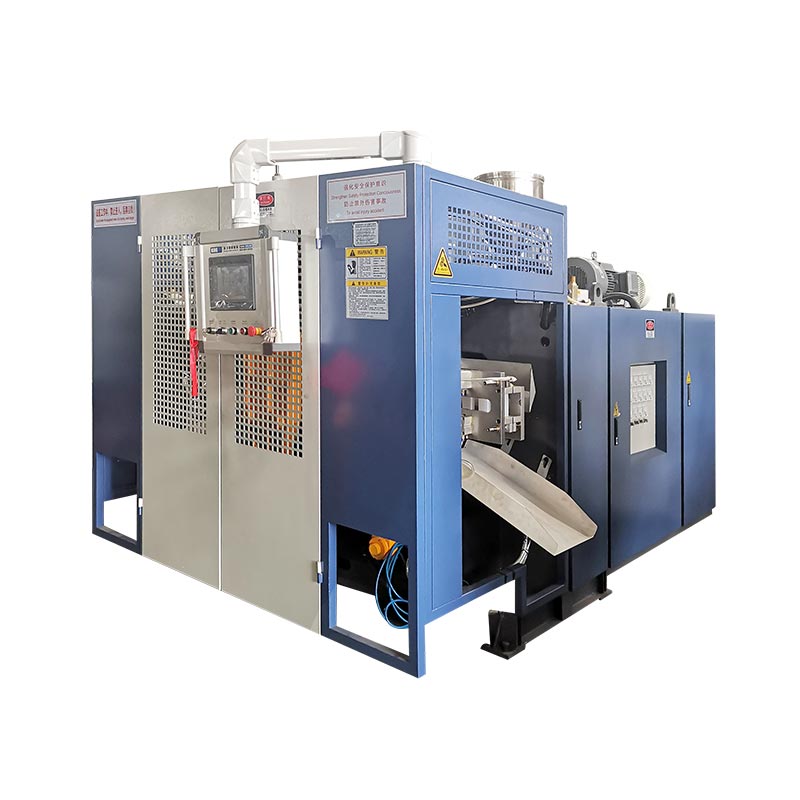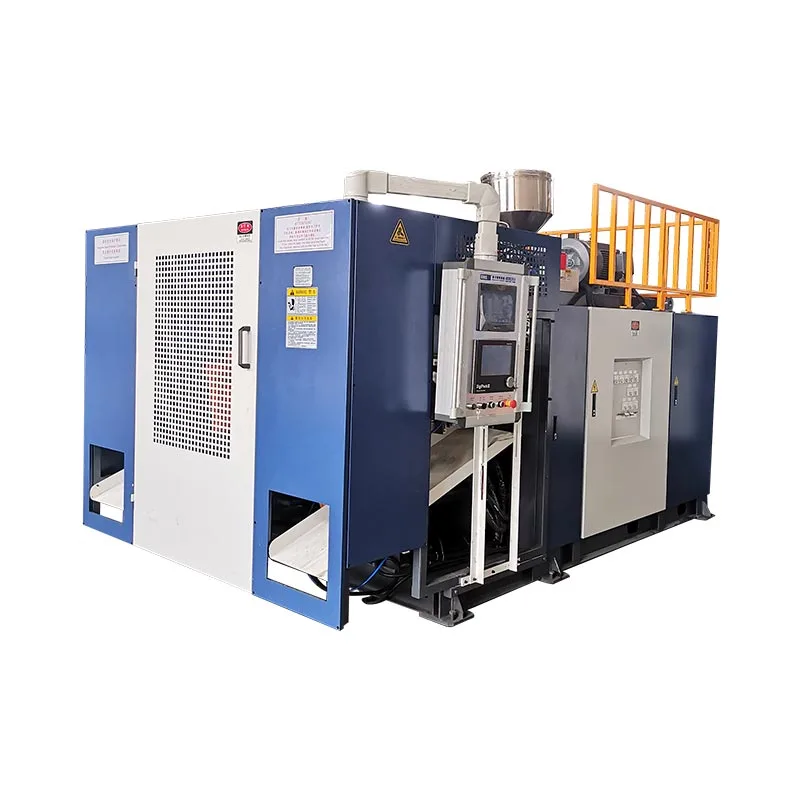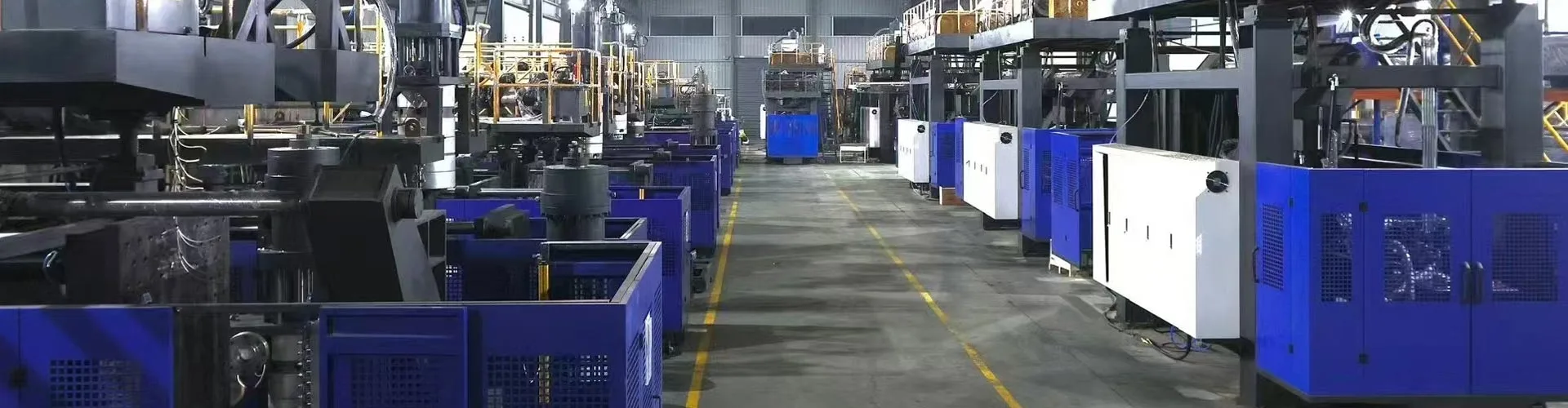
A continuous blow molding machine extrudes a nonstop parison while mold stations move in to catch and inflate it. The extruder never stops, which makes this the fastest route for HDPE and PP containers from about 0.5 to 30 liters. Three variables set your output: station count, die head cavities, and cycle time. Three more set your cost: energy per part, maintenance, and scrap. This guide covers both sides, with real specs from our own machines.
Continuous extrusion covers most of the plastic containers you handle in a day. Detergent bottles, motor oil jugs, jerry cans, agrochemical packaging — nearly all come off machines like these.
One clarification before the details. Clear PET water bottles come from a different process, injection stretch blow molding, on different machines. This guide covers continuous extrusion blow molding for HDPE, PP, PVC, and PA. If your product is a PET beverage bottle, the equipment in our continuous machine range will not make it.
Machine configurations: how the molds meet the parison
Every continuous machine solves the same problem. The parison flows without stopping, so the mold has to come to it, close, blow, and clear out before the next shot. How the machine does that defines the configuration.
Mold-moving machines shuttle the mold horizontally to the parison. The build is simple, proven, and cost-effective. It covers 2 to 15 liter containers.
Curved-arm machines swing the mold through an arc, which shortens the travel and speeds the cycle. They also carry co-extrusion heads for 1 to 6 layers. This is the class for high output and layered bottles.
Then comes station count. Single station (L) runs one mold set. Double station (D) runs two mold sets off one extruder, so one side blows while the other ejects.
| Configuration | Container range | Best for | Trade-off |
|---|---|---|---|
| Mold-moving, single station | 2–15 L | Modest volumes, frequent product changes | Lowest output per machine |
| Mold-moving, double station | 2–15 L | High volumes on one product family | Higher cost; needs steady demand |
| Curved arm, single station | 5–30 L | Speed, layered walls, larger jerry cans | Higher energy draw |
| Curved arm, double station | 5–30 L | Maximum output, multi-layer at volume | Highest capital and floor space |
Plant fit, checked early: confirm four things before you commit — floor space against the machine footprint, ceiling height for the die head and hopper loader, three-phase power for the connected load, and chilled water capacity. Machine weight ranges from 2.5 tonnes on a 2 L single station to 28.5 tonnes on a 30 L curved-arm double station, so check your floor loading too.
US buyers should add one more early check. Containers for food, beverage, or pharmaceutical contact bring FDA material requirements that shape your resin and any regrind policy. Recycled-content rules also vary by state and change often, so confirm the current requirement for your product category before you lock the resin specification.
Production performance: turning specs into bottles per hour
Every catalogue prints an output number. Read it correctly, or you will overpromise on delivery.
Those numbers show the dry cycle — the machine running empty at full speed, no plastic, no cooling. Use them to compare machines fairly. Never use them as a production forecast.
Here are the real dry-cycle figures across our continuous range, with the specs that drive them.
| Model | Max container | Dry cycle | Clamping | Screw | HDPE capacity | Avg. energy |
|---|---|---|---|---|---|---|
| KGB2L | 2 L | 600 pc/hr | 40 kN | 50 mm, L/D 25 | 30 kg/hr | 12–18 kW |
| KGB2D | 2 L | 600 × 2 | 40 kN | 60 mm, L/D 25 | 55 kg/hr | 12–18 kW |
| KGB5L | 5 L | 500 pc/hr | 65 kN | 60 mm, L/D 25 | 55 kg/hr | 16–25 kW |
| KGB5D | 5 L | 500 × 2 | 65 kN | 70 mm, L/D 25 | 80 kg/hr | 16–25 kW |
| KGB15L | 15 L | 450 pc/hr | 165 kN | 75 mm, L/D 25 | 100 kg/hr | 25–34 kW |
| KGB15D | 15 L | 450 × 2 | 165 kN | 90 mm, L/D 25 | 120 kg/hr | 25–34 kW |
| KGH15L | 15 L | 500 pc/hr | 200 kN | 80 mm, L/D 25 | 150 kg/hr | 40–50 kW |
| KGH15D | 15 L | 500 × 2 | 200 kN | 90 mm, L/D 25 | 180 kg/hr | 40–50 kW |
| KGH30L | 30 L | 450 pc/hr | 300 kN | 90 mm, L/D 25 | 180 kg/hr | 70–80 kW |
| KGH30D | 30 L | 450 × 2 | 300 kN | 100 mm, L/D 25 | 300 kg/hr | 70–80 kW |
Now the math that turns those numbers into a production plan.
Two rules make that derate honest. Thicker walls cool slower, so heavy parts derate harder than light ones. And changeovers eat hours that never appear in a cycle-time number.
Measure your own derate after installation. Run the machine empty to confirm the dry cycle, then run a full production shift and divide good parts by hours. That ratio becomes your planning factor, and it holds steady once the process settles.
Match the line, not just the machine: size your blow molding output against your filling line, not in isolation. A machine that outruns your filler builds inventory and floor clutter. Multiply your planned pieces per hour by shift hours, divide by bottles per case, and check that number against your downstream case and pallet throughput before you buy.
Materials and part design
Continuous extrusion runs PE, PP, PVC, and PA. HDPE carries most bottle and jerry can work, and its forgiving processing window explains why it dominates the category.
The screw does the real work. Its diameter and length-to-diameter ratio set how much resin the machine melts per hour, and that caps output before anything else does. Our machines run 50 to 100 mm screws at L/D 25, with 3 to 5 heating zones on the barrel and 3×5 to 3×8 heating sections in the die head.
| Material | Typical products | What to watch |
|---|---|---|
| HDPE | Detergent bottles, jerry cans, motor oil jugs, dairy | Most forgiving. Match melt index to part weight — lower MFI for larger parts |
| PP | Hot-fill and higher-temperature packaging | Narrower processing window; cools slower, so cycles lengthen |
| PVC | Clear bottles, specialty chemical packaging | Heat-sensitive. Degrades if it sits hot; purge before any stoppage |
| Regrind blends | Cost reduction across most products | Blend at a controlled ratio; contaminated regrind carries specks into the melt |
Part design sets limits the machine cannot overcome. Deep undercuts fight the pinch-off. Sharp corners thin the wall where the parison stretches most. Handles need enough die head diameter to form cleanly — our heads run 90 to 220 mm on single die-pin models.
Bring the drawing to your supplier before you cut a mold. In our experience, most wall-thickness complaints trace back to a design decision rather than a machine setting — and an hour on the drawing prevents weeks of trial-and-error.
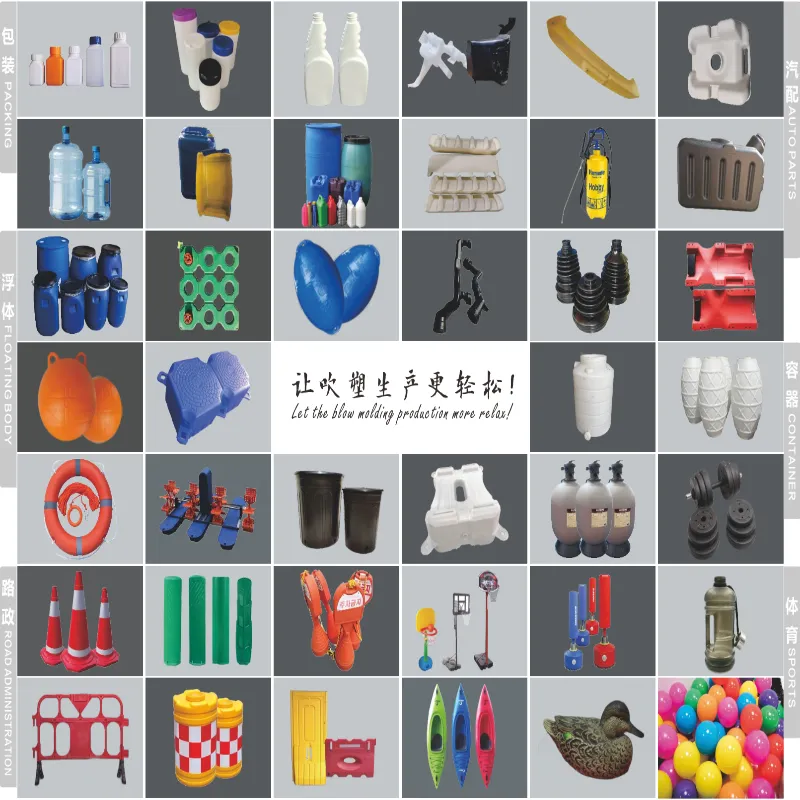
Layers open more options. A co-extrusion head adds a colored skin, a transparent view stripe, or a buried recycled core — all in the same shot. Our curved-arm machines run 1 to 6 layers, covered in full in the multi-layer guide.
Automation, controls, and energy
The control stack decides whether quality holds across shifts. Ask any supplier what sits inside, and expect names, not adjectives.
Our machines run Mitsubishi PLCs, MOOG servo control, Weinview HMIs, and OMRON, Schneider, and GEFRAN components. Programmed wall-thickness control varies the die gap through the shot, which puts material where the part needs it and takes it out where it does not.
For line integration, ask three specific questions: which protocols the PLC exposes for MES or SCADA connection, whether alarms export as structured data, and whether the supplier offers remote diagnostics. We provide IoT remote monitoring so our engineers can inspect a machine in real time and flag problems before they stop production.
Energy deserves its own analysis. Three loads dominate: barrel heating, the drive system, and cooling. The table above lists average consumption by model, and cooling water runs 50 to 180 L/min depending on machine size.
Compare suppliers on that per-part figure, not on hourly draw. A faster machine spreads the same kilowatts across more bottles, which often makes the higher-rated machine the cheaper one to run.
Lifecycle economics: what the machine costs to own
Purchase price is one payment. Ownership runs for a decade. Five factors drive capital cost, and four drive operating cost.
| Cost driver | Category | Notes |
|---|---|---|
| Machine size and station count | Capital | The largest single variable |
| Layer count | Capital | Each layer adds an extruder and head complexity |
| Molds and cavities | Capital | Usually quoted separately — budget for them |
| Downstream automation | Capital | Deflashing, leak testing, conveying |
| Energy | Operating | Use the per-part figure above |
| Labor | Operating | Falls sharply with automated deflashing and handling |
| Scrap and regrind | Operating | Closing the regrind loop recovers flash you already paid for |
| Spares and maintenance | Operating | Budget annually; stock fast-wear items on site |
Build your payback model on the delta, not the total. Compare the new line against what you run today: parts per hour gained, labor hours saved, scrap reduced, energy per part changed. Divide the machine and tooling cost by that annual gain, and you have a payback period in your own numbers rather than a vendor's.
Maintenance and failure modes
Uptime comes from a schedule, not from luck. Plan three tiers of work.
| Interval | Tasks |
|---|---|
| Daily | Check die head heaters and temperatures; clear the pinch-off area; verify cooling water flow and pressure |
| Weekly | Inspect clamping faces and locating pins; check servo and hydraulic pressures; review scrap rate for drift |
| Quarterly | Run performance diagnostics; inspect the lubrication system; calibrate critical components |
| Annually | Inspect screw and barrel wear; service the die head; review the full spare-parts inventory |
Common failure modes follow patterns: worn pinch-off edges weaken base welds, drifting heater zones change wall distribution, and dulled clamping faces let flash appear. Each one shows up as a defect on the part first.
Operator training pays back faster than any spare part. Confirm what your supplier includes, and confirm that installation covers machine guarding and lockout procedures to your local safety requirements — in the US, that means OSHA compliance signed off before the line runs production.
Ask about the warranty in writing: ours runs one year on the whole machine from arrival at your factory, with main components such as the MOOG wall-thickness controller and servo motors extending to two years. Ask any supplier what their warranty covers, what it excludes, and how fast spare parts reach your country.
Choosing your configuration
Work in this order: container volume and material narrow the machine class, annual volume decides single or double station, and layer requirements decide mold-moving or curved arm. Cavities then scale the output to your forecast.
Our five-step selection guide walks that sizing path in detail. For containers above 30 liters, the parison grows too heavy for continuous extrusion, and the decision moves to accumulator machines — covered in our accumulator vs continuous comparison.
Frequently asked questions
What is a continuous blow molding machine?
A continuous blow molding machine extrudes a nonstop tube of molten plastic, called a parison, while one or two mold stations move in to catch it, close, and inflate the part. The extruder never stops. This suits small and medium containers in HDPE, PP, and PVC — bottles, jerry cans, and lubricant packaging. Large parts use accumulator machines instead, because a heavy hanging parison stretches before the mold closes.
How do I calculate bottles per hour from cycle time and cavities?
Multiply cycles per hour by cavities per die head by station count. A machine rated at 600 dry cycles per hour with a 2-cavity head on a double station reaches 2,400 pieces per hour in theory. Then apply a realistic derate for cooling, handling, and changeover, because catalogue ratings show the machine cycling empty. Plan capacity on the derated number.
Which materials run on a continuous blow molding machine?
HDPE, PP, PVC, and PA run well on continuous extrusion blow molding machines. HDPE dominates bottle and jerry can production. Match the screw to the material: stiffer grades need more melting capacity, which is why screw diameter and length-to-diameter ratio matter. Clear PET beverage bottles use a different process — injection stretch blow molding — and different machines.
How much energy does a continuous blow molding machine use?
Average energy consumption scales with machine size. Kinggle continuous machines run 12 to 18 kW on the 2 L class, 16 to 25 kW on the 5 L class, 25 to 34 kW on the 15 L class, and 40 to 80 kW on high-speed curved-arm models. Compare suppliers on energy per finished part rather than per hour, since a faster machine spreads the same draw across more pieces.
What maintenance does a continuous blow molding line need?
Plan daily, weekly, and quarterly work. Daily: check die head heaters, clear the pinch-off area, verify cooling water flow. Weekly: inspect clamping surfaces and hydraulic or servo pressures. Quarterly: run performance diagnostics, inspect the lubrication system, and calibrate critical components. Keep fast-wear spares on site, since a missing part costs more in downtime than in inventory.
Next step depends on where you are
Send your container details — volume, material, wall thickness, target output — and our engineers will respond with the right path for your stage:
- Trialing a new product? We will recommend a starting configuration and run your part in a sample trial.
- Adding capacity? We will build the output math against your filling line and quote the matching model.
- Replacing an aging machine? We will compare energy per part and scrap against your current line, so the payback comes from your numbers.
Every quotation names the model, the components, the trade terms, and the lead time — regular models run 30 to 40 days, custom builds 60 to 120 days. Browse the full continuous machine range while you gather your numbers.
Request a configuration and quotation →A continuous blow molding machine earns its place through rhythm — an extruder that never stops, molds that keep up, and a line sized to your filler. Get the configuration, the cavity count, and the derate right, and the output math holds in production. See the models and specifications in the continuous blow molding machine range.