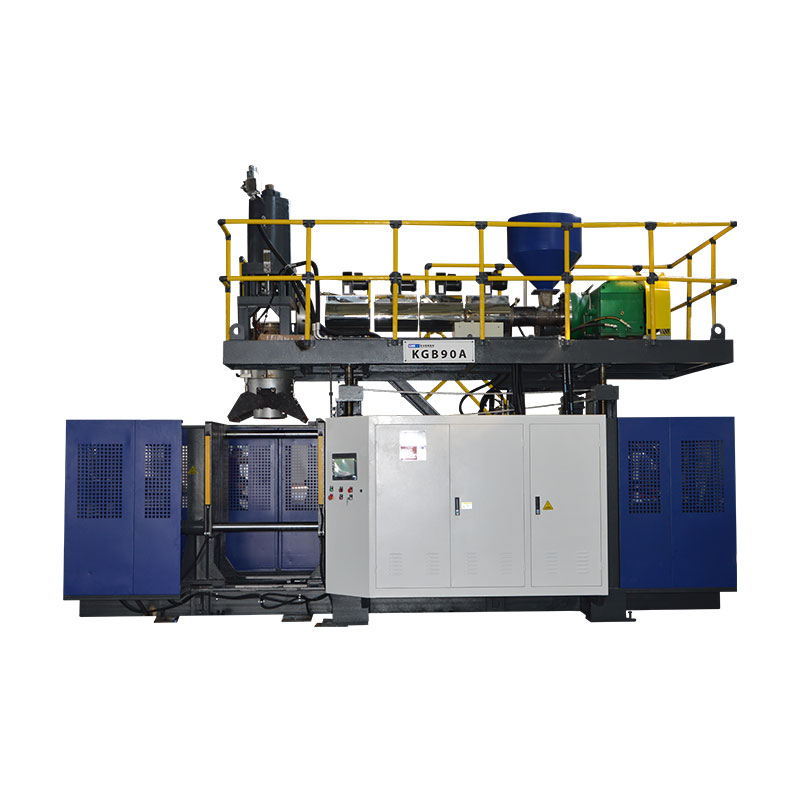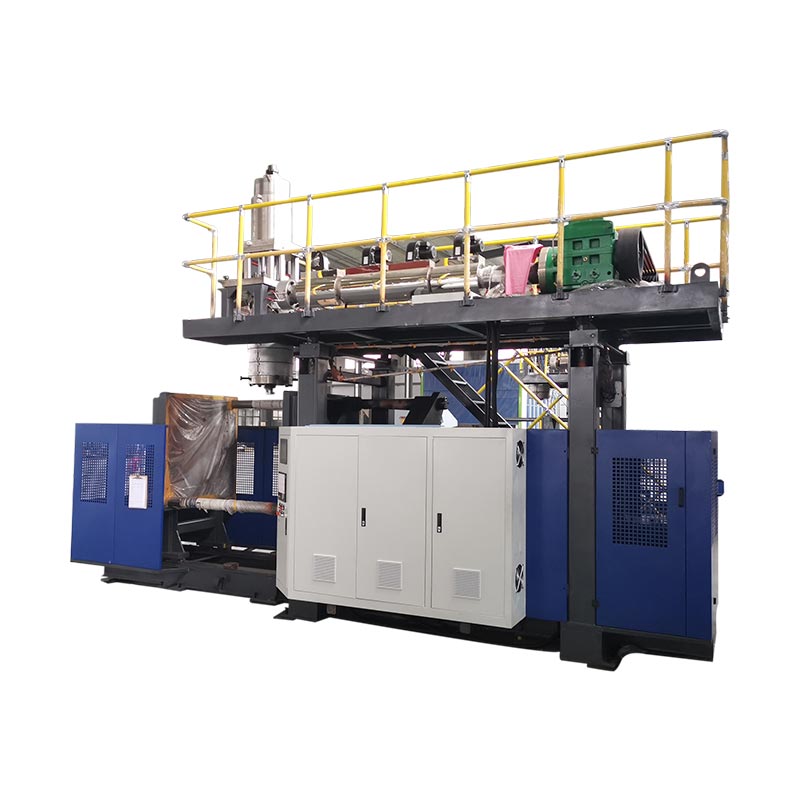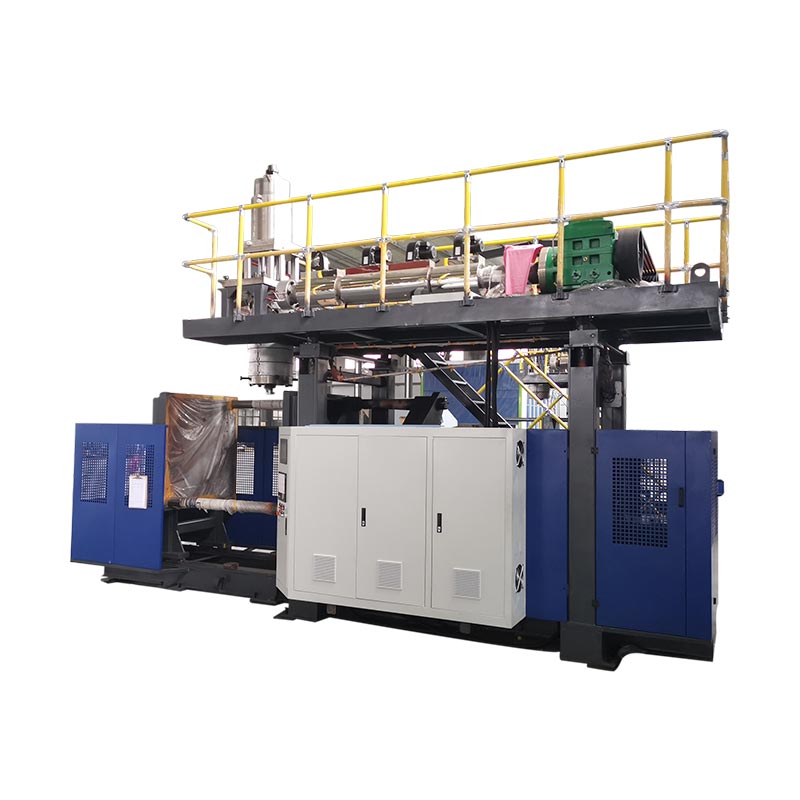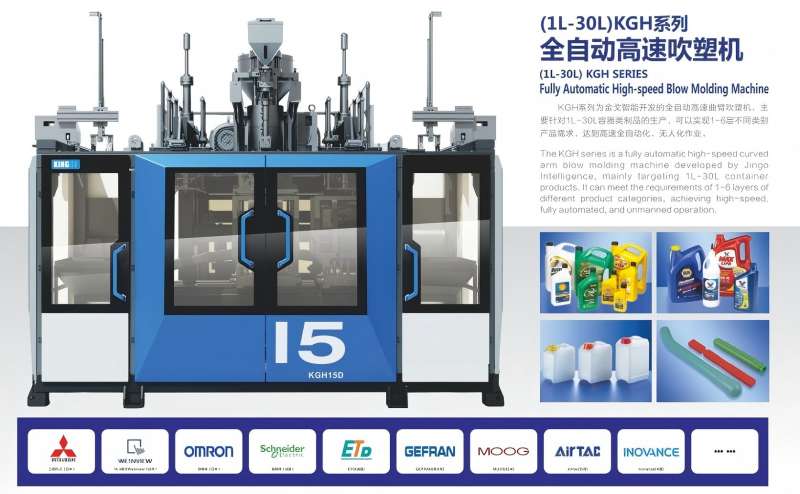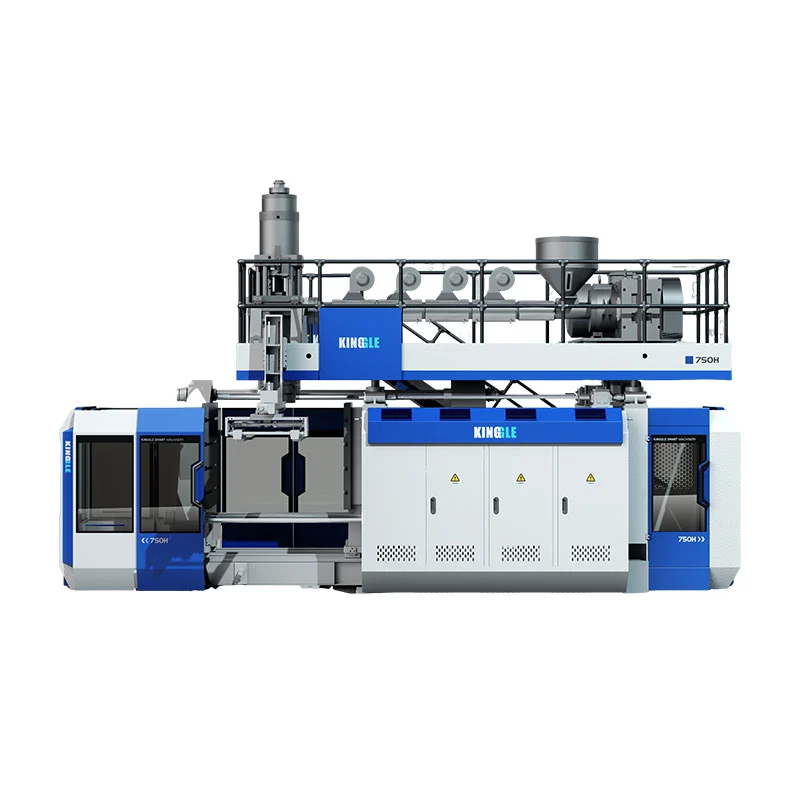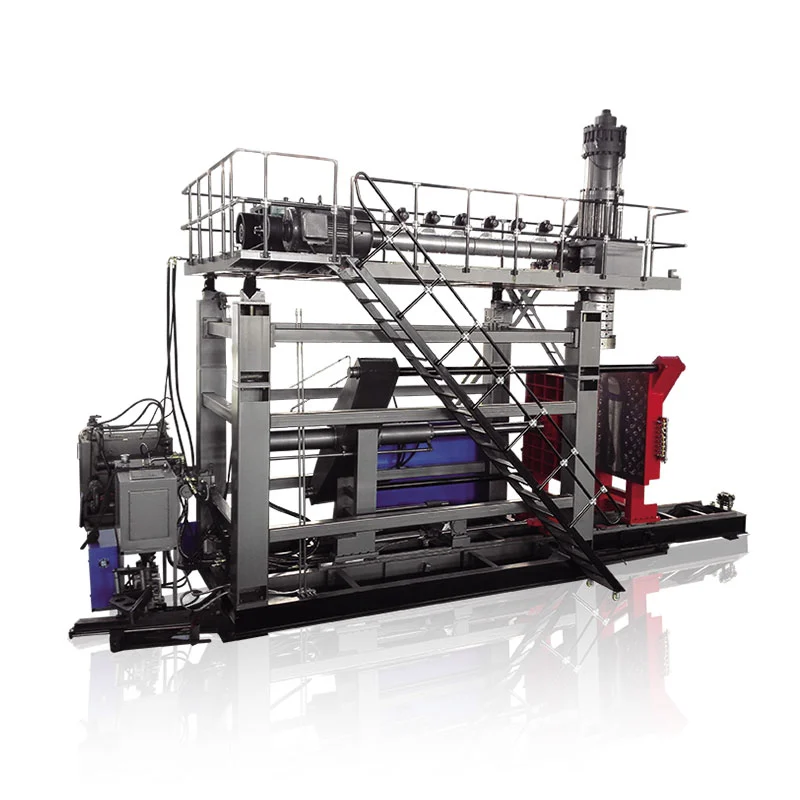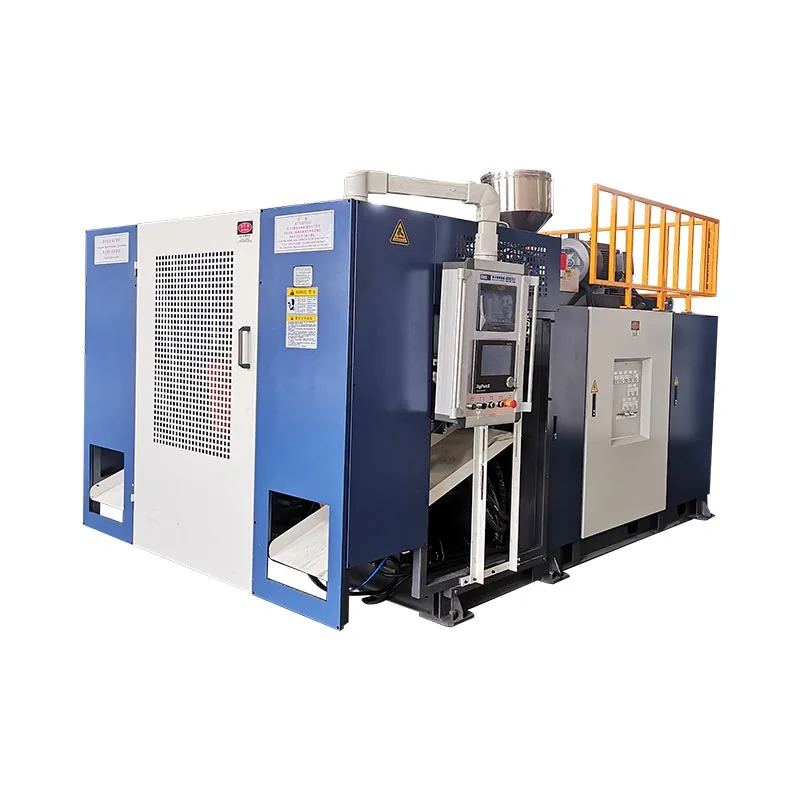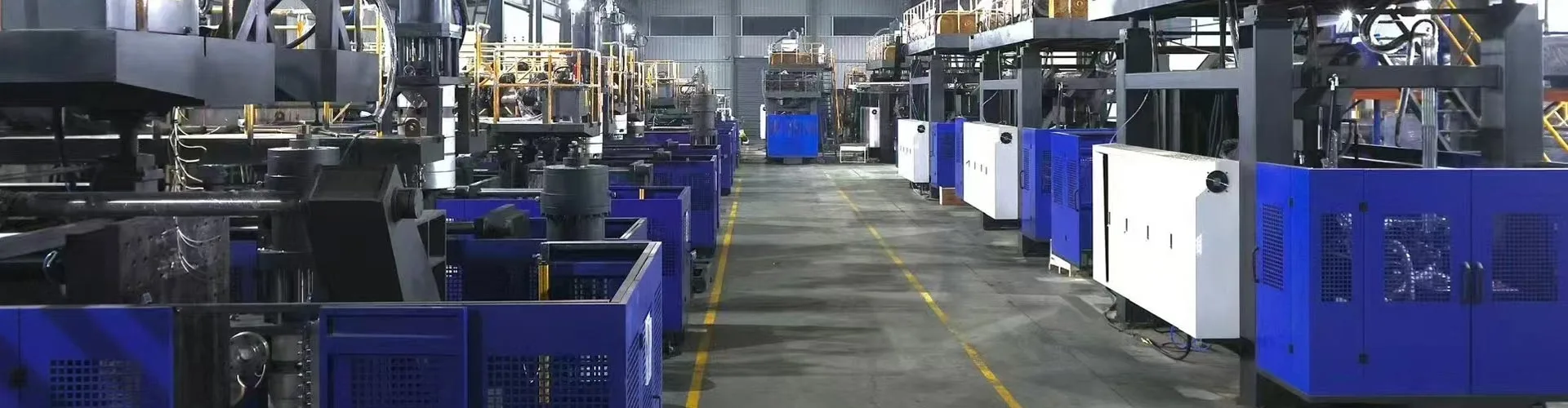
Common blow molding products include detergent bottles, milk jugs, lubricant containers, chemical drums, automotive ducts, hollow toy bodies and industrial carrying cases. The process also suits selected large hollow components, such as plastic tabletops. These products share a forming principle, but they require different materials, tooling and production equipment.
For a machine buyer, the useful question is which part must come out of the mold. An IBC inner bottle is different from the complete transport assembly. A tabletop is different from a finished folding table. Define that component first, then check the forming route, mold fit, material delivery and required number of accepted parts.

What Products Are Made by Blow Molding?
A Quick Guide to Common Blow Molded Products
Blow molding inflates hot plastic inside a mold to create a hollow body. LyondellBasell's polyolefin blow molding guide identifies packaging, automotive items, toys, material-handling containers and double-wall tool cases among its applications. The table connects representative products to the questions that matter before selecting equipment.
| Product or component | Typical route to evaluate | First review priority |
|---|---|---|
| Detergent bottles and handled jugs | Extrusion blow molding (EBM) | Handle formation, neck finish, pinch-off and closure fit |
| Small personal-care or pharmaceutical bottles | EBM or injection blow molding (IBM) | Material, neck requirements and complete toolset |
| Clear PET beverage bottles | Stretch blow molding | Preform, stretching and bottle specification |
| Jerry cans, drums and IBC inner bottles | EBM with a suitable material-delivery arrangement | Part weight, parison delivery, openings and package requirements |
| Automotive ducts and reservoirs | EBM where the design and grade are suitable | Geometry, interfaces, operating environment and function |
| Hollow tabletops, selected panels and toy bodies | Large-part EBM; compare alternatives where appropriate | Wall distribution, mold space, cooling and assembly loads |
| Double-wall industrial carrying cases | EBM for a compatible case design | Inner and outer walls, closure details, trimming and fitted hardware |
| Selected plastic pallets and handling parts | Large-part EBM; compare with other pallet processes | Support conditions, structure, cooling and finished-part tests |
These are starting routes for evaluation. A product name does not establish a resin grade, cycle time or approved machine configuration. Kinggle's application directory provides a separate route into its product categories.
Identify the Molded Part Within the Finished Product
Mark the blow molded component on the assembly drawing. Identify which openings form in the mold, which are cut afterward, and which fittings arrive from another process. This simple step prevents an equipment quotation from omitting operations that the buyer expected to be included.
Blow Molded Bottles, Jugs and Industrial Containers
Household, Food and Personal-Care Packaging
Containers are the most familiar examples of blow molded plastic products. Shell's HDPE product overview discusses milk and juice containers, personal-care packaging, detergent bottles, motor-oil bottles and large drums. Those examples demonstrate the range of uses; each package still needs material and finished-product approval for its contents.
A food container brief should name the intended contents and contact conditions. A detergent jug brief should define its closure, filled handling and compatibility requirements. Sharing a nominal volume does not make the two packages interchangeable. Include neck drawings and the actual closure when sealing performance is part of acceptance.
Lubricant Bottles, Jerry Cans and Chemical Drums
A larger container brings different handling and filling demands. Review the handle load path, corners, base, pinch-off and openings. Specify how the filled package will be moved and stored, and identify any required transport qualification before tooling is finalized.
Do not accept a machine's ability to form the body as evidence that the complete package meets its use requirements. The cap or bung, gasket, wall distribution and intended liquid belong in the same evaluation. A resin data sheet alone cannot close that assessment.
IBC Inner Bottles and Other Large Containers
For a composite IBC project, distinguish the plastic inner bottle from the cage, base, valve and other components. State whether the requested supply covers molding only or also trimming, fitting installation, testing and assembly. Capacity is useful for describing the container, but the machine review also needs the mold envelope and gross material required for each forming cycle.
An application listing for IBCs is not a reason to select a smaller drum machine. The proposed configuration must accommodate the actual inner-bottle design, material delivery and removal path.
Industrial Blow Molding: Parts, Panels and Cases
Automotive Blow Molding: Ducts, Reservoirs and Hollow Components
Automotive blow molding can produce air ducts, fluid containers and other suitable hollow components. LyondellBasell lists automotive applications in its polyolefin guide, but that does not make polyolefin suitable for every automotive environment. Begin with the specified material and service conditions.
For a duct, review its bends, changes in section, connecting ends and mounting features. For a reservoir, review the openings, connections and intended fluid. Include any cutting or joining operations in the manufacturing plan. Kinggle's automotive application page provides examples to help identify the component being discussed.
Large-Part Blow Molding for Panels and Furniture Components
A hollow panel may provide the required external shape without filling its entire interior with plastic. Its performance still depends on the wall distribution, geometry and support. Review the underside and mounting points as carefully as the visible top surface.

For a broad panel, include the required flatness, supported areas and load duration. Where the design could also suit twin-sheet thermoforming, compare both routes against those same requirements. Include the joining regions and finishing operations in that comparison.
Blow Molded Industrial Cases and Returnable Packaging
Double-wall instrument and tool carrying cases are an application identified in LyondellBasell's guide. The outside protects the contents while the inside must accommodate the intended equipment. A case should therefore be reviewed in both open and closed positions, including the relationship between its inner and outer surfaces.
Define the hinge and latch arrangement rather than assuming that every feature forms in the same operation. Add requirements for fitted hardware, inserts, foam or internal supports where the design uses them. For returnable packaging, specify the handling sequence and cleaning conditions, along with how damage will be judged. Submit the actual case drawing for a configuration review.
Plastic Pallets and Other Handling Parts
Selected pallet designs are another large-part application. Their useful load depends on the actual structure and support conditions. Floor support, fork handling and storage-rack support impose different demands; a load figure without those conditions is incomplete.
Use a product-specific comparison before choosing between blow molded and injection molded designs. Kinggle's pallet application page identifies this product category; the finished pallet still needs a defined load and handling assessment.
Toys, Outdoor Products and Medical Equipment Components
Blow Molding for Toys, Play Structures and Consumer Parts
Hollow toy bodies show why blow molding extends beyond packaging. Shape, hand-contact areas, trimmed edges and fitted components need attention even when the part does not contain liquid. The material and finished toy must suit the intended users and conditions of use.

A product photograph can help identify the application. It cannot establish the wall thickness, material specification, test results or machine cycle. Request those details separately when assessing a toy or play component.
Traffic Barriers, Floats and Garden Products
Kinggle lists traffic barriers and floats among its accumulator-machine applications. For outdoor products, define exposure, handling and any filling or draining arrangement. A float project also needs a product-specific assessment of buoyancy and integrity; a machine volume label does not supply either rating.
Garden containers and other hollow consumer parts can also enter an EBM feasibility review. Large size alone does not decide the route. The drawing must show how the part fills, releases from the mold and reaches its required condition after cooling.
Medical Blow Molding: Equipment Panels and Components
For the equipment applications considered here, define the plastic component on the drawing. Kinggle's medical-bed application page is an application reference for equipment-related parts, not evidence that the machine supplies a complete approved medical device.
Specify the component's interfaces, loads, surface requirements and intended cleaning conditions. Sterile container production and blow-fill-seal systems are separate equipment and validation questions. Do not infer those capabilities from a hospital furniture application.
Which Blow Molding Process Fits Each Product?
Extrusion Blow Molding for Packaging and Industrial Hollow Parts
EBM starts with a hot extruded tube called a parison. The mold captures it, air expands it against the cavity, and the part cools before removal. LyondellBasell's EBM overview describes a range from small squeeze bottles to large tanks.
Continuous extrusion and accumulator-head delivery are arrangements within EBM. They describe how the parison is supplied, while station count, drive system and automation describe other configuration choices. Review these choices together against the product and production plan.
Injection Blow Molding for Suitable Small Containers
IBM first injection molds a preform, including the neck, and then blows the body. It deserves consideration for suitable small containers with demanding neck requirements. The University of Michigan's process explanation describes the preform, blowing and ejection sequence.
A small bottle may have more than one viable route. Compare the same finished-container requirement, including the toolset and accepted output, rather than choosing from size alone.
Stretch Blow Molding and PET Packaging
Stretch blow molding adds a stretching operation as the preform is blown. Clear PET beverage bottles are a familiar application. This route requires its own preform and process review; it is not the same operation as inflating an extruded HDPE parison.
Confirm the process before comparing machinery. A general blow molding product list includes several technologies and should not imply that a single EBM machine can switch to PET beverage-bottle production by changing its mold.
Materials for Blow Molded Plastic Products
Match a Resin Grade to the Actual Function
HDPE is common in blow molded polyethylene containers. LDPE, PP and other suitable materials serve different requirements. Choose the grade for both forming behavior and end use. A polymer-family name does not specify melt behavior, stiffness, impact performance or suitability for the intended contents.
For a material comparison, preserve the test method and conditions beside each value. Even matching melt-index numbers do not establish identical processing behavior. LyondellBasell's guide discusses molecular structure and shear sensitivity alongside melt index, rather than treating one number as a complete material description.
Review Layers, Colorants and Recycled Content as Part of the Formulation
Define the complete formulation: base grade, colorant or masterbatch, other additives, recycled content and any layer structure. The approved trial should use the intended recipe. Successful forming with one formulation does not release another blend automatically.
For multilayer products, identify each layer's function and the equipment needed to deliver it. For recycled feedstock, separate incoming-lot checks from machine trials and finished-product acceptance. Record the approved recipe and process conditions so later material changes can be evaluated against a known baseline.
Matching Blow Molding Equipment to the Product
Check Shape, Mold Space and the Removal Path
Start with the complete mold envelope, mounting arrangement, thickness, opening clearance and part removal. Nominal container capacity is only an initial screen. A wide, shallow part and a tall container can create different requirements even when their internal volumes are similar.
Kinggle's published specifications make the distinction visible. The KGB5L page lists a 5 L maximum container capacity, a 368 × 450 mm mold platen and a separate maximum mold size of 410 × 450 mm. The KGB100B page lists 120 L, a 1,200 × 1,200 mm platen and a 920 × 1,200 mm maximum mold size. Platen size and permitted mold size are separate catalog fields; confirm mounting compatibility from the proposed layout.

Match Gross Material Demand and Parison Delivery
Size material delivery against gross material per cycle, including the flash that leaves the forming operation. Net part weight alone understates that immediate demand. The KGB5L page lists 55 kg/h HDPE plasticizing capacity; the KGB100B page lists 160 to 200 kg/h. These material-throughput fields are not accepted-part production rates.
For an accumulator proposal, check both the material available for the shot and replenishment over the repeatable cycle. Also confirm the resin and conditions behind the quoted capacity. A value published for HDPE does not establish performance with every engineering polymer.
Include Cooling, Trimming and Accepted Output
Cooling, handling, deflashing, cutting and inspection can limit the cell. Measure or estimate the repeatable rate at the final accepted-part boundary. A machine dry-cycle figure excludes the evidence needed to establish output for a particular product.
When a new product brief arrives, I would first establish whether the request covers a finished product or its blow molded component. An IBC inner bottle, hollow tabletop and hospital-bed panel create different machine tasks. I would ask for the drawing, material, net weight, critical interfaces and accepted-output target, then review mold space, parison supply, cooling, removal and trimming. Two containers marked 5 L can differ in shape, weight and finishing, so I would not carry a cycle from one to the other. If the proposal misses demand, I would identify the limiting operation before changing the configuration or schedule. The review should end with one record of operating conditions, trial questions and acceptance methods.
Hypothetical production review: suppose two 5 L products, A and B, are both compatible with a proposed machine's mold space and material system. Each produces one part per complete cell cycle. Demand is 1,000 accepted parts in a planned eight-hour shift. Assume 85% running time, 98% final acceptance, and cycles while running of 20 seconds for A and 28 seconds for B. These are planning assumptions, not Kinggle trial results or customer production records.
Expected accepted quantity = planned hours × 3,600 × running fraction ÷ cycle seconds × parts per cycle × acceptance fraction
| Planning input or result | Product A | Product B |
|---|---|---|
| Nominal volume | 5 L | 5 L |
| Complete cell cycle while running | 20 seconds | 28 seconds |
| Parts per cycle | 1 | 1 |
| Planned shift / running fraction / acceptance | 8 hours / 85% / 98% | 8 hours / 85% / 98% |
| Calculated accepted quantity per shift | 1,199.52 parts | 856.80 parts |
| Comparison with demand | Above 1,000 | 143.20 below 1,000 |
Under these assumptions, I would shortlist A for the stated shift and revisit B's cycle or schedule. B would need about 9.34 planned hours to reach 1,000 accepted parts at the same running and acceptance fractions. Fractional quantities are expected planning values; actual parts are counted as whole units. The example does not attribute the cycle difference to shape or establish either rate experimentally. Use a whole-cell running cycle and avoid counting the same downtime twice.
Confirm Which Product Changes the Proposed Machine Can Support
Ask for a compatibility review across the intended product mix. A new mold may also require changes to the die head, blowing arrangement, handling, trimming fixtures or material setup. Confirm the changeover scope and the checks that release the next product.
Keep product parts separate from machine parts when preparing the request. The extruder, die head, clamping system and controls are covered in the machine components guide; their functions help explain why mold exchange alone does not establish a new application.
Finished-Product Assembly and Validation Requirements
Separate the Molded Body from Closures, Frames and Attachments
A container body can pass a dimensional check while the assembled closure leaks. A tabletop can match its external dimensions while its mounting arrangement fails the specified use test. Keep component checks and assembly checks distinct, and identify which party supplies and validates each item.
For each interface, record the mating component, drawing revision, assembly method and functional requirement. Include relevant downstream fixtures in the quotation. Otherwise, a forming-machine acceptance can leave the buyer with unresolved finishing and assembly work.
Define Evidence for Dimensions, Structure, Sealing and Use Conditions
Use material data for the question it answers. ASTM D638's public scope concerns tensile properties from defined specimens and conditions. ASTM D790's public scope concerns flexural properties under specified specimen and loading arrangements. Neither supplies a finished hollow panel's or pallet's load rating.
Translate the intended use into a part-specific acceptance plan. Identify dimensions and wall locations to measure, the assembled condition to test, conditioning and loading conditions, and the agreed pass criteria. A sealing test, structural test and dimensional inspection answer different questions. For containers, also confirm that a failed unit is actually removed from accepted output.
SKZ's research overview connects material characterization, forming behavior and process development. That is a useful basis for trials: investigate the actual material and part rather than treating a catalog application name as proof of performance.
What to Send a Supplier for a Product Feasibility Review
Provide the Part Drawing, Material and Weight
Send the component and assembly drawings, their revisions, overall dimensions, openings, interfaces and critical wall locations. Include the specified material or performance requirements, complete formulation and target net weight. Photographs help explain an existing product, but they do not replace dimensions and functional requirements.
Define Output, Finishing and the Operating Conditions
State demand as accepted units over a defined production calendar. Add the product mix, planned changeovers, required downstream operations and available utilities. Explain whether the supplier must include molds, trimming, conveying, inspection and assembly fixtures.
Ask for a Configuration and an Acceptance Plan
Request a proposed layout that identifies the machine, tooling, material delivery and finishing scope. Ask which requirements are supported by existing evidence and which need a trial. Agree how the final run will establish dimensions, function and accepted output with the intended material.
Kinggle's application pages can help route the inquiry, while the linked product pages provide the published specifications for comparison. Send the drawing, material details and output target to sales@kinggle.com or use the contact page. Request a product-specific proposal with its operating conditions and acceptance scope before choosing a model.
Frequently Asked Questions
What are common products made by blow molding?
Common examples include bottles, handled jugs, drums, automotive ducts, hollow toy bodies and double-wall carrying cases. Selected large hollow components, such as tabletops and pallet designs, can also use blow molding. The suitable route depends on the actual component, material and performance requirements.
Can blow molding make products other than bottles?
Yes. Industrial hollow parts, tool cases, furniture components and toy bodies extend its use beyond bottles. Review the molded component separately from frames, closures, hardware and other parts of the finished assembly.
Are all hollow plastic products blow molded?
No. Other processes, including rotational molding, twin-sheet thermoforming and assembly of separately formed parts, can create hollow structures. Identify the actual manufacturing route from the design and process requirements rather than appearance alone.
Can one blow molding machine make different products?
It can support different products within its verified configuration limits. Check mold fit, material compatibility, parison delivery, blowing, cooling, removal and downstream operations for each product. Changing the mold alone does not prove that the next product can meet its quality and output targets.
Are PET bottles and HDPE bottles made on the same equipment?
Do not assume so. Clear PET beverage bottles commonly use stretch blow molding, while many HDPE bottles use extrusion blow molding. Their starting forms and process requirements differ. Confirm the bottle specification and forming route before selecting equipment.
What information is needed to select a machine for a new product?
Provide the component and assembly drawings, material and formulation, net weight, critical dimensions, use conditions and target accepted output. Include finishing, inspection, product mix and utilities so the supplier can review the complete production cell and propose an acceptance plan.