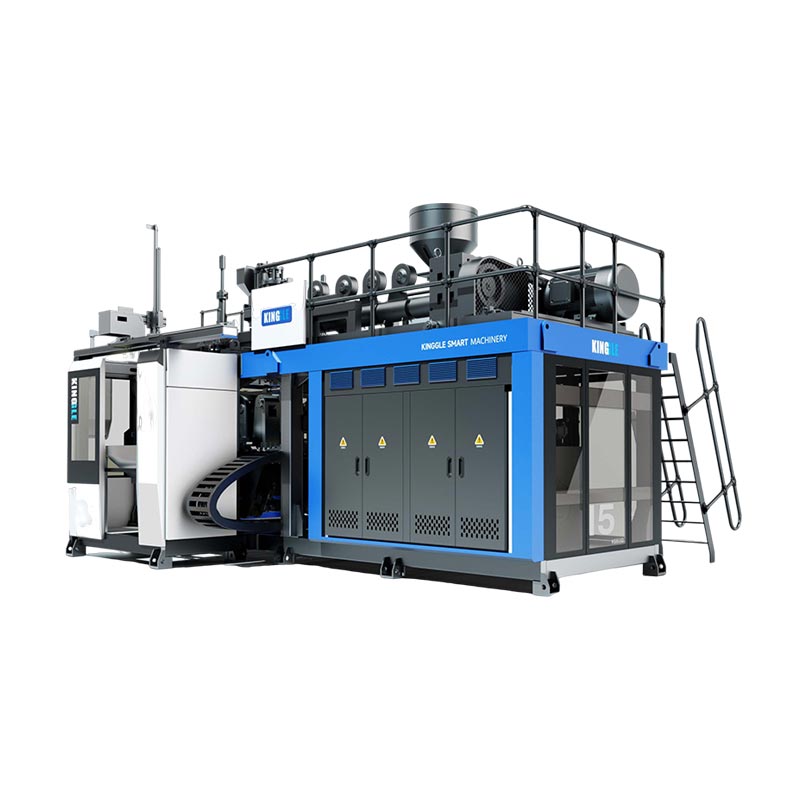
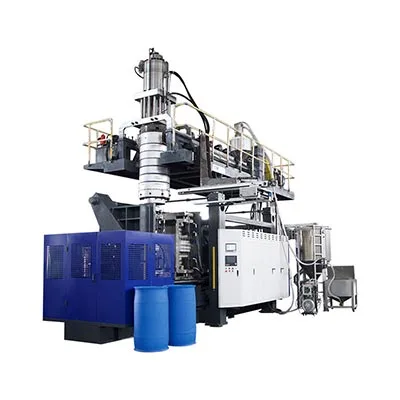
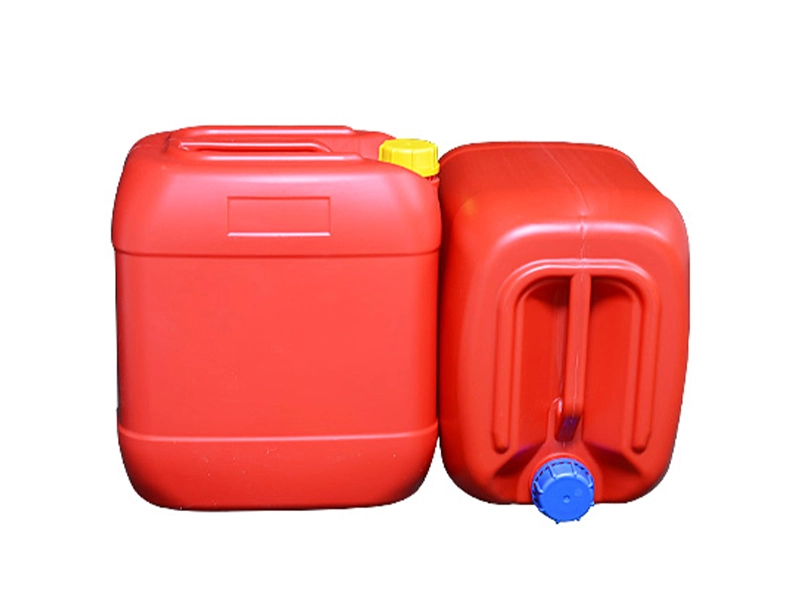
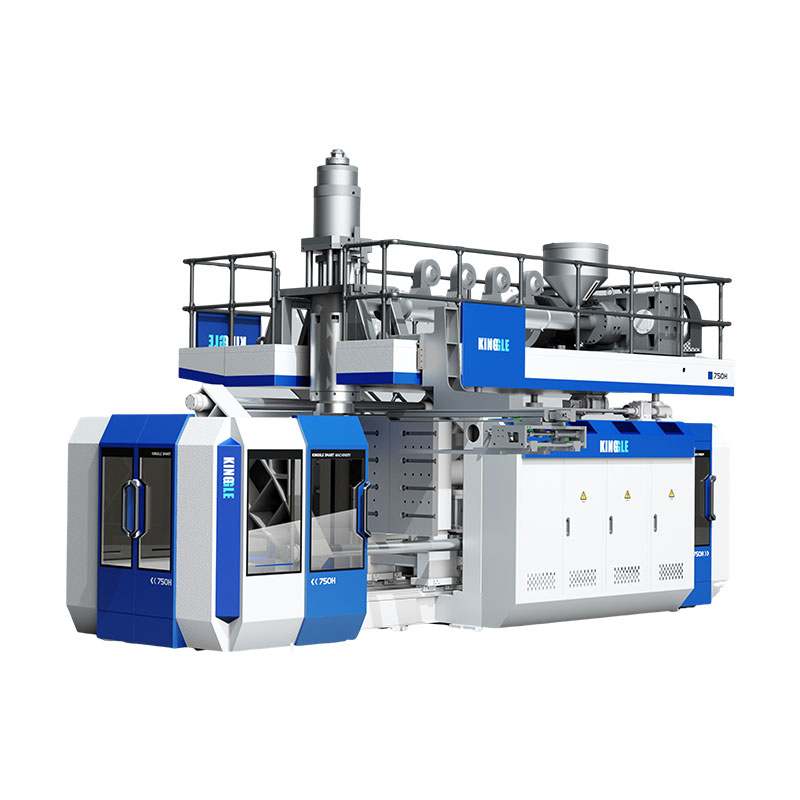
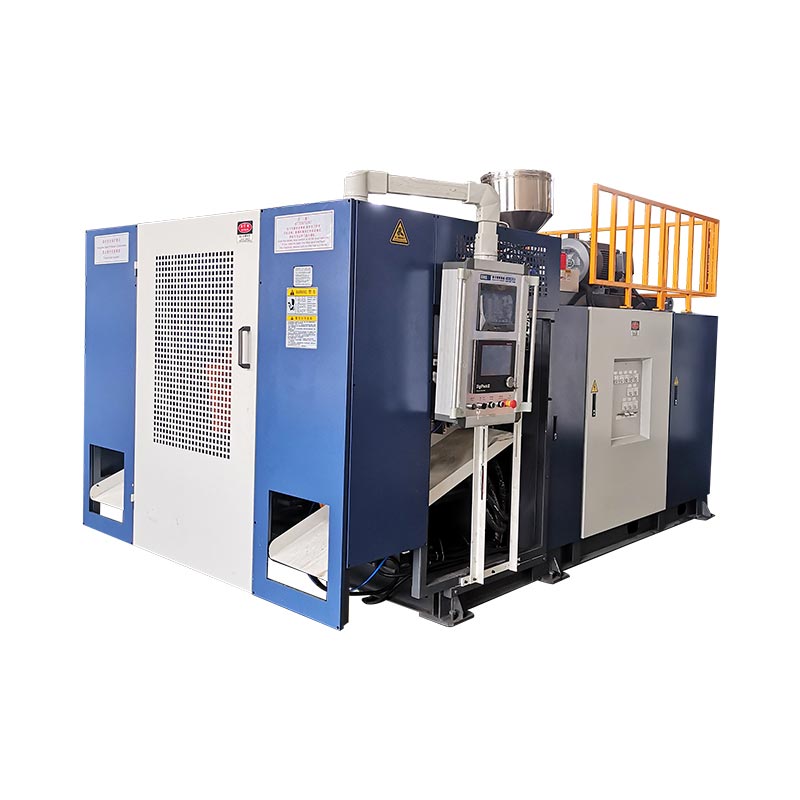
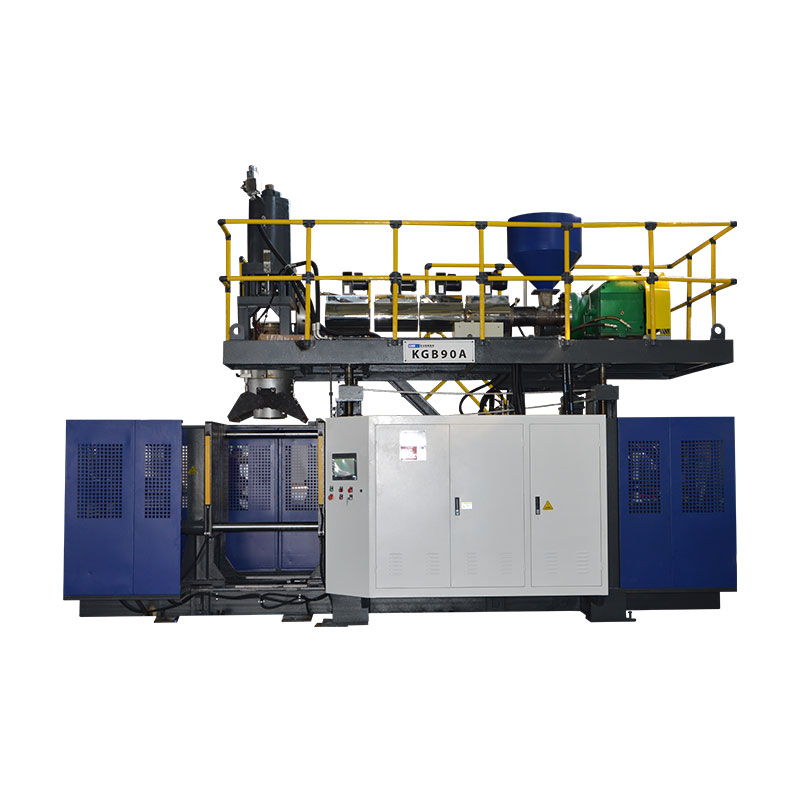
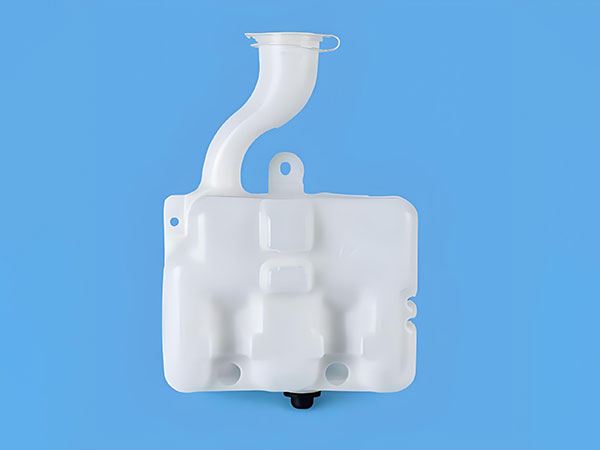
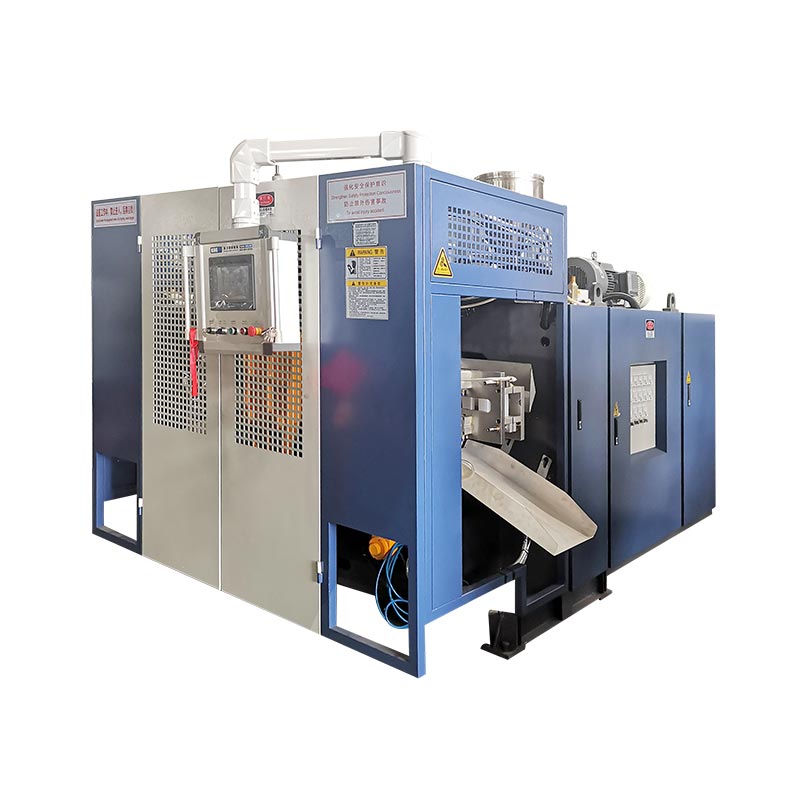
Choose an automatic blow molding machine by the product it must deliver and the operations included after molding—not by the word “automatic” on the quotation. For extrusion blow molding, specify the resin, tooling, take-out, trimming, inspection and transfer as one production system. We recommend approving the configuration against accepted containers at the final discharge point, not a catalogue dry-cycle figure.
A molding machine can run an automatic cycle while people still remove flash, check bottles or fill cartons. That may be the right arrangement for a small, changing product range. It is the wrong arrangement if the investment case assumes those jobs have disappeared. Define the boundary before comparing prices.
Five decisions that matter before an order
- Match the molding process to the part before comparing automation levels.
- Define every transfer and finishing operation, including work that stays manual.
- Balance the molding rate with trimming, inspection and packing capacity.
- Test fault recovery and changeovers, not just uninterrupted production.
- Compare total line cost per accepted container under the same conditions.
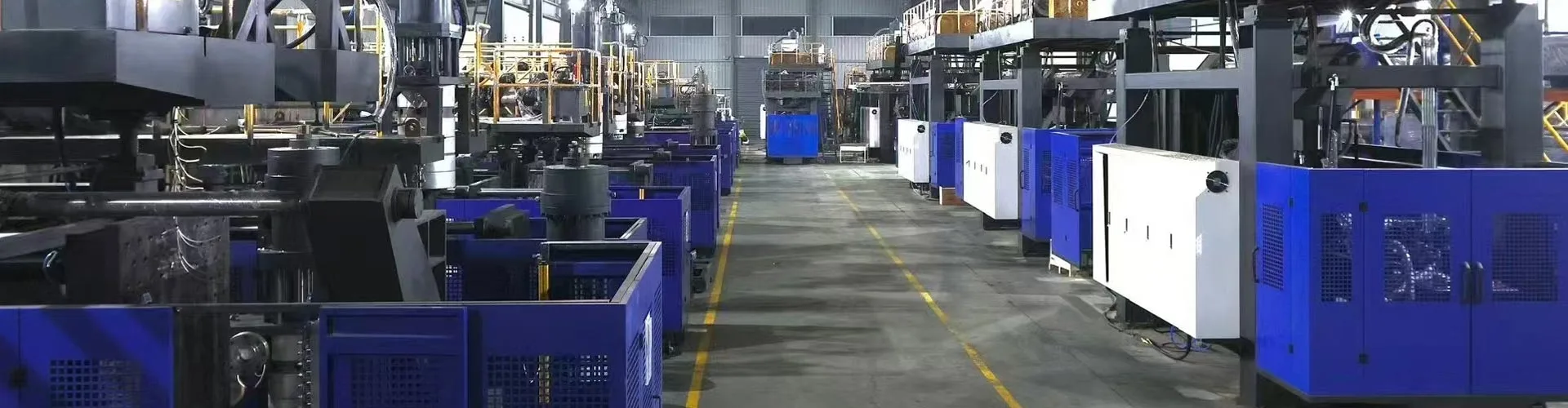
What does “automatic” cover in blow molding?
“Automatic” describes how operations are controlled. It does not identify how the plastic part is formed. An automatic extrusion blow molding machine and a PET bottle blowing machine can both run programmed sequences, yet they need different material preparation, tooling and finishing arrangements. A buyer searching for a fully automatic blow molding machine should settle the process question first.
In extrusion blow molding, the machine forms a molten tube called a parison. The mold captures that tube, and air forms the hollow part. PET stretch blow molding uses a preform that is stretched and inflated. Those different starting forms explain why a PET preform-loading guide is not a complete purchasing guide for an HDPE detergent bottle line.
| Decision | Extrusion blow molding | PET stretch blow molding |
|---|---|---|
| Starting form | Extruded molten parison | PET preform |
| Common buying context | HDPE bottles, handled containers and industrial hollow parts | Clear beverage bottles made from preforms |
| Automation questions | Part release, flash removal, trimming, testing and transfer | Preform handling, heating/stretch-blowing sequence and bottle transfer |
Process reference: Kinggle’s blow molding machine guide. Product geometry and resin grade determine the final process choice.
Separate the machine, the cell and the line
A machine-level automatic cycle covers the agreed molding sequence. An automated cell adds defined handling or finishing around that machine. A production line connects successive operations through an agreed accepted-product boundary. Packing may be inside that boundary, or it may remain a separate factory operation.
These are useful purchasing distinctions, not a promise that every supplier uses the same terminology. Put the actual operations in the specification. “Fully automatic” without an equipment list leaves too much room for different interpretations.
We favor a specific description such as “automatic molding, oriented take-out, deflashing and leak-tested discharge” over a broad label. It tells the buyer where the finished product appears and what still needs attention. Material replenishment, sampling, scrap handling and carton changes also need owners, even when the normal molding sequence runs without repetitive manual handling.
Likewise, automatic control is not the same as an all-electric drive. Drive type, station arrangement, head count and automation scope are separate choices. Review each against the job instead of treating them as one premium specification.
Start with the part and the production schedule
A bottle’s nominal volume is not enough to specify its production line. A narrow round bottle and a wide handled container can carry the same liquid volume but need different molds, take-out tooling and supports. The line must handle the actual external shape, not an abstract “2 L product.”
Begin with the part drawing and the finished condition expected at discharge. Record the neck finish, handle opening, body dimensions, target weight and critical quality requirements. Confirm the exact resin grade, color package and agreed recycled or regrind condition. These details make a proposed trial relevant to the intended job.
Translate the sales plan into a manufacturing requirement
Define accepted containers per shift alongside the number of shifts, batch sizes and change frequency. A high hourly rate is less useful if most orders need short runs and extensive tooling changes. A slower but easier-to-change cell may fit that production mix better. Neither conclusion can be reached from maximum catalogue output alone.
List the product family, not only the first launch bottle. Identify the widest part, the heaviest part and the hardest part to grip or trim. These may be different SKUs. Then decide which products must run on the initial build and which require future tooling or separate equipment.
- Freeze the test article: drawing revision, resin, finished weight and required tests.
- Set the delivery condition: trimmed, inspected, oriented, counted or packed.
- Define the schedule: good containers per shift, operating hours and planned SKU changes.
- Check the tooling family: molds, head pitch, gripping fixtures, trimming nests and test seals.
- Approve the cell envelope: utilities, guarding, service access and product flow.
Station count, die outlets and cavities need separate review. Two stations do not mean two outlets. A multi-head blow molding machine does not make every bottle shape compatible with the outlet spacing. A multilayer head describes wall construction, not the number of finished containers per event.
Kinggle’s multi-head versus multi-cavity guide explains those configuration distinctions. Use that review before fixing the automation layout. Once the cavity arrangement is settled, the take-out and finishing equipment must preserve each position through transfer and quality checks.
The most useful enquiry therefore includes a drawing, material specification, production schedule and quality definition. For an HDPE bottle production line, a request for an “automatic plastic bottle making machine” without those inputs cannot establish the right line scope.
Check the machine systems that set product quality
Downstream automation cannot repair an unstable parison, an unsuitable pinch-off or a part that leaves the mold too soft to handle. The molding process must produce a repeatable article before the transfer system can deliver repeatable results. Otherwise, the robot becomes a precise way to move inconsistent parts.
The important parts of a blow moulding machine include the extruder, die head, clamping unit, blow system, cooling circuits and controls. Review their contribution to the approved part rather than choosing by component names alone. A recognized PLC brand, for example, does not establish the supplied recipe functions or downstream communication.
| System | What to review | Evidence to request |
|---|---|---|
| Extrusion and die head | Resin suitability, gross parison demand and outlet balance | Production samples and identified material conditions |
| Parison control | Wall distribution at the part’s critical locations | Position-specific measurements and saved recipe |
| Mold and clamping | Tooling fit, pinch-off and release clearance | Approved drawings and molded-part inspection |
| Cooling and handling | Part rigidity at the planned release and grip points | Transfer trial with the actual part |
| Controls | Sequence, alarms, recipe scope and downstream signals | Function demonstration and interface list |
A concrete reference: Kinggle’s 2 L single-station machine
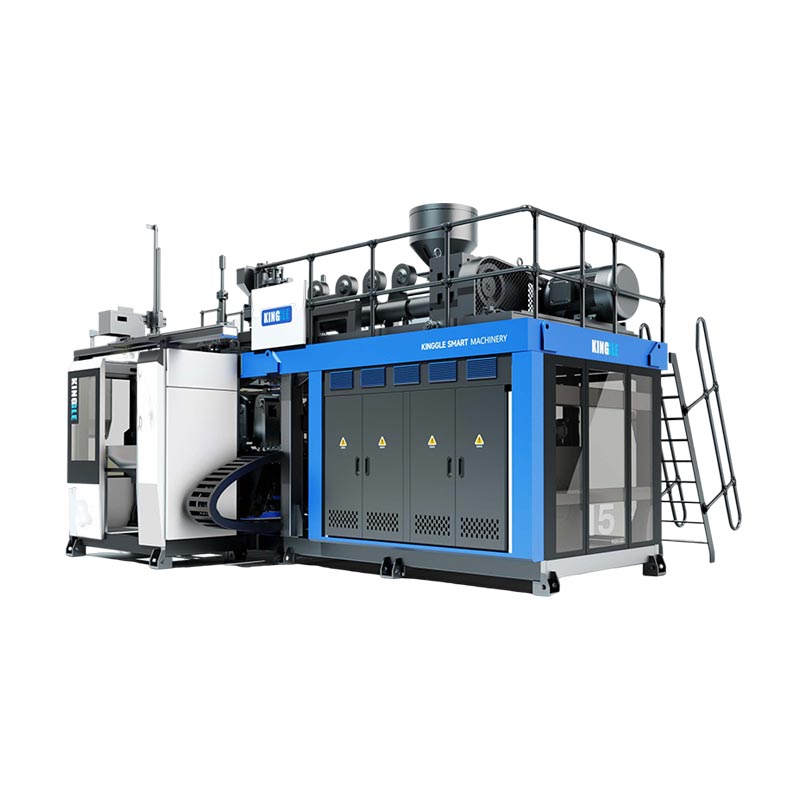
The KGB2L product page lists a maximum container capacity of 2 L, a 50 mm screw, 30 kg/h HDPE melting capacity and a maximum mold size of 360 × 380 mm. It also describes two-, three- and four-outlet configurations for smaller bottles in the 100 ml–1 L range. These values help screen a proposed job; they do not replace a tooling review.
The same page labels 600 PC/HR as “Output(dry Cycle).” That is not the accepted output of an identified shampoo bottle, mold and finishing line. A production requirement needs the actual material, cooling time, active positions and inspection condition. Treat the dry-cycle entry as the published motion reference it is.
For a multi-outlet proposal, check the combined gross parison mass as well as cavity fit. Finished bottle weight excludes the flash that the extruder also supplies. More outlets can increase the demand on extrusion, cooling and finishing together. Head count alone cannot establish a usable production rate.
We would approve the molding system only after the critical part measurements and transfer behavior are stable under the agreed conditions. Adding a conveyor before resolving those issues moves the problem farther down the line. For wall distribution, use the parison programming guide alongside the product drawing.
Specify the line from feeding to accepted containers
The strongest specification for blow molding automation follows the product through every operation. It says what each module receives, what it delivers and who owns the connection to the next module. This is more useful than a long list of robots, conveyors and sensors without an agreed process boundary.
Kinggle’s published automation capabilities include downstream trimming, inspection and packaging. For a bottle project, translate that capability into a defined scope. Automatic deflashing, neck trimming, leak testing and packing are different functions; none should be silently assumed from the presence of another.
| Operation | Question to settle | Acceptance check |
|---|---|---|
| Feeding | Who supplies conveying, blending and material-level control? | The approved material reaches the hopper without an unplanned supply interruption. |
| Take-out | Where is the part gripped, and what orientation leaves the unit? | No missed transfer or unacceptable marking on the test article. |
| Deflashing and trimming | Which flash and finish features are removed? | Required edges, neck and handle openings meet the part definition. |
| Inspection and rejection | Which tests are inline, and how are failed parts separated? | Agreed challenge samples are identified and routed correctly. |
| Conveying and packing | What bottle condition and arrangement must reach the next station? | Transfer, accumulation and final counting work at the agreed rate. |
Give each boundary one named integration owner. If the machine supplier provides the take-out and another supplier provides the leak tester, someone must still approve the bottle orientation, transfer height, spacing and control handshake. Buying compatible-looking modules is not the same as buying an integrated cell.
Agree how “ready,” “part present,” “cycle complete” and fault conditions are represented where those signals are needed. Identify which controller initiates a stop and which unit reports the initiating fault. The exact architecture is project-specific, but the responsibility cannot remain vague.
Check scrap flow separately from the accepted-product route. Removed flash needs collection and an agreed disposition. Reuse depends on the material and product requirements; an automatic grinder connection does not authorize any regrind percentage. Keep the material recipe controlled.
For bottle leak testing, define the test method, fixture, sealing condition and agreed challenge samples. A test station must do more than display a green result. It needs to separate failures reliably and record counts without letting rejected parts return unnoticed to the good-product conveyor.
The scope drawing should also show maintenance and mold-change access. Use Kinggle’s utility and factory-layout guide to coordinate power, air, water and space with all included auxiliaries.
The handoff can limit output before the molding machine does
A blow molding production line delivers only what its connected operations can sustain. The fastest module cannot compensate indefinitely for a slower trimmer, tester or packing station. Buffers give the line time to recover from a short interruption; they do not remove a persistent capacity mismatch.
First put every equipment rate on the same basis. Does the number mean molding events, gross parts, tested parts or accepted containers? Does it cover continuous running only, or include replenishment and ordinary stops? Compare rates only after those definitions match.
A worked example with an explicitly assumed production basis
Consider a proposed line that releases 480 containers per hour after molding and trimming. Assume its one-position leak tester requires 8 seconds for the complete load, test, decision and unload sequence. Its ideal capacity is 3,600 ÷ 8 = 450 containers per hour. These are planning assumptions, not a measured Kinggle machine result.
Incoming rate: 480/h · Ideal tester capacity: 450/h · Accumulation: 30/h
Even with no tester stops, incoming parts exceed its capacity by 30 containers per hour. A buffer with 15 usable positions would fill in 15 ÷ 30 = 0.5 hour, or 30 minutes. Starting the line with an empty conveyor might make a short demonstration look satisfactory. The imbalance still exists.
Now consider a complete tester stop. At the assumed incoming rate of 480/h, parts arrive at 8 per minute. The same 15 free positions provide only 15 ÷ 8 = 1.875 minutes, about 113 seconds, before that buffer is full. The accumulation rate during a slowdown and during a complete stop are different.
Those calculations are useful only if the positions are genuinely usable. A bottle that tips, touches a guard or cannot preserve the required orientation does not create a valid buffer position. The controls also need an agreed response before the safe accumulation limit is reached.
Check geometry as well as speed
Take-out tooling and conveyors must handle the part in its actual release condition. Identify a repeatable grip location. Check whether the neck, body or flash provides that location, and whether trimming removes it before the next transfer. A feature available at the first pickup may not exist at the second.
We would resolve that datum chain before increasing machine speed. A line that transfers at a sensible rate and recovers predictably is a better production asset than one that needs repeated manual repositioning. The preferred solution may be revised tooling, a different transfer sequence or additional downstream capacity—not a faster molding cycle.
Finally, count accepted containers after the agreed inspection point. Keep upstream gross counts for diagnosis, but do not use them as the shipping-output figure. Kinggle’s factory acceptance guide explains why product identity, count boundaries and observation time belong in the same record.
Prove the line can recover and change products
A smooth automatic run proves only one operating state. Production also includes replenishment, failed transfers, rejected parts, blocked conveyors and product changes. Those events deserve a place in the acceptance plan because the response determines whether the cell returns to controlled production.
From the factory side, we would put fault recovery ahead of a polished demonstration. If a bottle misses the pickup, the next question is not how quickly someone can place it back. The questions are what detected the miss, which movement stopped and how the cell confirms a known state before restarting. Repeated hand correction is a symptom to investigate, not normal automatic operation.
When a thin-walled bottle tips after release, we would check the grip and support condition before changing several process settings. Review the part’s rigidity at transfer, the fixture contact points and the motion sequence. Then trial one controlled correction and inspect the part again. More gripping pressure can create a different defect instead of fixing the first one.
The same discipline applies when leak rejects rise. Preserve the affected samples and identify the position and time. Check the test seal and fixture condition alongside the molded neck and pinch-off. A leaking test connection and a leaking container require different corrections. Changing the molding recipe without separating those causes can waste time and hide the fault.
Define recovery before the fault occurs
- Record the initiating fault, affected module and product position.
- Bring the cell to the state defined by the approved control and safety design.
- Have authorized personnel resolve the fault under the prescribed isolation and access procedure.
- Reconcile parts in transfer, inspection and reject positions before restarting.
- Resume through the agreed recovery sequence, then verify the required product checks.
These are planning steps, not permission to enter guarded equipment or bypass an interlock. The integrated cell needs a risk assessment covering module interactions and foreseeable interventions. ISO 12100:2010 sets out general principles for machinery risk assessment and risk reduction; the project must also identify the applicable machine-specific and destination requirements.
A saved recipe is not necessarily a complete changeover
A recipe may recall temperatures and molding movements while the picker, trim nest and tester remain manually adjusted. Ask which positions are stored, which are motorized and which require a physical tooling change. Techne’s process automation documentation provides an industry example of format-linked settings for picker, deflashing and leak-tester positions. That illustrates the scope to specify; it does not establish those functions on every machine.
Define changeover time from the final accepted part of one format to the first accepted part of the next, under the agreed method. Record tooling work, adjustments, material transition and quality release separately. This exposes what a quicker recipe recall actually saves and what remains a mechanical or process task.
Compare cost per accepted container, not automation labels
A semi-automatic versus fully automatic blow molding machine comparison should begin with the same product and production schedule. Otherwise, the cheaper quotation may simply exclude handling, testing or packing that the other quotation includes. Compare equal delivery boundaries before comparing equipment totals.
Automation is most defensible when it removes a defined repetitive constraint. That may be manual flash removal, inconsistent transfer, a difficult inspection handoff or a packing operation that cannot keep pace. Buying more automation without identifying the constraint can add maintenance and changeover work without improving accepted output.
Keep the cost boundary as wide as the output boundary
Cost per accepted container = total cost within the agreed production boundary ÷ accepted containers delivered within that boundary
The numerator should include the costs relevant to the comparison: material, labor, utilities, tooling, maintenance and the selected capital or overhead treatment. Use the same accounting method for both options. A downstream robot is not free because its cost sits outside the molding-machine quotation.
List the recurring human tasks. Someone may still replenish material, move scrap, sample parts, replace cartons, maintain tooling and respond to alarms. Estimate workload across a normal shift, not only while the automatic sequence runs. Decide whether an operator can safely serve more than one cell without delayed checks or recovery.
Use electrical energy in kWh for the observation period and accepted containers from that same period. Power in kW is a different quantity. Include the agreed auxiliaries when comparing a complete line, particularly if a compressor, chiller or grinder changes between the proposals. The utility requirements guide explains why connected power and operating demand should also remain separate.
For frequent format changes, examine the fixtures and spare tooling required for each SKU. A lower initial cell price can be offset by difficult changeovers or extra format parts. Conversely, a sophisticated transfer system may be unnecessary for a low-volume product with a practical manual finishing route.
We recommend ranking proposals by the production constraint they remove, the accepted output they can verify and the recurring work they leave behind. A more automated cell earns its place when those benefits fit the factory’s real schedule. “Unmanned” is not a sufficient financial argument.
Ask for sensitivity cases rather than a universal payback claim. Compare expected demand, lower utilization and more frequent changes using the buyer’s own costs. That makes the investment decision useful even when sales volumes or product mix change.
Approve the configuration before placing the order
Turn the selected concept into an agreed equipment list, cell layout and acceptance protocol before the purchase order. The most expensive ambiguity is often not a missing sensor. It is a boundary that each party thought belonged to someone else.
For a compact bottle project, the 2 L single-station platform offers a concrete starting point. Its published mold envelope and smaller-bottle multi-outlet options allow an initial fit review. The actual drawing, resin, head arrangement and downstream scope determine the proposed build. Do not choose that configuration from volume alone.
Make the trial answer purchasing questions
The trial should use the agreed product definition and include the operations supporting the quoted output. If leak testing or trimming is part of the delivery boundary, demonstrate it with the cell rather than presenting an unrelated standalone cycle. Preserve sample identity where multiple positions could hide a weak outlet or cavity.
The acceptance record should connect each claim to a method, limit and observed result. A word such as “passed” without the underlying condition cannot guide commissioning at the buyer’s factory. The Kinggle FAT guide provides a fuller framework for that evidence.
- Build identity: machine, tooling, control version and included modules.
- Test conditions: product, resin, active positions and utility conditions.
- Quality: critical measurements, functional tests and reject reasons.
- Line performance: accepted count, observation period, stops and interventions.
- Recovery: agreed fault scenarios and the demonstrated restart sequence.
- Handover: drawings, manuals, tooling information, backups and open items.
Separate factory acceptance from site acceptance where plant services or third-party equipment cannot be reproduced before shipment. Identify those remaining checks in advance and assign responsibility. A factory trial should not quietly claim to verify conditions it did not include.
Training must cover ordinary operation and the jobs automation leaves behind. Operators need to recognize a failed transfer, interpret the initiating alarm and follow the approved recovery method. Maintenance needs the drawings, wear-part information and access required to support the cell.
Discuss an automatic extrusion blow molding configuration with Kinggle. Send the container drawing, resin grade, finished weight, required tests, production schedule and planned downstream operations through the project enquiry page.
Contact: sales@kinggle.com · +86-574-87103665. A defined product and line boundary make the configuration review more useful than a request for machine price alone.
Frequently asked questions
Is an automatic blow molding machine the same as a complete production line?
No. An automatic machine may control molding movements while product removal, trimming, inspection or packing remain separate. A complete production line defines the transfer, controls and quality boundary between those operations. Ask for an equipment list and layout that identify every included module, manual task and excluded service. The purchase specification, not the word automatic, determines what will arrive.
Does a fully automatic blow molding machine still need operators?
Yes. Material replenishment, quality sampling, tooling changes, maintenance and fault recovery still need assigned responsibilities. Automation can remove repetitive handling without removing every production task. Plan staffing around the full shift and the actual service layout, including packing and scrap handling. Do not derive a labor estimate from a short demonstration in which support staff remain outside the camera frame.
Are automatic deflashing, bottle leak testing and packing included as standard?
Do not assume they are. The quotation should identify each operation, the supplied equipment, product-specific tooling, test method and reject route. A take-out unit is not a leak tester, and an automatic conveyor is not an automatic packing system. For each quoted module, ask what unfinished condition it receives and what accepted condition it delivers.
Can an existing extrusion blow molding machine be automated?
Possibly, but feasibility depends on the existing control system, guarding, available space, mold opening, product release and transfer arrangement. The part must also suit the proposed gripping, trimming and inspection fixtures. Review the complete cell before buying a robot or conveyor separately. A retrofit should include a defined integration responsibility, updated risk assessment and agreed production trial.
How should buyers verify the output of an automatic line?
Count accepted containers at the agreed final discharge point over a defined observation period. Identify the resin, product, mold, active positions, utilities and included downstream operations. Keep rejects, stops and manual interventions in the record. Report gross molding output separately from accepted line output. A catalogue dry-cycle value is not a substitute for this production trial.