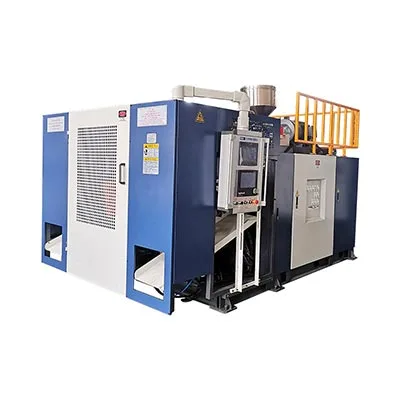
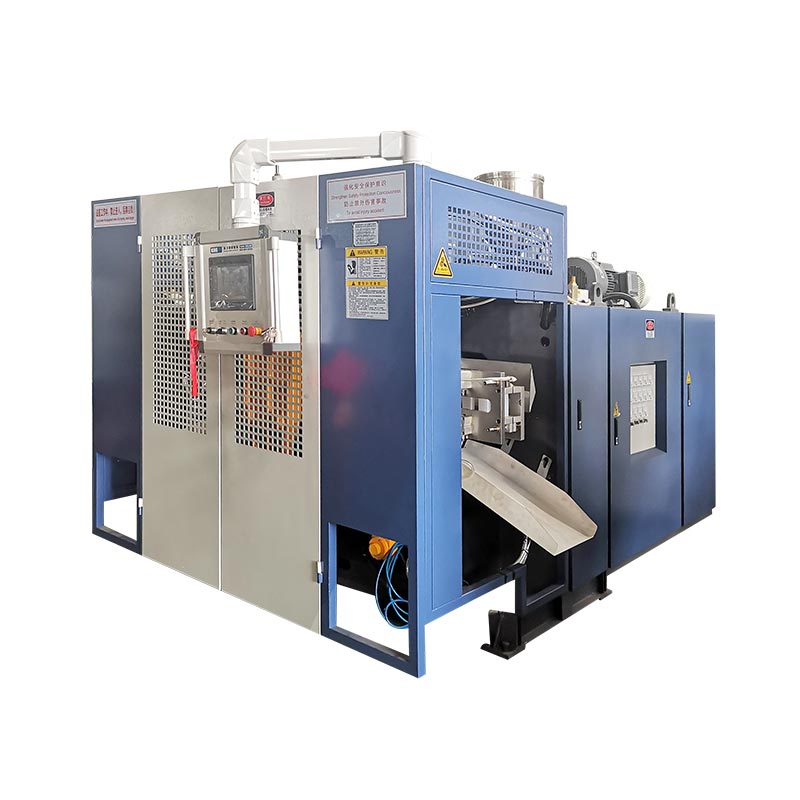
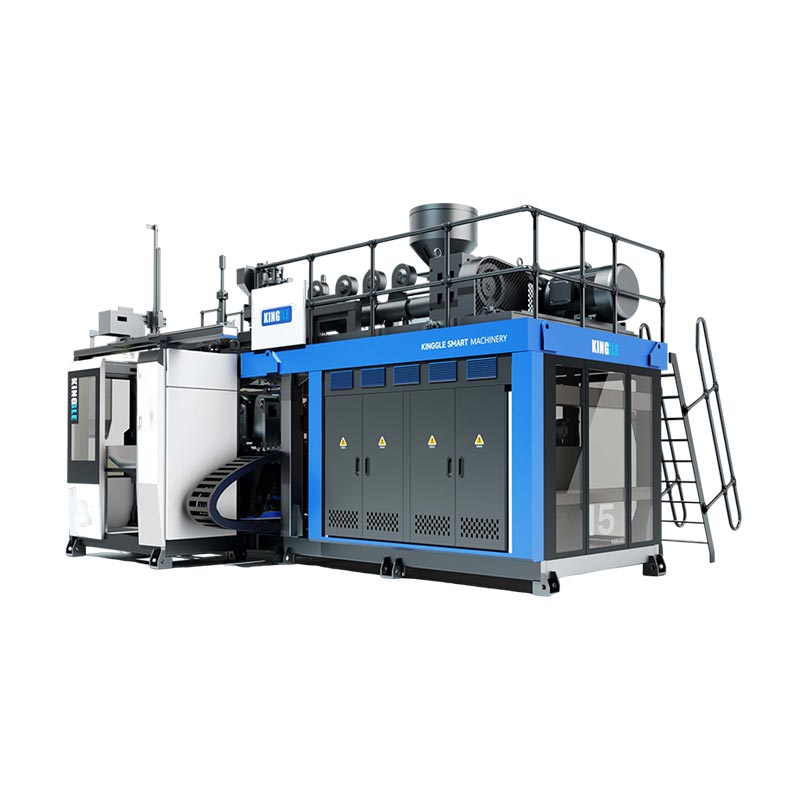
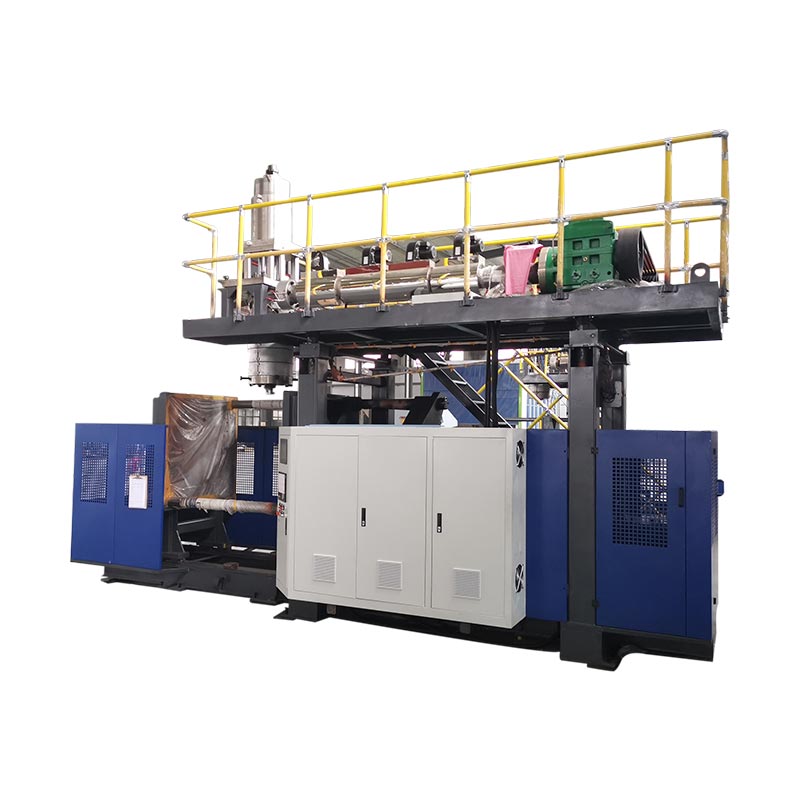
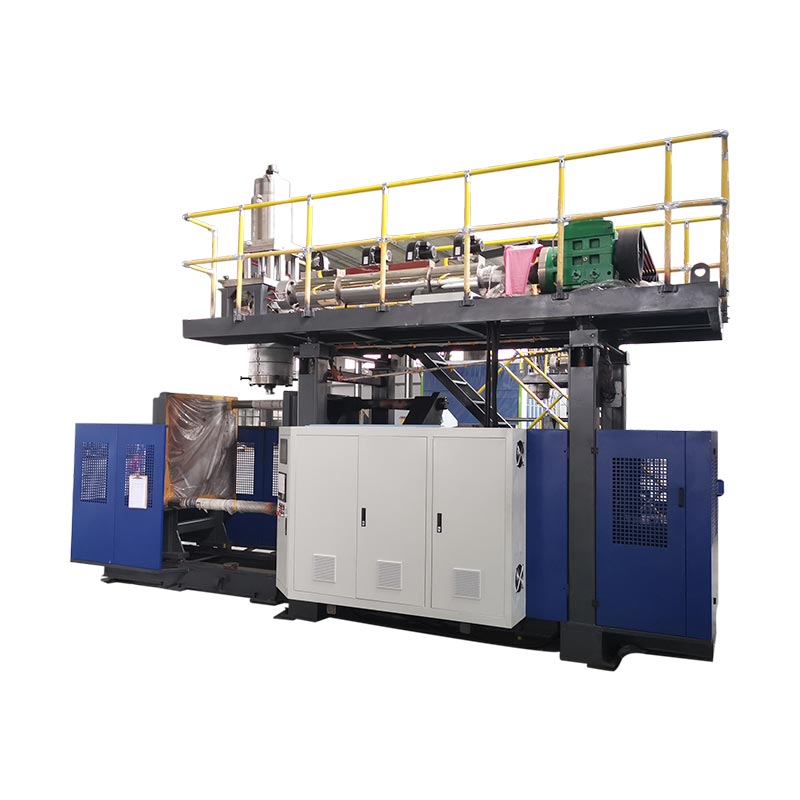
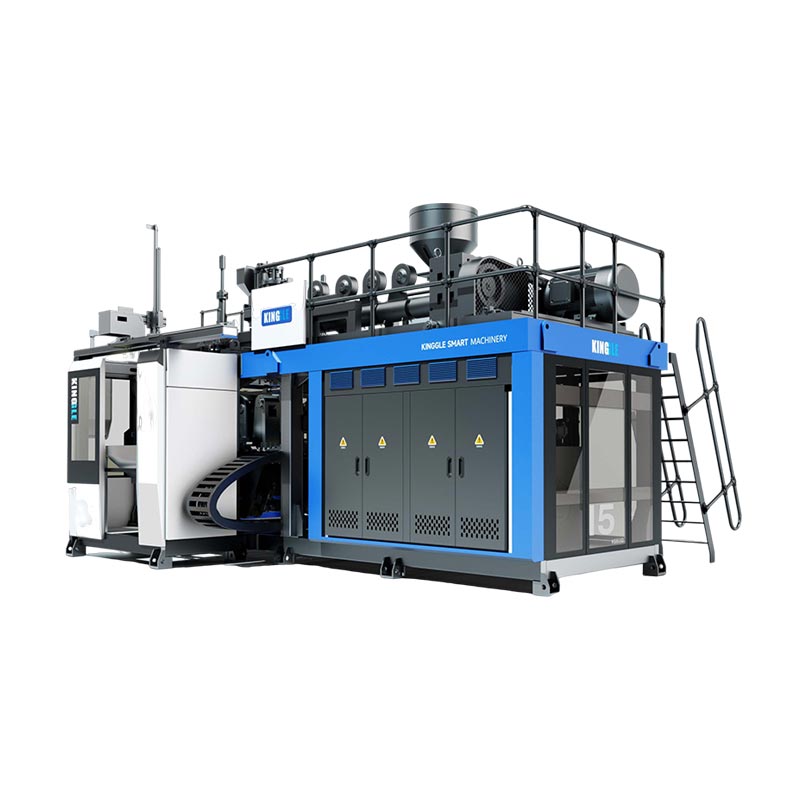
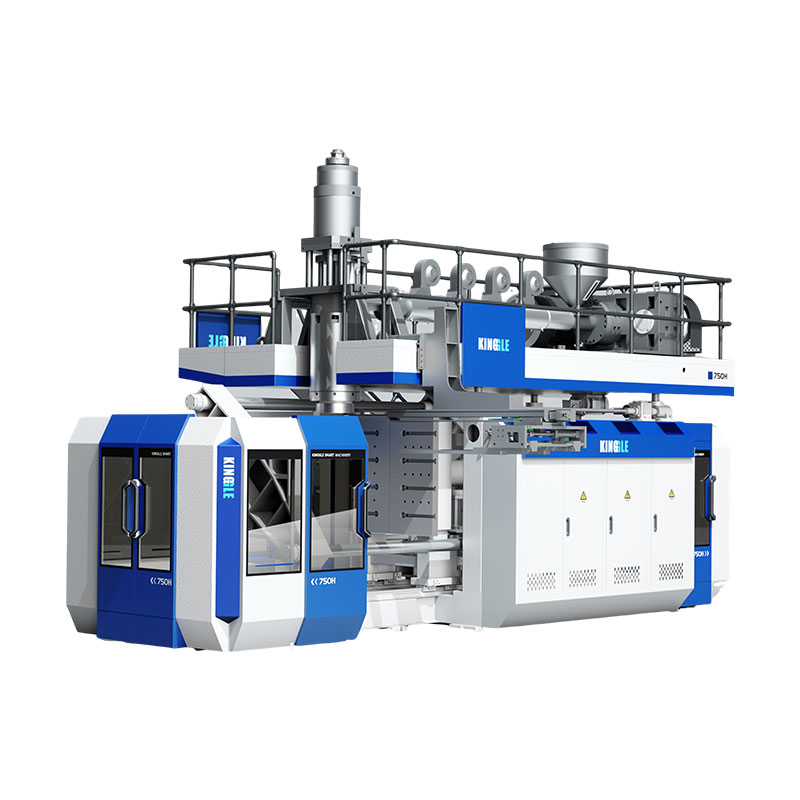
A used extrusion blow molding machine is worth considering when it fits the product, its condition can be verified, and the work needed before production has a defined scope and cost. A new machine is the stronger option when the used alternative depends on unresolved tooling, controls or performance assumptions. Neither should receive approval from a quotation alone.
Compare both routes at the point where the equipment can make accepted products at the intended factory. A lower purchase price is useful only if enough of that saving remains after inspection, repairs, mold adaptation and commissioning.
This comparison concerns extrusion blow molding equipment, including continuous and accumulator-head machines. PET preform reheating and stretch-blow systems require a different technical checklist.
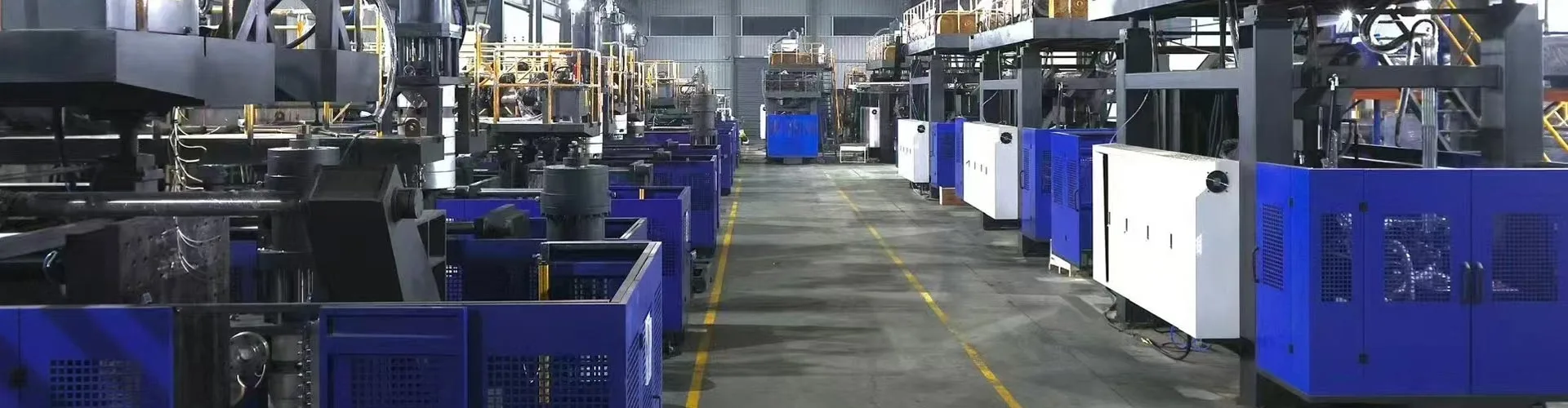
New vs used blow molding equipment: the main differences
Start with what the seller will deliver. A machine described as refurbished might have replacement controls but retain its original screw, barrel, head and hydraulic components. Ask which assemblies were inspected, repaired or replaced, and what evidence supports their release.
| Buying route | Define before ordering | Evidence needed |
|---|---|---|
| New machine | The exact build, options, tooling interfaces and delivery boundary. | Agreed specifications, representative trial results and complete handover documents. |
| Used machine sold as-is | Existing condition, missing items, access for inspection and responsibility for repairs. | Machine identity, inspection findings, operating evidence and a priced work list. |
| Documented refurbished machine | Rebuild scope, retained components and the responsibility for remaining defects. | Inspection and repair records, component identification and post-repair testing. |
A new machine has a specification risk if the order is vague. A used machine adds condition questions. A refurbishment reduces those questions only to the extent that its scope and verification are documented.
How to compare new and used blow molding machine prices
Match the process, configuration and output requirement
Do not place a continuous single-station machine beside a large accumulator-head machine and interpret the price difference as a new-versus-used discount. First match the required material, product geometry, layer structure, head arrangement, stations, mold requirements and accepted output.
Identify the included equipment too. A quote with a mold, material handling and downstream trimming is not equivalent to a bare machine. Use a quotation comparison with consistent scope before negotiating the headline price.
Use marketplace listings as leads, not completed valuations
A listing shows an asking price for a described asset. It does not establish the transaction price, current condition or cost at your factory. Record the listing date and verify that the advertised build matches the machine offered for inspection.
For each price comparable, record the model and serial number, build year, machine architecture, condition evidence, controls, included tooling and auxiliaries, delivery terms, currency, taxes and exclusions. Keep unknown fields visible. A cheap listing with several blanks is an incomplete comparison.
Will the used machine fit your product and mold?
Nominal container capacity is a starting point. It does not resolve shot demand, mold movement, wall distribution or the output your product requires. Build a requirement sheet before arranging a purchase inspection:
- Identify the resin grade, intended recycled content, color system and layer structure.
- Separate finished part weight from the material processed per cycle, including flash and other process scrap. Define how regrind will be handled.
- For a continuous machine, examine extrusion delivery and the required cycle together. For an accumulator machine, confirm the actual accumulator configuration and usable shot capability for the proposed material.
- Check mold mass, mounting, thickness, opening space, part removal, die-head alignment and blow-pin interfaces against drawings for the actual build.
- Define the required accepted output and product checks, rather than relying on a dry-cycle rating.
- Match electrical supply, cooling, compressed air, floor access and downstream interfaces to the intended site.
For example, Kinggle lists a mold thickness range of 200 to 310 mm for the KGB5L, and 510 to 600 mm for the KGB100B. Those model-specific catalogue entries illustrate why mold fit needs an interface check. They are not interchangeable limits or approval for a particular mold.
If the proposed machine cannot meet a mandatory requirement, stop the price comparison until a technically defined modification resolves it. The site utility checklist helps separate machine capability from work required at the receiving factory.
Used blow molding machine inspection checklist
Commission a qualified inspection and agree what access, records and tests it includes. Measurements and acceptance limits must refer to the relevant OEM drawings or service criteria. There is no useful universal screw-clearance limit for every machine size and design.
| System | Evidence to request | Close before purchase release |
|---|---|---|
| Screw and barrel | Service history, applicable wear measurements and operating observations under the proposed resin. | The measurement reference, findings, repair scope and replacement availability. |
| Die head and accumulator, if fitted | Build identification, maintenance records, leakage findings and representative parison observations. | Required cleaning or repair, usable configuration and who will verify it. |
| Clamp and mold movement | Condition assessment against OEM criteria, alignment records and the proposed mold interfaces. | Any corrective work, its cost and the checks required after repair. |
| Hydraulics and utilities | Maintenance records, leak findings, operating observations and required services. | Defect causes and priced remedies; a cleaned machine alone does not close a leak finding. |
| Controls and drives | Controller versions, backups, licenses where required, alarm history and identified replacement parts. | Recovery arrangements, obsolete parts and the scope of any controls conversion. |
| Guards and safety functions | Assessment by competent personnel, matching instructions and records of modifications. | Safety deficiencies and destination-specific requirements before operation. |
For every finding, add the responsible party, supporting document, price basis and retest requirement. Keep an uninspected assembly marked as unverified; do not give it a zero repair allowance simply because no defect has yet been recorded.
In the UK, HSE's guidance on second-hand equipment addresses safe supply and adequate instructions, and explains that a sold-as-seen description does not remove those duties. Check the applicable rules for the destination country rather than treating this UK guidance as a worldwide conformity checklist.
What I would check before approving a used machine
I would start with the product drawing and acceptance requirements, not the machine's age. Before comparing prices, I would confirm the resin, finished part weight, mold dimensions, required output and available utilities. A low-priced machine should remain a candidate only if its configuration can meet those requirements without an undefined rebuild.
My next priority would be evidence of condition. I would ask for maintenance records, electrical drawings, control-system details and program backups, then have qualified personnel inspect the relevant mechanical and safety systems. Fresh paint would not answer questions about screw and barrel condition, hydraulic performance or replacement-part availability. Any unresolved item would stay on the purchase checklist with a named owner and a cost estimate.
For the production trial, I would specify a representative resin and mold, together with written product checks. I would record accepted parts, rejects, interruptions and manual adjustments during the agreed observation period. A short video showing the machine cycling would not satisfy that requirement. Neither would a dry-cycle figure presented as finished-product output.
If the trial showed inconsistent parts, I would separate possible causes before discussing a repair allowance: material variation, tooling condition, process settings and machine condition require different checks. I would not accept a promise that commissioning will solve every issue.
Finally, I would compare both options at the same delivery boundary. Inspection, repairs, mold adaptation, transport, installation and commissioning belong beside the purchase price. Where costs remain uncertain, I would calculate a separate repair-heavy scenario.
I would support a used-machine purchase when product fit, condition and support are documented and the remaining saving is worthwhile. I would favor a new machine when the used option depends on several unpriced assumptions. The decision should follow the evidence, not a preference for new or second-hand equipment.
What should a production trial prove before you buy?
Agree the trial plan before the demonstration. Use the intended resin and mold where practical. If substitutes are necessary, identify what they do and do not establish. A sample made with another material or a simpler mold cannot close every question about the intended product.
Record production that meets an agreed acceptance plan
Define product acceptance and any sampling plan before counting output. Record the observation window, total production, accepted quantity, rejected quantity, interruptions, reasons for stops and manual adjustments. Agree whether the output requirement concerns a stable production window or elapsed production time including specified interruptions.
Accepted units per hour = accepted units ÷ elapsed observation hours
The denominator must be explicit. Do not compare one machine's uninterrupted run with another machine's elapsed time including stops. Record product checks such as mass, dimensions, wall distribution and the application-specific tests agreed for the container. A good appearance alone does not complete that acceptance plan.
Keep energy measurements comparable
EUROMAP 46.2, January 2014, describes product-related energy measurement for an extrusion blow molding machine with a given mold and product requirements. It ties the comparison to the product and operating conditions. It does not establish a general saving for every new machine, servo drive or older hydraulic machine.
Identify which loads the meter includes, the operating state and the product-quality basis. Keep machine-only energy separate from compressors, chillers and other auxiliaries unless both options include the same boundary. For a purchasing cost worksheet, kWh per accepted unit can be useful, but that business metric alone does not demonstrate compliance with the full EUROMAP procedure.
End the trial with three lists: passed requirements, defects requiring correction and items not demonstrated. Give each open item an owner and a verification method. Use the factory acceptance test guide to define the wider release process; an energy measurement period is not a universal machine-acceptance duration.
From purchase price to ready-to-run cost
Use the same cost boundary for both machines. Include inspection, repair, controls recovery, tooling interfaces, decommissioning where applicable, packing, transport, rigging, site work, commissioning, trial material and initial spares. Record taxes and duties consistently. Separate written quotations, estimates and unresolved amounts.
A zero is appropriate when the item is genuinely not required or is already included elsewhere. It is not a substitute for a missing quote.
A lower purchase price can leave little room for repairs
For a hypothetical procurement comparison, I would assess two extrusion blow molding machines against the same product specification, mold requirements and acceptance target. To make the calculation easy to follow, I would express the budgets in cost units rather than present assumed figures as supplier quotations.
Assume the rows below cover the required preparation work and both options use the same tax basis. Financing and routine operating costs are outside this initial-investment example.
| Initial investment item | New machine | Used machine |
|---|---|---|
| Machine purchase | 82 | 50 |
| Inspection and assessment | 1 | 3 |
| Mechanical and control-system restoration | 0 | 20 |
| Tooling and interface adaptation | 6 | 10 |
| Transport and site preparation | 8 | 8 |
| Commissioning and production trials | 3 | 6 |
| Total initial investment | 100 | 97 |
At the purchase-price stage, the used machine appears to save 32 cost units. After the assumed work needed to reach the same production starting point, that advantage falls to 3 units.
I would then test how much uncertainty the saving could absorb. An additional repair costing 4 units would bring the used option to 101 units, compared with 100 for the new machine. That would reverse the initial investment comparison before considering operating costs.
This calculation would not, by itself, justify buying the new machine. If inspection reduced the restoration allowance, or the existing mold fitted without modification, the used option could become more attractive. Each allowance would need supporting evidence.
My decision would remain conditional on the production trial and the unresolved work list. I would also compare energy, maintenance and downtime separately before drawing a lifetime-cost conclusion. In this example, the useful result is the remaining 3-unit margin: it shows how little room the lower-priced option has for additional work.
Separate initial investment from total cost of ownership
For a stated operating period, compare ready-to-run expenditure plus operating and maintenance costs, less a supportable residual value. State production demand, working hours, energy tariffs and financing assumptions. Identify whether the model is discounted. Do not add depreciation to the purchase cash cost and call the sum cash spending.
If a delayed start matters, estimate its effect separately and explain the basis. Avoid counting the same consequence twice, such as charging both lost contribution and an overlapping replacement-production allowance. The cost per accepted container is the appropriate next calculation once comparable production evidence is available.
When is new blow molding equipment worth the higher price?
A new machine deserves preference when it can meet required configuration, integration or support needs that the used candidate cannot resolve economically. That case is strongest when it identifies the specific requirement, the alternative modification and the resulting cost or uncertainty. The word new is not evidence of lower energy use or higher accepted output.
A used machine remains reasonable when its actual build fits the job, inspection and trial evidence are sufficient, critical parts can be supported, and the remaining saving justifies the identified work. A documented refurbishment can also be suitable, but judge the repaired assemblies and test results rather than the label.
Keep the decision open if a mandatory item remains unverified. The next action may be another inspection, an agreed repair and retest, a revised configuration, or a different machine. A scoring total should not allow optional advantages to cancel a mandatory failure.
What documents, spare parts and support should be included?
Match records to the serial number and current build. A manual for the original machine is incomplete if later changes affect wiring, controls, guarding or operating instructions.
- List included molds, head tooling, auxiliaries, software access and loose parts.
- Require available electrical and hydraulic drawings, operating and maintenance instructions, and records of relevant modifications.
- Define program-backup format, access rights, license requirements and a supportable recovery method.
- Identify critical parts, their current supply route and any proposed substitutes that need engineering approval.
- Write down repair duties, trial conditions, correction and retest responsibilities, installation scope, training and warranty exclusions.
- Assign responsibility for checking destination requirements and for any necessary conformity work before shipment and operation.
Compare the schedule to accepted production, not simply the shipping date. Include inspection, repair, packing, transport, site readiness, installation and production release. Stock availability does not eliminate those tasks. Supplier capability is a separate check covered in the factory evaluation guide.
Frequently asked questions
Is a used blow molding machine always cheaper to operate?
No. A lower purchase price does not establish lower operating cost. Compare accepted output, measured energy within the same boundary, maintenance needs and downtime over a stated period. Keep the purchase saving separate from the operating-cost calculation.
What affects the price of an HDPE bottle-making machine?
Relevant factors include the extrusion process, product and mold requirements, head and station arrangement, layer structure, controls, auxiliaries and delivery scope. For used equipment, condition and required restoration also affect the comparison. Request prices against the same product specification.
What should a refurbished blow molding machine include?
It should have a written refurbishment scope identifying inspected, repaired, replaced and retained assemblies, with supporting records and agreed testing. State the remaining defects, exclusions and support terms. A controls upgrade alone does not establish the condition of the mechanical systems.
Can existing molds be reused on a second-hand machine?
Only after checking the actual mold and machine interfaces. Verify mounting, thickness, opening and removal space, mold mass, die-head and blow-pin alignment, cooling and required movement. Use drawings and a representative trial rather than nominal container capacity alone.
What if the seller cannot arrange a representative production trial?
Record which requirements remain unverified and what alternative evidence is available. A substitute material, mold or demonstration may answer limited questions, but it should not be presented as proof of the full production requirement. Define further inspection, conditional acceptance or another candidate before committing.
Discuss your machine requirements with Kinggle
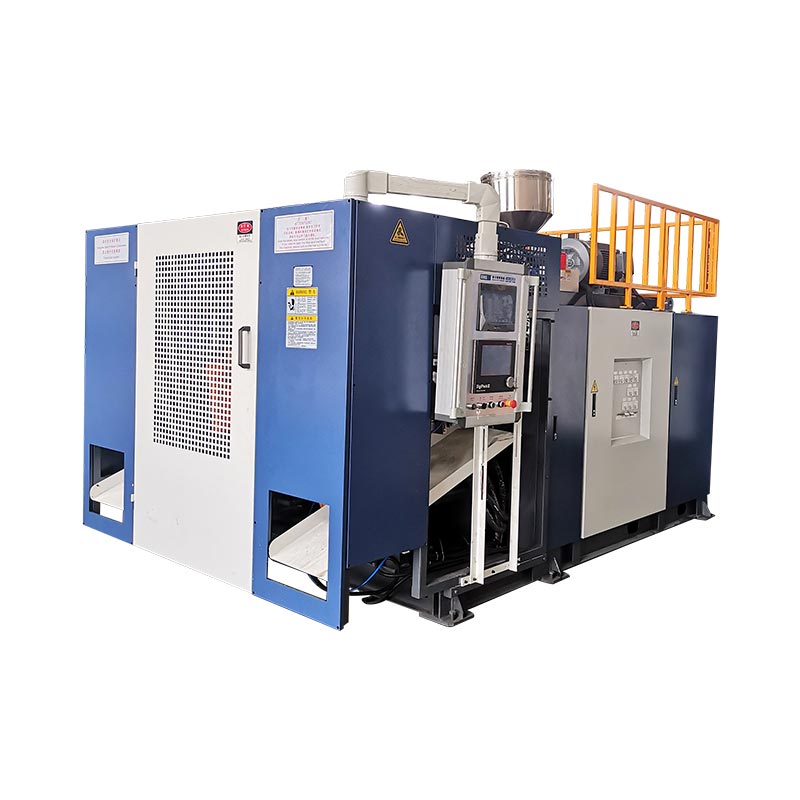
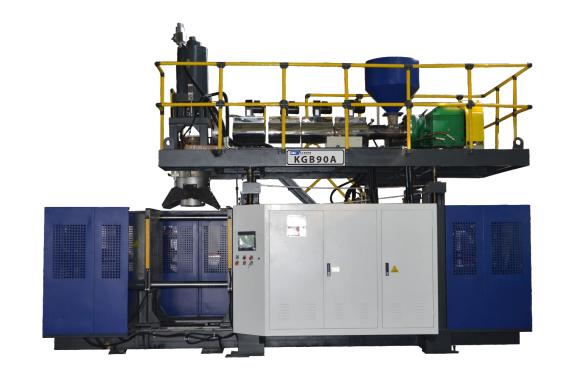
Use a defined new-machine configuration as one side of the comparison. Kinggle's published range includes continuous and accumulator-head equipment; the two examples below serve different project sizes and are not equivalent price comparables.
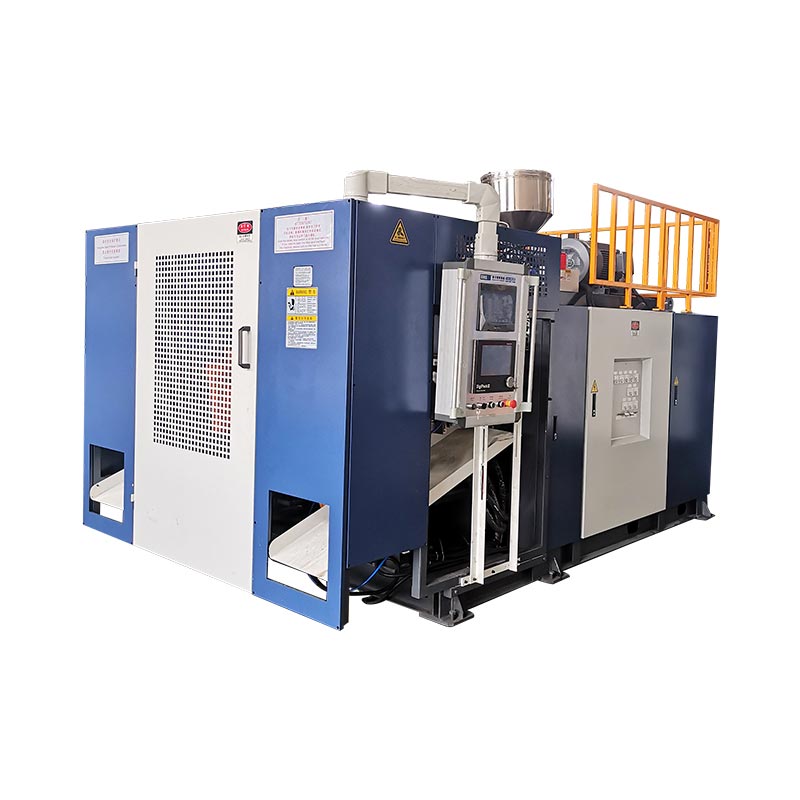

Send the product drawing, resin grade, part weight, layer requirements, target accepted output, available mold information and factory utilities. If a used candidate is under consideration, include its specification and the scope you want to compare. Installation, training, spares and warranty coverage should be defined in the written proposal.
Contact Kinggle for a machine configuration proposal, email sales@kinggle.com, or call +86-574-87103665.
Buy verified production capability
Approve the machine that can meet the product requirement with acceptable, documented cost and support. Keep product fit and safe intended use as mandatory gates. Then compare trial evidence, the work needed before production and the remaining cost advantage. If those questions are still open, the purchase decision is not ready, however attractive the initial price looks.