HDPE or PP? Follow the bottle, not the polymer label
Two hypothetical product files show how the choice changes when contents, appearance, tests and production evidence change.
HDPE is often the practical starting point for opaque household and chemical bottles. A blow molding grade of PP may remain in the running when clarity, stiffness or service temperature changes the brief. Neither answer survives without an exact grade and finished-bottle tests.
Most HDPE versus polypropylene comparisons begin with a property chart. That helps with screening, but it encourages a bad shortcut: treating two polymer families as if each had one fixed density, flow behavior, impact value and processing window.
Supplier portfolios say otherwise. Braskem publishes multiple polyethylene and polypropylene blow molding grades for different package sizes and uses. SABIC separates HDPE homopolymer, HDPE copolymer and PP random copolymer options on its bottle-material page. A family name starts the comparison; it cannot finish it.
The two files below are teaching cases. They do not describe named Kinggle customers or completed factory trials.
The detergent bottle starts with HDPE, then earns it
- Product brief
- A small opaque handled bottle for a household liquid.
- Buyer priority
- Chemical compatibility, leak performance, handle and pinch integrity, repeatable trimming and accepted output.
- Still unknown
- Exact contents, storage conditions, closure, weight, wall map, test limits and resin grade.
Contents decide whether the shortlist is credible
"Household chemical" is too broad for approval. The pack owner has to identify the contents, concentration, storage time and temperature range. SABIC names impact resistance, chemical resistance and environmental stress-crack resistance among the selection needs for non-food bottles. Those are grade and test questions, not blanket promises for every HDPE bottle.
The handle and pinch line turn data into a part problem
A molded plaque value cannot show how the handle bridge stretched or whether the tail weld fused. The product drawing and blow mold design determine where the parison travels, pinches and cools. Wall measurements, leak results and functional tests belong beside the data sheet.
Opacity removes one reason to prefer PP
This bottle does not need to resemble clear PET. Color consistency, surface finish and label-panel shape still matter, but high transparency is not driving the brief. Suitable HDPE blow molding grades stay on the shortlist while the team checks the harder requirements.
The bottle has the final vote
The named grade must form a stable parison, run through the proposed die and mold, trim correctly and pass the agreed inspections. Good appearance with a weak pinch is a failed material decision. The defects guide helps separate resin, parison, tooling and cooling evidence during the trial.
Keep a suitable HDPE blow molding grade as the lead candidate. Do not release it until the exact contents, grade documents and finished-bottle tests are agreed.
Why that is not a universal HDPE win
File A removed a reason to prefer PP, preserved the risks that still matter and attached the choice to a bottle test. That is narrower than an advantages table, and far more useful.
The resin supplier owns grade data
Flow, density, stiffness, impact, heat and stress-crack figures keep the methods and conditions printed on the source document.
The bottle owner owns the service brief
Contents, closure, filling, storage, transport and acceptance tests define the package's job.
The mold creates local walls
Parting line, pinch geometry, vents, cooling and draw path affect how the material forms.
The trial connects the evidence
The result needs a named machine, die, mold, recipe, material and sample record.
The same data sheet can mislead both project teams
A buyer may open two resin documents, circle the higher impact value and call the comparison finished. That only works when the test method, specimen, conditioning and units are comparable. The ExxonMobil HDPE guide, for example, labels its published values as typical rather than specification limits. Braskem's portfolio places test methods beside the property columns. Those details are part of the number.
File A should look for grade evidence that relates to chemical exposure, environmental stress cracking, impact and process stability, then confirm those needs on the bottle. File B may spend more time on haze, gloss, stiffness and thermal conditions. Neither team should promote a family-level claim such as "PP is always clearer" or "HDPE is always tougher" into a purchasing requirement. A candidate grade can move forward because its documented profile suits the brief. It passes only when the finished package meets the controlled tests.
Flow data needs the same discipline. Melt flow rate and melt index may be reported under different loads and temperatures for different polymers. Comparing the printed numbers without their methods can reverse the intended meaning. The useful question for the machine team is more direct: can this named grade form and hold the required parison on the proposed extrusion head, with a repeatable cycle and acceptable bottle?
The clearer personal-care bottle gives PP a reason to stay
- Product brief
- A smaller personal-care bottle where the buyer wants to see the product and keep a rigid package shape.
- Buyer priority
- Visual appearance, finish quality, closure fit, service conditions and stable extrusion blow molding.
- Still unknown
- Target haze or clarity, wall, product contact, filling temperature, decoration, drop requirement and grade.
"Clear" must become an acceptance target
Transparent, translucent and merely less opaque are different expectations. Braskem's portfolio includes PP random copolymer grades for transparent blow molded packages. That makes PP credible, but it does not guarantee the appearance of this wall, color package, mold surface and process.
Missing service conditions can end the case
The brief does not yet state filling and storage conditions. A claim about heat resistance would be premature. The supplier should confirm the exact grade's data and current declaration for the intended contact and region. The project team then tests the molded bottle under its service plan.
Lower density does not guarantee a lighter approved bottle
Supplier tables commonly show PP grades at a lower density than HDPE grades. That can inform early mass estimates, but equal resin volume is not equal bottle performance. Stiffness, impact, wall distribution, finish dimensions and tests decide the final weight.
The old HDPE recipe cannot approve PP
A polymer-family change can alter flow, melt strength, swell, drawdown, thermal settings and cooling. Peer-reviewed work on parison formation uses process data including swell, drawdown and temperature. In the factory, the hanging tube is part of the material decision.
Keep a suitable PP blow molding grade for sample development because appearance gives it a product-specific reason to compete. Retain an HDPE reference until visual, dimensional and functional evidence is compared.
The files do not share a winner
File A gives HDPE a starting advantage because compatibility and structural evidence drive the opaque bottle. File B keeps PP in contention because appearance is part of the job. Both remain conditional because neither supplied an exact grade, complete service conditions or molded-part results.
Product type, appearance intent, broad contents category, process type and the existence of blow molding grades in both families.
Controlled drawing, closure, exact grade and lot, contact conditions, wall and weight targets, methods, output and trial record.
Even the trial scorecards should look different
The detergent-bottle trial should preserve evidence around the handle, pinch line, closure interface and any exposure or transport tests required by the pack owner. Appearance belongs on the sheet, but a small cosmetic preference should not outweigh a leak or functional failure. The personal-care trial may give greater weight to visual consistency, finish quality, decoration and the buyer's defined clarity target, while keeping dimensional and functional limits as non-negotiable gates.
That distinction affects sampling. Do not pour bottles from every station and outlet into one box. Mark the machine, mold revision, material lot, recipe, station or outlet and time sequence. Measure samples after the agreed trimming or finishing step. A mixed average can hide a weak outlet or a wall-thickness drift that becomes visible only in time order.
The process record should show actual conditions rather than setpoints alone. Record the thermal state, extrusion and head settings, parison program revision, cooling-water condition, cycle stages and any manual intervention. If the team changes a major setting during the comparison, mark the time and decide whether the acceptance window restarts. Otherwise the result may combine two different processes while presenting one convenient average.
The trial also needs stopping rules. A candidate that cannot hold a safe, controllable parison on the selected equipment should not continue merely to produce attractive samples. A candidate that molds smoothly but misses a product-critical test does not win because its cycle looks calm. These are engineering decisions, not a beauty contest between materials.
Cost enters only after the accepted bottle exists
Resin price per kilogram is visible and easy to compare. It is also incomplete. The commercial unit is an accepted, finished bottle. Final part weight, trim scrap, start-up loss, rejected product, cycle time, downstream work and changeover behavior all affect the usable result. A lower-density PP grade may allow a promising weight estimate, yet the design may need different wall distribution or mass to pass impact and handling tests. An HDPE candidate with a lower quoted price may still lose if the required bottle cannot be made consistently.
Keep the calculation transparent: use the actual approved bottle weight and observed accepted yield for each candidate, then apply current commercial inputs supplied by the buyer and resin source. Do not turn a laboratory property or a machine catalogue value into a savings claim. The comparison becomes credible when procurement can trace every input back to a quotation, controlled sample or trial record.
Kinggle's catalogue draws a useful boundary
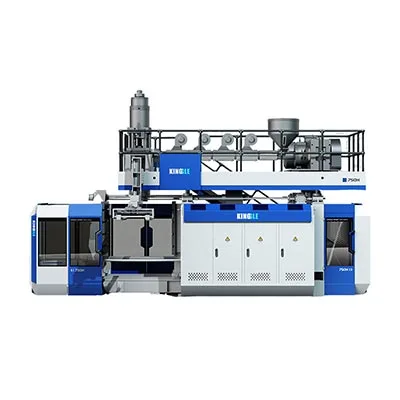
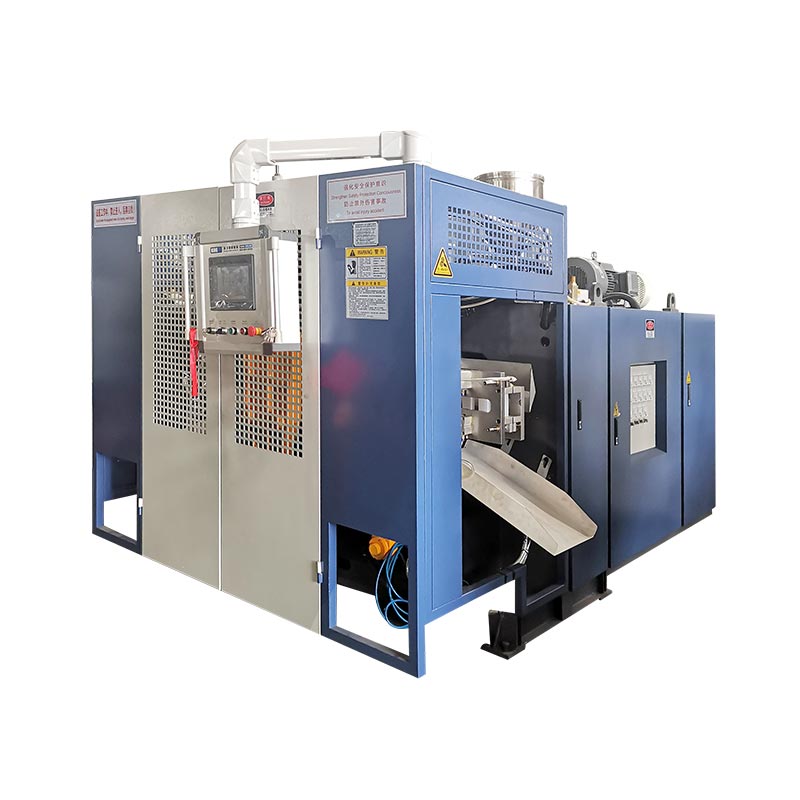
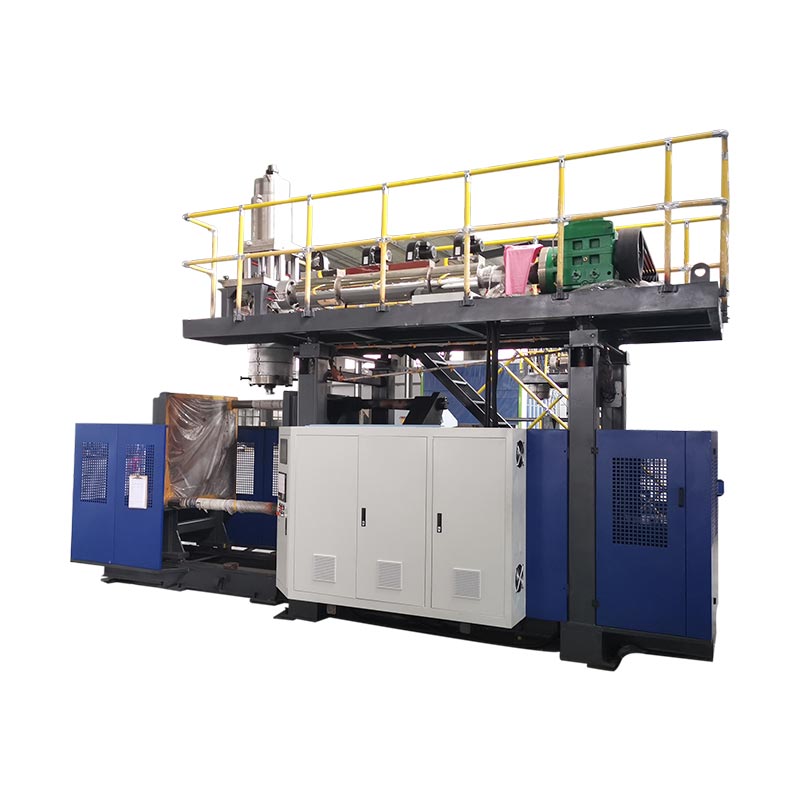
Current pages for the KGB2L, KGB5L, KGB15L and KGB80A list PE and PP among their material families. Their extrusion-capacity rows are specifically labeled for HDPE.
SupportedPE and PP are within the published material scope of these machine families.
SupportedThe 30, 55, 100 and 120 to 140 kg/h references are labeled as HDPE melting capacity.
Not supportedThose figures cannot be relabeled as verified PP throughput, sellable bottles per hour or a guarantee for either teaching case.
If the buyer proposes PP, Kinggle needs the grade data and product brief before confirming screw, head, process and output. If the buyer proposes HDPE, kg/h still does not replace gross parison mass, cooling time, station or outlet count and accepted yield. The factory acceptance test guide shows how to separate those numbers during verification.
Six questions finish the meeting
What product and closure drawings are controlled, and which dimensions are inspected after trimming?
What will the bottle contain, and what filling, storage, transport and use conditions apply?
Which exact HDPE and PP grades remain under consideration, with current supplier data?
Which appearance, weight, wall, leak, drop, top-load, torque or other limits define acceptance?
Which machine, die, mold, station, outlet and downstream configuration will make the samples?
How will the trial preserve sample identity, settings, losses and the reason one candidate advances?
A useful record ends with a named grade and a bounded reason. "HDPE is better" is not a decision a factory can reproduce.
Bring the bottle and the grade code
Send Kinggle the part and closure drawings, resin data sheets, contents and service conditions, weight and wall targets, tests, output, color and regrind plan, mold information and downstream scope. The answer may still be HDPE or PP. It will at least be an answer to your bottle.
Discuss the material and machine trial