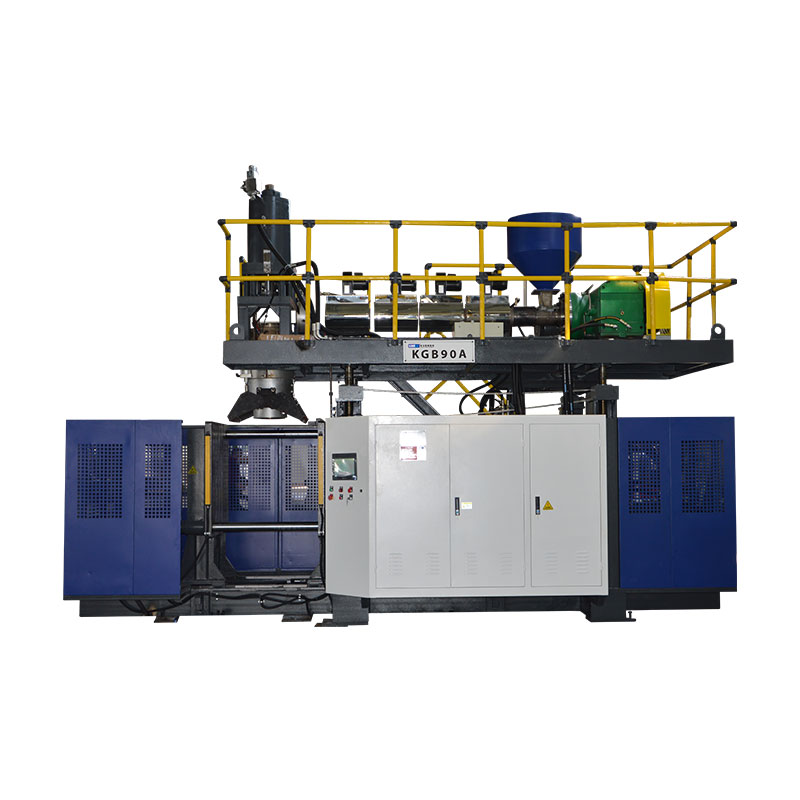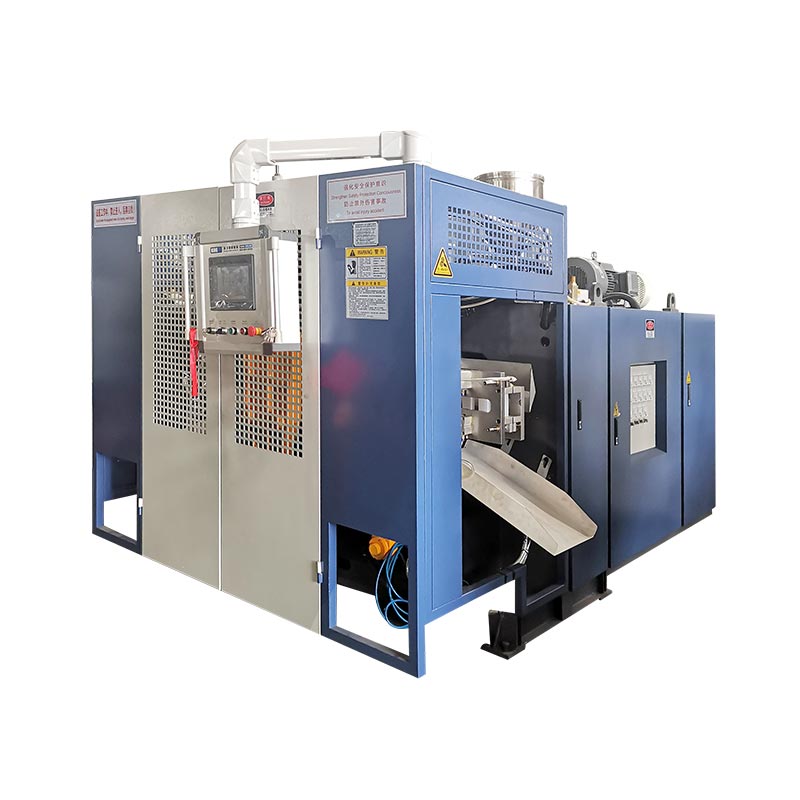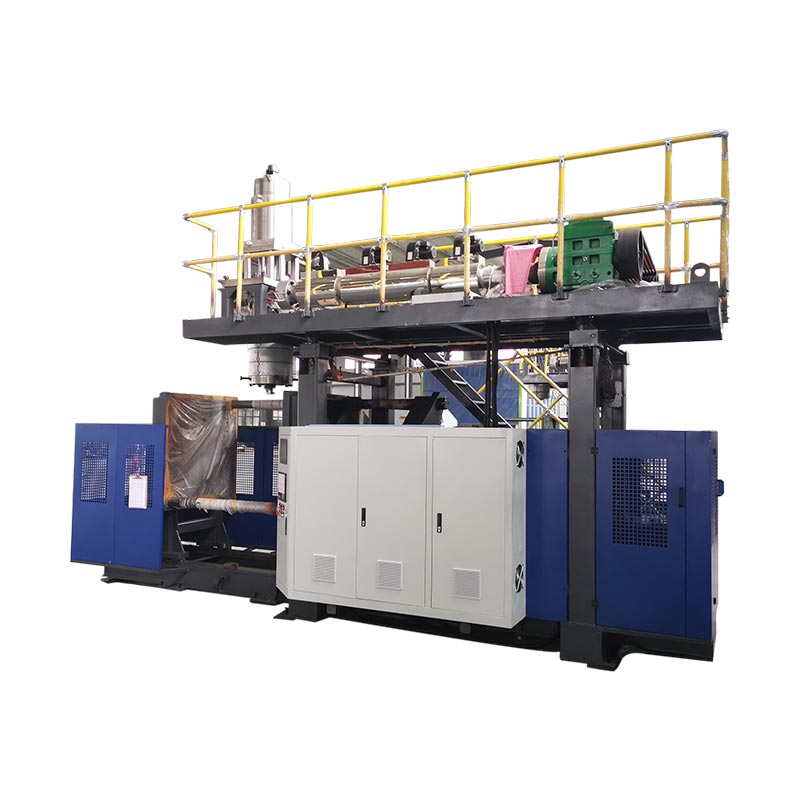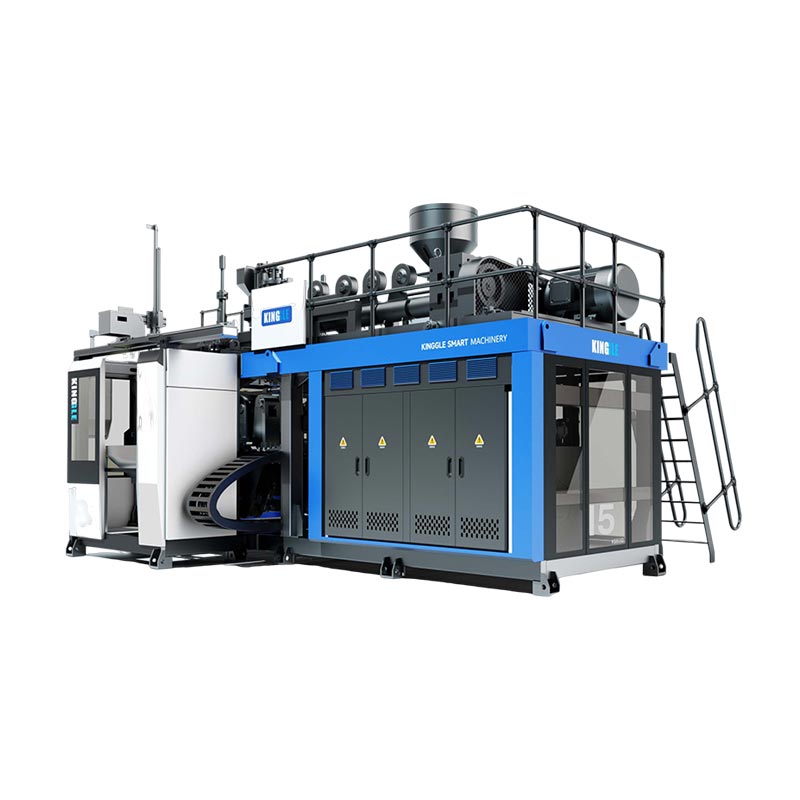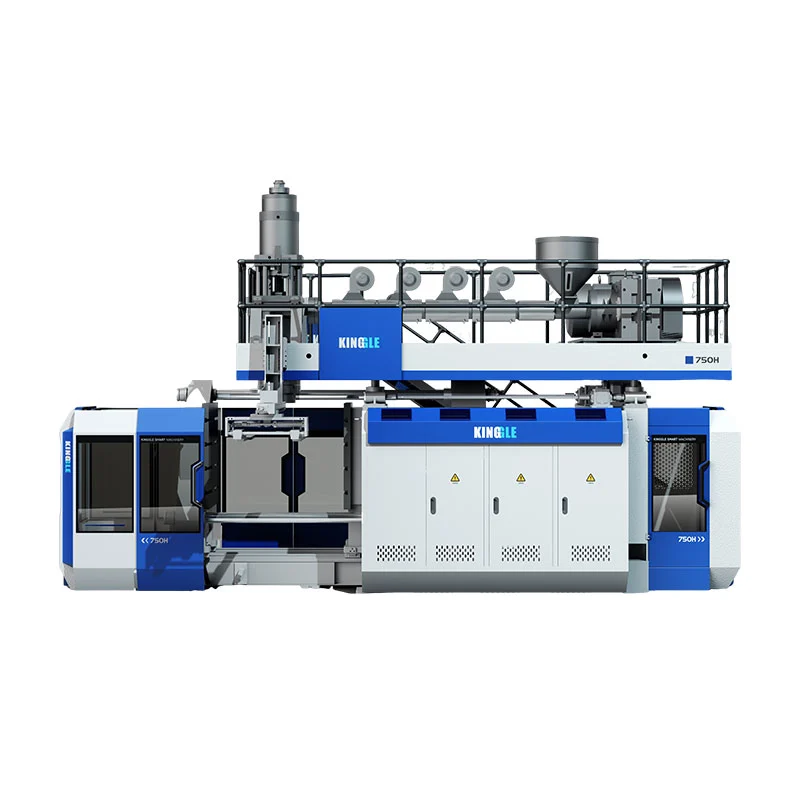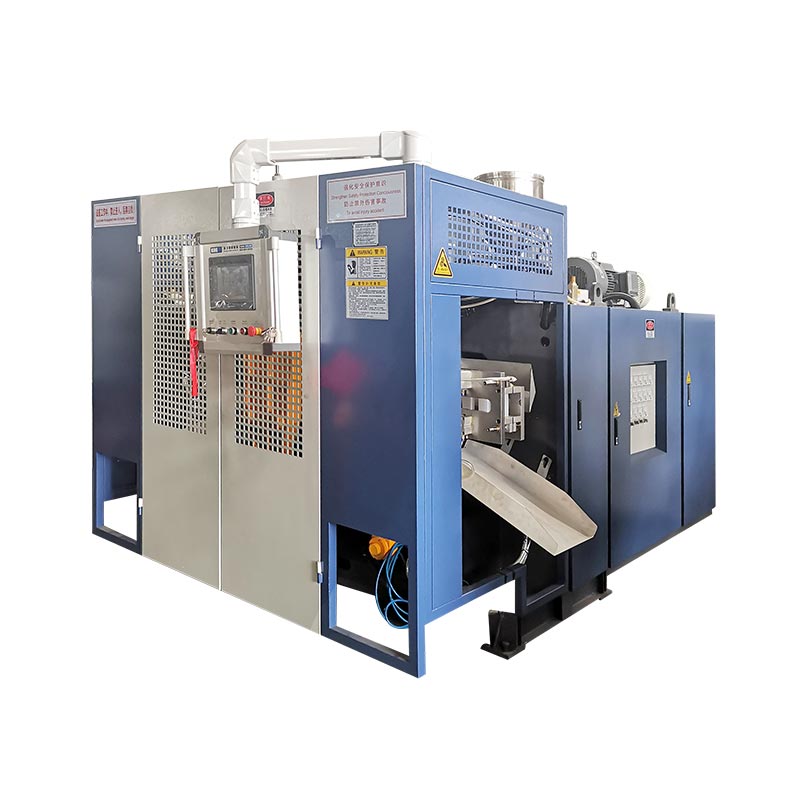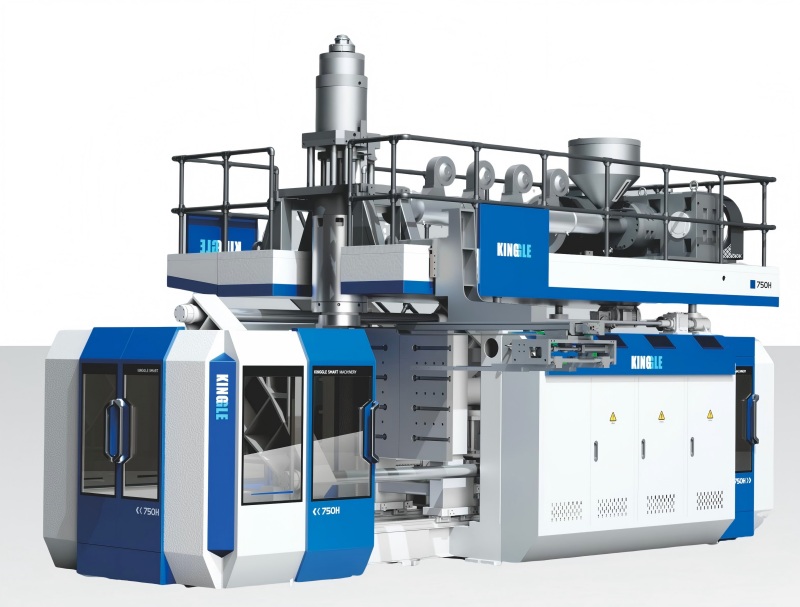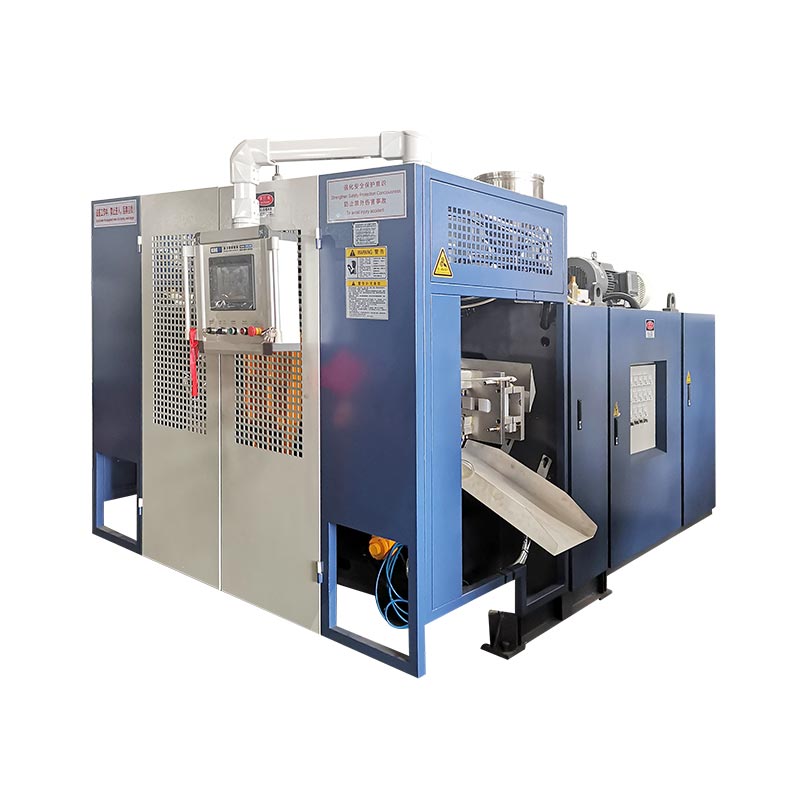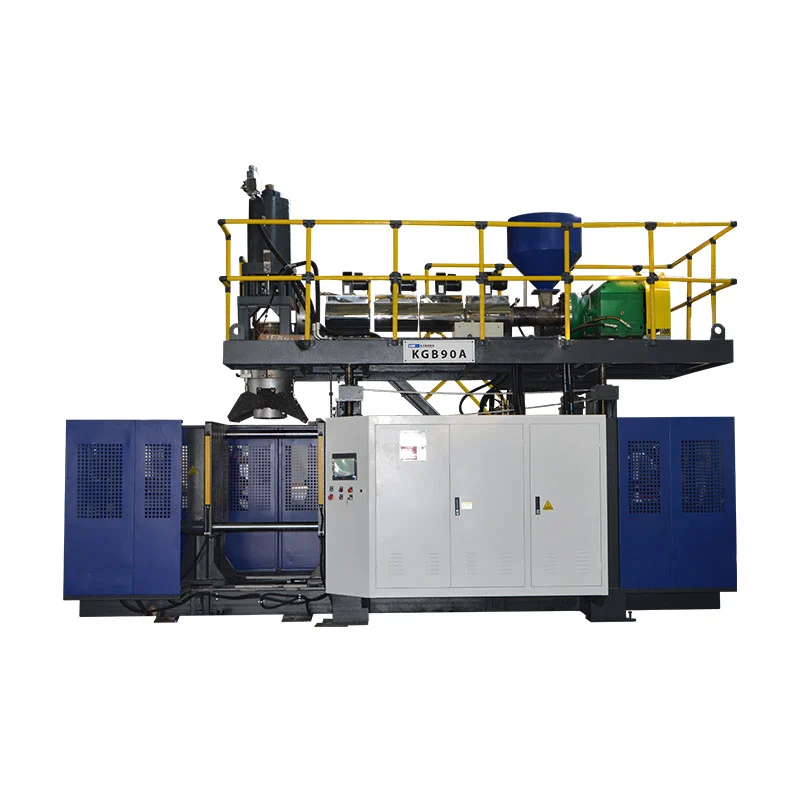
A chemical drum blow molding machine is an accumulator extrusion machine sized for 200 to 220 litre drums. The accumulator shoots a heavy parison out fast, before gravity pulls it out of shape. Everything else about the machine exists to serve one moment: the drop test.
That's the honest framing. A drum that can't survive a fall doesn't ship dangerous goods, however good it looks.
So this article works backwards from the test. What the drum has to survive. Where drums actually break. And what the machine has to do about it.
Key Takeaways
- Drums fail at the bottom chime and the pinch-off weld. Almost never in the side wall.
- The drop test is done with the drum full and conditioned cold. Cold plastic is brittle plastic.
- A 200 litre drum weighs 12 to 15 kg with a 3.5 to 4 mm wall. Every extra millimetre is money.
- HMW-HDPE, not ordinary HDPE. Stress crack resistance is what survives a year of aggressive chemistry.
- Output is 17 to 20 drums an hour. Cooling sets that pace, not the extruder.
On this page
What the drop test actually demands
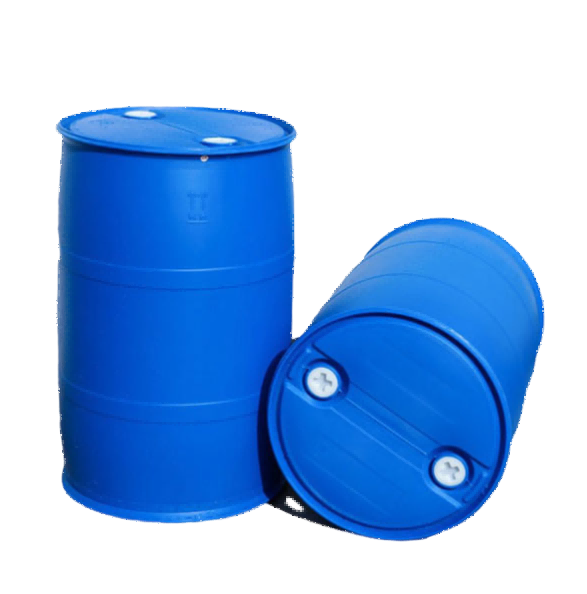
UN certification for dangerous goods packaging includes a drop test. The drum is filled, dropped, and inspected. It must not leak.
Three details make that harder than it sounds.
First, the drum is full. That's roughly 200 kilos of liquid behind the impact. The load doesn't stop when the drum hits the floor. It keeps moving, and the wall has to hold it.
Second, the drum is conditioned cold first. Polyethylene toughens as it warms and turns brittle as it cools. Testing cold is deliberate. It's the worst case in a real supply chain.
Third, the drop is usually diagonal, onto the bottom chime. Not flat. That funnels the whole impact into a small radius of plastic. And that radius is exactly where the parison had to stretch furthest to form the base.
Our drum tooling is validated to a 3 metre drop test with UN certification. Commercially, that isn't a bonus feature. Buyers of dangerous goods packaging can't accept an unproven drum, so it's the price of entry.
Where drums break
Ask a new buyer where a drum fails. They'll usually point at the side wall, because it's the biggest surface.
It isn't. Two places account for nearly every failure we're asked to diagnose.
The bottom chime
This is the corner radius where the base meets the side wall. Geometrically it's the furthest the parison has to stretch, so it's naturally the thinnest part of the drum.
It's also where the diagonal drop concentrates its energy. Thin plastic, concentrated impact, cold conditioning. That's why the chime goes first.
The pinch-off weld
When the mold closes, it pinches the parison shut and cuts the flash away. That seam is a weld between two faces of melt. It's the weakest line in the finished drum.
A weld can look perfect and still be cold. Cold welds peel apart under impact instead of tearing. The failure surface tells you which happened. A torn weld had good fusion. A peeled one didn't.
Table 1 · Failure diagnosis
| Where it failed | Likely cause | What to change |
|---|---|---|
| Bottom chime, split | Wall too thin at the base radius | Add thickness points at the chime |
| Weld peeled apart | Melt too cold at the pinch-off | Raise melt temperature, balance die zones |
| Weld split cleanly | Not enough material at the seam | Re-profile material into the pinch line |
| Cracks weeks after filling | Stress cracking, wrong resin grade | Move to a higher molecular weight HMW-HDPE |
| Heavy flash, weak seam | Clamp creeping open | Check tonnage and pinch-off edge wear |
| Deformed after stacking | Not enough cooling before ejection | Extend cooling, lower water temperature |
The fourth row is the one that hurts. Stress cracking doesn't show up in the drop test. It appears weeks later, at a customer's site, in a drum full of something aggressive. By then you've shipped thousands.
Why HMW-HDPE, and not ordinary HDPE
Chemical drums are made from high molecular weight HDPE. The reason is a property called environmental stress crack resistance, or ESCR.
Here's what that means in practice. Put polyethylene under constant stress, expose it to certain chemicals, and it can crack over time. No impact needed. It just gives way.
A full drum is exactly that situation. The wall is permanently stressed by the weight of the contents. Those contents might be a detergent, a solvent or an acid. And the drum could sit like that for a year.
Longer polymer chains resist this far better. That's what the high molecular weight in HMW-HDPE buys you.
There's a catch, and it lands at the machine. HMW resin is stiffer to process. It swells more leaving the die. It needs more extruder power and different parison settings than the HDPE in a small can.
So check plasticizing capacity against your actual drum resin. Quotations usually state it for standard HDPE, which is not what you'll be running.
Programming the wall for impact
A parison controller doesn't set one thickness. It sets a curve along the length of the parison. On a drum, that curve is designed around the drop test.
It gets simpler once you see the drum as a set of jobs:
- Base and bottom chime: more. This takes the impact, and it's the thinnest area by default. It needs the most compensation.
- Pinch-off line: more. The weakest weld shouldn't also be the thinnest section.
- Top chime and closure area: more. Bungs concentrate stress, and drums get dropped on the top too.
- Straight side wall: less. It carries the least concentrated load. This is where weight comes off.
- Above the cut line: minimal. That material becomes flash and gets reground.
The numbers make the stakes clear. A 200 litre drum weighs 12 to 15 kg, with a wall around 3.5 to 4 mm. Add one unnecessary millimetre across the body and you've added kilos of HMW-HDPE to every drum you ship.
That's why controller resolution isn't a footnote here. A 100 point wall thickness controller puts material precisely where the chime will form. A coarse controller spreads it across a wide band instead, and you pay for the difference on every cycle.
One more thing worth knowing. Sag works against you here. The parison thins at the top as it hangs, and the top of the parison forms the base of the drum.
So the area needing the most material is the area gravity is stealing it from. That contradiction is what the whole wall programme exists to solve.
The double ring, and why it's there
Look at a 220 litre drum and you'll see two raised rings around the body. They aren't styling.
They do three jobs. They stiffen the side wall against denting. They give forklift drum handlers something to grip. And they carry the load when drums are stacked, keeping weight off the wall itself.
From a molding standpoint, rings are a complication. Each is a change in section, so the parison stretches differently there. Get the programme wrong and thin spots appear immediately below each ring.
It's a good example of why mold design and machine capability belong in the same conversation. A ring profile that's easy to draw can be awkward to blow evenly. That discussion costs nothing before the mold is cut, and a great deal afterwards.
Specifying the machine
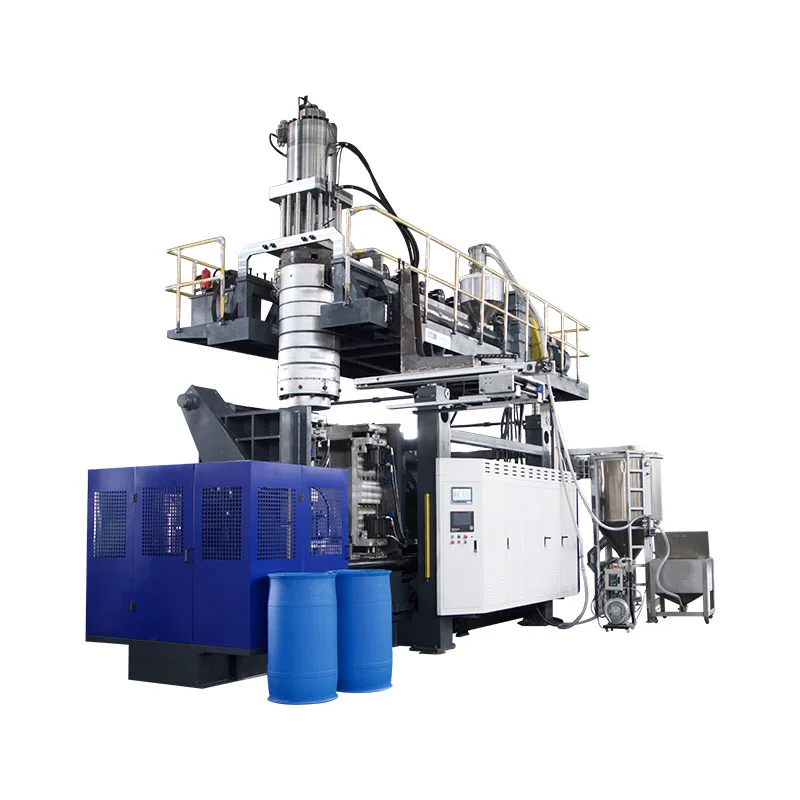
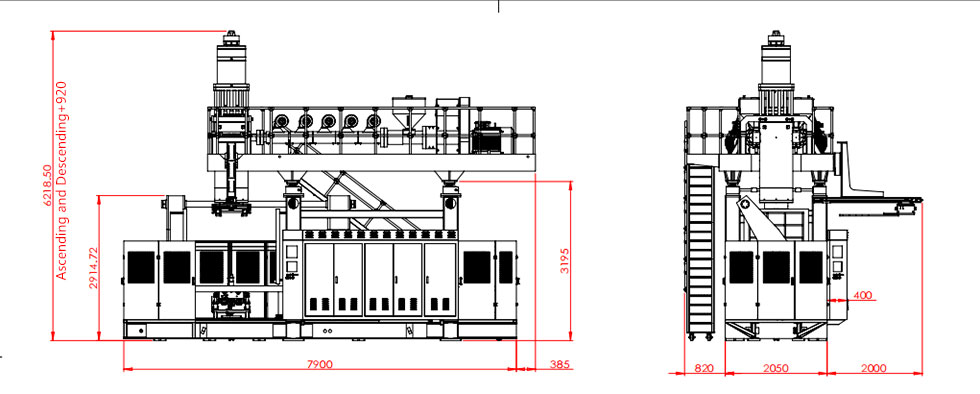
Drums are demanding, but the specification comes down to four questions.
- What's the largest drum? A 200 to 220 litre drum needs a 250 litre class machine. Ours is the KGB200L/LP chemical barrel special, also sold as the 220 litre plastic drum machine.
- Smaller drums too? Most plants run a range. A 30L or 120L accumulator covers the lower end, and two machines commonly span 30 to 220 litres.
- Which resin grade? Confirm plasticizing capacity against your actual HMW-HDPE, not generic HDPE figures.
- What else runs on the frame? The same machine makes water tanks, pallets, barriers and fuel tanks by changing the mold. Planning for that keeps utilisation up between drum contracts.
Table 2 · Drum size to machine class
| Drum size | Machine | Clamping force | Indicative output |
|---|---|---|---|
| 20 to 30 L | 30L accumulator | 215 kN | ~650 per hour |
| 50 to 60 L | 60L accumulator | 280 kN | ~500 per hour |
| 120 L | 120L accumulator | 440 kN | ~320 per hour |
| 160 L | 160L accumulator | 760 kN | ~300 per hour |
| 200 to 220 L | 250L drum special | 760 kN | 17 to 20 per hour |
That last row surprises people, and it's worth explaining honestly. The KGB200L/LP spec sheet shows 300 pieces per hour dry cycle. Real 220 litre drums come off at 17 to 20.
The machine isn't underperforming. Dry cycle is the machine running with no plastic and no cooling. A 4 mm HMW-HDPE wall takes minutes to set, and cooling is the pace-setter on every large part. No amount of extruder power changes that.
Talk to us about your drum programme
Send the drum size, resin grade and certification you need. We'll come back with machine class, wall programme approach and realistic output for your part.
Get a Quote Chat on WhatsAppFrequently asked questions
What machine makes plastic chemical drums?
An accumulator extrusion blow molding machine. It stores melt and shoots it out fast, so a heavy drum parison doesn't sag before the mold closes. A 200 to 220 litre drum needs a 250 litre class machine with around 760 kN clamping force.
What is the UN drop test?
A filled drum is dropped from a set height onto a rigid surface, usually including a diagonal drop onto the bottom chime. It must not leak afterwards. Our drum tooling is validated to a 3 metre drop test with UN certification.
Why do plastic drums fail the drop test?
Most failures are at the bottom chime or the pinch-off weld, not the side wall. The usual causes are too little material in the base radius, a cold weld, or resin with insufficient stress crack resistance.
How much does a 200 litre drum weigh?
Typically 12 to 15 kg in HMW-HDPE, with a wall of roughly 3.5 to 4 mm. Exact weight depends on the wall programme and the certification the drum has to meet.
What output can a drum machine achieve?
A 220 litre double ring drum runs at roughly 17 to 20 pieces per hour. Cooling limits it, because a 4 mm wall takes far longer to set than a small container.
Can one machine make drums and other products?
Yes. Accumulator machines change product by changing the mold. The same frame makes water tanks, pallets, traffic barriers, buoys and fuel tanks.
Where this leaves you
Drums look like simple parts. They aren't. A drum has to survive being dropped, full and cold, onto its weakest corner. Then hold something aggressive for a year without cracking.
Three things decide whether it does. Resin with real stress crack resistance. A wall programme that puts material into the chime and the weld. And enough control resolution to place it precisely, instead of adding weight everywhere.
Get those right and the drum passes. Get them wrong and it passes sometimes, which is worse. You won't find out until a customer does.